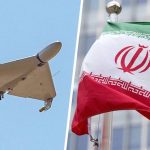
For decades, Iran’s nuclear program served as its ultimate insurance policy — a deterrent powerful enough to give any adversary pause. That logic no longer applies. The joint US-Israeli campaign under Operation Epic Fury may have dismantled Iran’s nuclear infrastructure, but Tehran has discovered something arguably more potent: a 21-mile stretch of water that keeps the global economy hostage without a single warhead.
The closure of the Strait of Hormuz has already been described as the largest disruption to the energy supply since the 1970s energy crisis — and the largest in the history of the global oil market. What began as a military conflict has morphed into a contest over who controls the arteries of global trade. And right now, Iran is winning that argument.
The Toll Booth Strategy
Since mid-March, Iran has turned the Strait of Hormuz into a “toll booth,” according to Lloyd’s List Intelligence — rerouting ships from the normal, well-demarcated two-way lane to an alternate path close to the Iranian coastline, between the islands of Qeshm and Larak. The IRGC checks each ship’s nationality, ownership, cargo, and crew before granting passage — with at least some vessels paying an estimated $2 million per transit. Iranian lawmakers are already pushing to formalize the arrangement through legislation, framing it not as an act of war but as a sovereign right over a corridor Iran says it secures.
The geopolitical implications of that framing are serious. Under international law, Iran has no legal authority to impose blanket transit tolls on vessels passing through the strait, according to Shahla Ali, a professor of law at the University of Hong Kong, who notes that while states can charge fees for specific services within territorial waters, such as pilotage, those charges must be connected to services actually rendered. Any unilateral parliamentary measure imposing a broad transit fee would therefore be inconsistent with established international maritime law. The gap between what is legal and what is enforceable, however, is precisely where Iran is operating.
Maritime traffic remains down more than 90% from normal levels, according to ship-tracking data, despite a de facto toll booth system. Ship transits dropped from around 130 per day in February to just 6 in March — a collapse of about 95%. Meanwhile, Iran is selectively granting passage based on political alignment: on March 26, Iran’s Foreign Minister announced that ships owned by five nations — China, Russia, India, Iraq, and Pakistan — would be allowed to transit the strait. The message to Washington’s allies was deliberate and unmistakable.
The Economic Fallout
The numbers coming out of international institutions tell a grim story. A closure that removes close to 20% of global oil supplies from the market during Q2 2026 is expected to raise the average WTI price to $98 per barrel and lower global real GDP growth by an annualized 2.9 percentage points. If the blockade persists longer, the damage compounds quickly. If shipping resumes only after three quarters, oil prices could reach as high as $132 per barrel by year-end, with growth impacts remaining negative through the end of 2026. Some Wall Street analysts have begun floating the possibility of $200-a-barrel oil if conditions deteriorate further.
The disruption extends well beyond fuel. Up to 30% of internationally traded fertilizers normally transit the strait, and unlike oil, the fertilizer sector has no internationally coordinated strategic reserves, making supply disruptions far harder to manage. Urea prices have increased 50% since the start of the war, the LNG disruption is also impacting fertilizer production, and the price shock during the spring planting season could reduce yields of corn in the US — the main feedstock for American beef, poultry, and dairy — potentially pushing global food prices higher into 2027.
Growth in global merchandise trade is projected to decelerate from about 4.7% in 2025 to between 1.5% and 2.5% in 2026, as the disruptions represent a major supply shock, pushing prices up while weighing on demand. For developing countries already carrying heavy debt loads, this is not an abstract macroeconomic adjustment — it is a crisis arriving on top of a crisis.
No Easy Exit
Washington finds itself caught between two bad options. Reopening the strait by force would require sustained military operations against Iran’s coastal assets, a campaign that military analysts say could take weeks of intensive bombardment with no guarantee of success. Accepting a deal that leaves Iran in de facto control of the waterway would hand Tehran a strategic victory that reshapes the entire security architecture of the Gulf — and with it, the credibility of American security guarantees.
The level of security demanded by the shipping industry will be hard to guarantee, with experience from the Red Sea offering a cautionary precedent — shipping companies briefly suspended operations there in late 2023 amid Houthi attacks on commercial vessels, and while traffic has since resumed, it remains below pre-2023 levels due to ongoing security concerns.
With tanker traffic through the strait down 90% during the first week of March, the IEA launched the largest emergency reserve release in its history — all 32 member countries unanimously agreeing to release 400 million barrels of oil, more than twice the previous record set in 2022 following Russia’s invasion of Ukraine, representing roughly 26 days of normal oil flows through the strait. That is a stop-gap measure, not a solution.
Iran has spent months building a stranglehold on the world’s most important energy chokepoint, and it is showing no signs of relinquishing it cheaply. The regime understands that time, in this context, is leverage. Every week the strait stays closed, the pressure on Washington’s allies — and Washington itself — intensifies. The nuclear threat may be gone, but what replaced it has turned out to be just as difficult to defuse.
Original analysis inspired by John T. Seward from The Washington Times. Additional research and verification conducted through multiple sources.