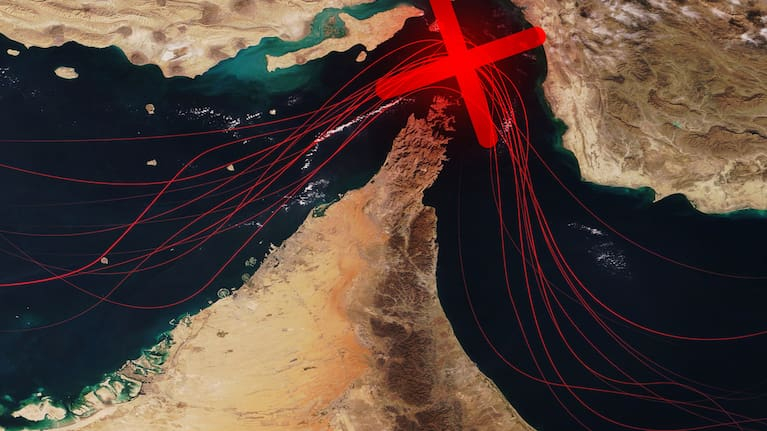
For nearly half a century, the global economy relied on a fundamental assumption: the American military would guarantee the free flow of energy through the Persian Gulf. That foundational security architecture collapsed during a recent prime-time address when the White House explicitly washed its hands of the waterway. By declaring that domestic energy independence renders the chokepoint strategically irrelevant to domestic interests, the administration abruptly shifted the security burden onto vulnerable allies. This sudden policy pivot leaves dependent consumer nations scrambling to protect their vital shipping lanes without their traditional superpower backer.
European capitals and Gulf monarchies now face the reality of policing the world’s most contested maritime corridor. Historically, these nations relied heavily on the Pentagon’s vast naval umbrella to deter regional aggression and secure commercial traffic. Now, they must hastily expand independent maritime coalitions—such as the European-led Operation AGENOR—to counter a sophisticated, multi-layered blockade enforced by the Islamic Revolutionary Guard Corps (IRGC). Expecting these regional players to seamlessly replace decades of embedded American deterrence represents a massive strategic gamble, especially after President Trump explicitly told allies to “grab it and cherish it” while suggesting they “go get your own oil.”
The immediate economic fallout from this security vacuum is already paralyzing global trade networks. With Brent crude trading well above the critical hundred-dollar mark—hitting $126 per barrel at its peak and hovering near $111 in early April—energy markets remain highly volatile. Beyond raw commodity costs, the commercial shipping sector faces crippling logistical hurdles as underwriters refuse to cover vessels navigating the hazardous chokepoint. While the U.S. has offered limited political risk insurance through the DFC, insurance premiums for the Strait increased by four to six times in a single week, effectively cementing the blockade regardless of political declarations.
Enduring Asymmetric Threats
Stepping back from direct confrontation does not magically erase the underlying military hazards concentrated in these waters. Local defense forces remain largely ill-equipped to neutralize the vast array of asymmetric weapons deployed across the coastline. Up to six thousand sophisticated sea mines are reportedly in the Iranian arsenal, alongside radar-evading suicide drones and advanced anti-ship missiles—like the cruise missiles that recently struck the tanker Aqua 1—that present operational challenges typically requiring cutting-edge American countermeasures. In addition, the persistent threat of coordinated proxy attacks cascading outward from Houthi militants in Yemen adds extreme unpredictability to any local stabilization effort.
Even if regional navies attempt to establish safe transit corridors, the operational autonomy of Iranian coastal commands complicates any potential diplomatic resolution. Ongoing Israeli airstrikes have severely degraded defensive networks across the region, heavily restricting any available face-saving exits for the targeted leadership. Consequently, the local guard units operating in the Gulf might lack both the capability and the political mandate to facilitate an orderly resumption of commercial transit, even as Tehran attempts to pivot to a “permission-based” transit regime that favors specific partners like China and India.
Ultimately, declaring victory and withdrawing naval support creates a dangerous illusion of closure. If European fleets and Arab security forces hesitate to fill the massive void left by the Pentagon, the critical waterway will simply remain impassable. A prolonged disruption of the global supply chain would inevitably trigger massive economic shockwaves, which could easily force a reluctant administration right back into the very conflict it just tried to escape.