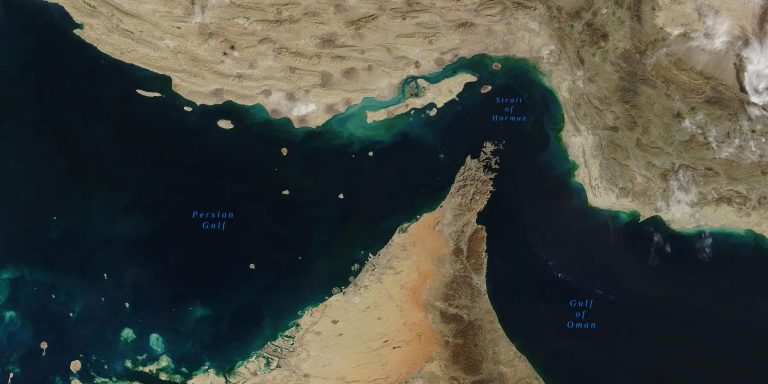
As the military confrontation between Washington, Tel Aviv, and Tehran extends into its second month, the true center of gravity has shifted from kinetic exchanges to global trade. The international community watches nervously as commercial traffic through the world’s most critical energy chokepoint faces severe constraints. While the White House issues early April ultimatums demanding open maritime access, this expectation fundamentally misreads the strategic thinking in the Middle East. Policymakers in the Islamic Republic are no longer treating the waterway as a temporary diplomatic bargaining chip. Instead, they view absolute sovereign control over these waters as the ultimate guarantee of post-war survival.
Commodifying a Vital Chokepoint
The traditional assumption that blockades merely serve to force ceasefire negotiations fails to capture the emerging reality. Following the perceived depletion of deterrence experienced during the brief 2025 escalations, military planners realized that ballistic arsenals alone could not prevent foreign strikes. Consequently, lawmakers are currently advancing legislation designed to transform temporary wartime blockades into a permanent security and toll-collection apparatus. This proposed legal framework would legally mandate maritime safety fees and institutionalize discriminatory transit rights based on geopolitical alignment. Friendly or neutral flags from nations like China, India, and Russia already enjoy informal safe passage, while Western-aligned vessels remain strictly barred.
This transformation aims to entirely replace the nation’s historical reliance on vulnerable petroleum exports. By establishing direct, bilateral financial channels for maritime transit fees, the state bypasses traditional banking hubs in the United Arab Emirates. Analysts project that a formalized toll system could eventually generate revenues exceeding previous crude sales. The strategy effectively forces the international community to purchase economic stability directly from the state apparatus.
The Legal Battleground
Resolving complex jurisdictional disputes remains the highest hurdle for this new economic paradigm. The fundamental principle of unimpeded transit passage governs most international waterways, specifically prohibiting coastal states from levying arbitrary fees. However, because neither Washington nor Tehran ever ratified the United Nations Convention on the Law of the Sea, maritime interpretations remain fiercely contested. Authorities justify their current posture by invoking the older, more restrictive concept of innocent passage originating from the 1985 Geneva Convention.
Global diplomatic responses reveal deep fractures in how the world enforces these legal doctrines. While the United Nations Security Council swiftly passed Resolution 2817 condemning the obstruction of shipping lanes, enforcing such mandates remains practically impossible. Any authorization for military intervention faces guaranteed vetoes from Beijing and Moscow. Meanwhile, regional officials point to a perceived double standard, noting that foreign airstrikes on domestic infrastructure receive little international condemnation compared to disruptions in commercial shipping.
Integrating Gulf Neighbors
Securing a permanent toll regime ultimately requires the tacit approval of neighboring capitals rather than Western endorsement. The economies of Saudi Arabia, Qatar, and Kuwait rely entirely on these exact shipping lanes to reach global markets. Recognizing this shared vulnerability, diplomats are reportedly floating the revival of the Hormuz Peace Endeavour, initially proposed in 2019 to foster localized security arrangements without external interference. To sweeten the proposition, regional competitors might receive substantial discounts on future passage tariffs as compensation for recent economic damages.
The most crucial piece of this diplomatic puzzle involves Oman, which shares territorial jurisdiction over the strategic chokepoint. Planners envision elevating Muscat to a co-management role, mirroring the administrative structures of the Suez Canal. While Omani officials currently maintain public silence, their eventual participation would legitimize the new framework. For neighboring energy producers, the choice is rapidly narrowing down to either paying for a seat at the new regulatory table or being entirely excluded from the future security architecture.
Original analysis inspired by Mohammad Eslami and Zeynab Malakouti from Responsible Statecraft. Additional research and verification conducted through multiple sources.