On March 31, Pakistan’s Deputy Prime Minister Ishaq Dar landed in Beijing carrying what may be the war’s most consequential diplomatic ask. According to Iran expert Vali Nasr, Tehran has requested guarantees in any future deal with the United States — and word is that Dar traveled to China specifically to secure Beijing as a guarantor, a condition Iran has set for opening talks with Washington. Foreign Minister Wang Yi met with Dar to formally launch a joint five-point initiative calling for an immediate ceasefire, a halt to attacks on civilian infrastructure, and the reopening of the Strait of Hormuz. The announcement marked Beijing’s most concrete step toward engagement since the war began on February 28 — and it came only after a month of criticism that China’s response to the biggest crisis facing its closest Middle Eastern partner had been, in the words of one Al Jazeera analyst, conspicuously “muted.”
That tension — between China’s enormous economic stake in the Gulf and its near-total inability to shape the war’s outcome — is the subject of a sharp new assessment from the Arabian Gulf States Institute in Washington. The analysis, by senior resident scholar Robert Mogielnicki, argues that Beijing’s posture of cautious detachment is not a deliberate long game but a reflection of limited options. China has no military leverage in the conflict, no seat at the negotiating table between Washington and Tehran, and no clear Middle East strategy to fall back on.
The Hormuz Paradox
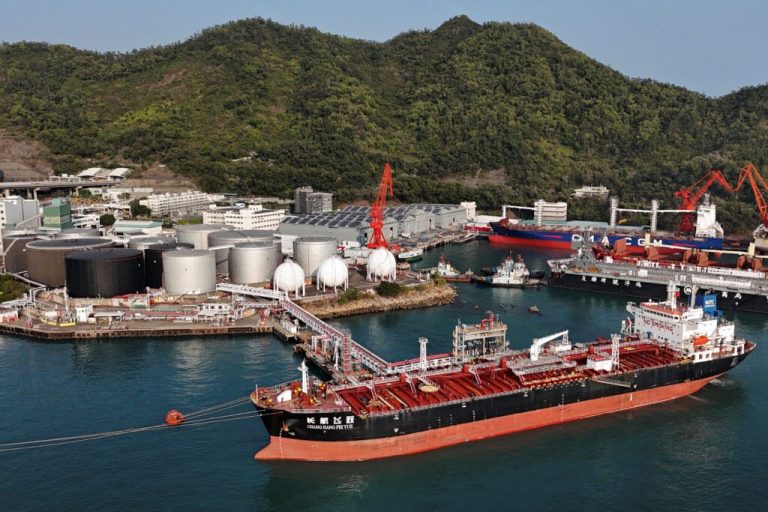
The numbers explain Beijing’s predicament. Before the war, China received 5.35 million barrels of oil per day via the Strait of Hormuz, but that figure has dropped to roughly 1.22 million, coming exclusively from Iran. Iran has sent at least 11.7 million barrels of crude through the strait since the war began, all of it headed to China. Reports emerged in early March that Iran would allow only Chinese vessels to pass through the strait, and a bulk carrier operated by a Shanghai company transited while signaling “CHINA OWNER.” According to Lloyd’s List, transit payments were being assessed by the IRGC in Chinese yuan.
This arrangement gives Beijing a trickle of oil that other importers cannot access — but it comes with a political price tag. Beijing is concerned that a wider war could lead to Iran targeting Gulf states where China’s commercial interests far outweigh its ties with Tehran. Chinese investments and construction contracts in Saudi Arabia alone totaled $11 billion in 2025, concentrated in energy, technology, and real estate — sectors now taking direct hits from Iranian retaliation. Early estimates suggest Gulf energy infrastructure repair costs could reach $25 billion.
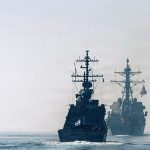
The selective opening of the strait also feeds Washington’s narrative that Beijing is profiting from the chaos. Trump called on China to send “warships” to help open the strait and wildly claimed that China gets 90% of its oil from the waterway — roughly double the actual figure. When Beijing inevitably refused, Trump postponed the planned Xi summit. Even long-term U.S. allies Australia and Japan made clear they would not join such an effort, but the diplomatic fallout still landed on Beijing.
Strategic Reserves, Structural Limits
China’s short-term energy position is stronger than headlines suggest. China is 85% energy self-sufficient, its supply has long been diversified internationally and electrified domestically, and Beijing has built a cushion against a short-term supply shock. Strategic and commercial reserves total around 1.3 billion to 1.4 billion barrels, covering about four months of imports. In the first two months of 2026, Chinese oil imports surged 16% as Beijing stockpiled in anticipation of conflict.
But these buffers have limits. Overland Russian pipelines are already running at full capacity, and Moscow lacks the tankers to significantly increase seaborne shipments. The war also threatens China’s broader commercial architecture in the Gulf. Iranian strikes have damaged infrastructure across the UAE, Saudi Arabia, Bahrain, and Qatar — countries where Beijing has invested billions and where its Belt and Road projects depend on stability.
The Real Prize: Taiwan, Not Tehran
The priority, of course, is Taiwan. One month before the strikes, during Xi’s phone call with Trump, the Chinese readout focused entirely on bilateral relations and Taiwan while omitting rising U.S.-Iranian tensions altogether. China’s silence reinforces the idea that, despite Iran’s membership in Chinese-led initiatives including the Belt and Road, the Shanghai Cooperation Organisation, and BRICS, it is not as important to Beijing as previously assumed — and that a deal securing China’s core interests may have been struck.
A Chatham House analysis argues that Beijing’s restraint should not be mistaken for indifference. China is playing a long game that it hopes will see it emerge having achieved its long-term objectives, at the expense of the United States. A protracted military conflict in Iran would divert U.S. military resources away from the Indo-Pacific, with major consequences for the future of Taiwan, and observing U.S. naval operations in real time in the Gulf could prove valuable if tensions in the Taiwan Strait flare up.
But there is a counterargument that cuts deeper. China’s lack of action undermines its advocacy for a multipolar world order, and Beijing’s limited response to both the 12-Day War and the current conflict undermines previous narratives that Chinese influence in the Middle East was rising. The 2023 Saudi-Iran rapprochement that Beijing brokered — its signature diplomatic achievement in the region — now feels like a relic of a different era.
Two days into the war, business continued as normal at the Chinese Foreign Ministry, as if the U.S. and Israel had not just attacked one of China’s comprehensive strategic partners. While Beijing sent a special envoy and helped prevent Iran’s neighbors from joining the fray, it made no attempt to directly confront the U.S. or send Iran military aid. China’s $200,000 in emergency humanitarian assistance to the Iranian Red Crescent — earmarked for families of girls killed in a school bombing — looked like a pittance against the backdrop of a war costing Iran billions.
The Dar visit to Beijing may signal a shift. According to Nasr, the Pakistani foreign minister would not be going to China without having floated the idea with both Washington and Beijing — meaning “Beijing is now the front line in the diplomatic effort.” Whether China accepts the role of guarantor for a potential U.S.-Iran deal would mark a genuine test of Beijing’s willingness to move from rhetoric to responsibility. For now, China remains what it has been throughout the conflict: a country with enormous interests, limited tools, and no strategy for the region it depends on most.
Original analysis inspired by Robert Mogielnicki from Arabian Gulf States Institute. Additional research and verification conducted through multiple sources.