Twenty-five years ago, Saddam Hussein tried to price Iraqi oil in euros. The decision fed into a confrontation with Washington that ended in invasion, occupation, and execution. The lesson was not lost on other oil-exporting governments: challenging the dollar’s role in energy markets invites consequences that go well beyond economics. For two decades, that logic held. It is now being tested in real time — not by an act of diplomatic defiance, but by a war that has paralyzed the world’s most consequential maritime chokepoint.
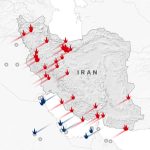
The Strait of Hormuz has not been formally closed. It doesn’t need to be. Iran has slowed flows to a trickle through a combination of interdiction, threat, and the insurance market’s rational response to both. In 2025, roughly 20 million barrels per day of crude and refined products transited the waterway. Today, that figure has collapsed. Brent crude is trading above $103.67 a barrel — up from around $72 before the war — and the disruption extends far beyond oil. Qatar’s Ras Laffan complex, struck by Iranian forces last week, supplies roughly a third of global helium, a critical input for semiconductor manufacturing. Fertilizer exports from the Gulf have contracted by approximately 33%, threatening agricultural supply chains from South Asia to sub-Saharan Africa.
Who Is Actually Being Hurt
The administration launched this war under the assumption that Iran would be subdued quickly and the economic pain would fall on Tehran. The distribution of damage has not matched that forecast. Japan imports around 90% of its crude from West Asia; South Korea sources roughly 70%, with over 95% of it transiting Hormuz. India, Taiwan, and Thailand face comparable exposure. These are American allies — some of the closest Washington has in the Indo-Pacific — and they are absorbing costs the White House did not adequately model.
Japan convened an emergency monetary policy meeting as markets deteriorated, with officials debating the sale of U.S. Treasury holdings to stabilize domestic conditions. South Korea’s KOSPI index dropped more than 12% in a single session on March 4. Goldman Sachs has warned that a prolonged Hormuz closure could push Qatar and Kuwait into GDP contractions of up to 14% this year — their worst economic performance since the 1991 Gulf War. Saudi Arabia and the UAE may absorb slightly less damage due to alternative export routes through the SUMED pipeline and Arabian Sea ports, but both still face projected economic contractions of 3% to 5%.
The financial market reaction has defied normal crisis logic. Geopolitical shocks typically send investors into gold and other safe havens. Instead, the S&P 500 fell nearly 4% in the war’s first two weeks, gold dropped 5.5%, and silver lost more than 13%. The explanation lies in liquidity mechanics: rising energy costs are forcing portfolio managers to sell precious metals to cover oil-related obligations, while uncertainty about Federal Reserve policy in an inflationary environment has kept safe-haven demand suppressed.
A Crack in the Petrodollar Architecture
The longer-term stakes are structural. The petrodollar system — in which Gulf exporters price oil in dollars and recycle earnings into U.S. Treasuries and Western financial markets — has been the hidden engine of American financial dominance for fifty years. It is not a formal agreement. It is a set of habits, incentives, and dependencies that function as long as everyone has reason to maintain them.
Those habits have been fraying. Iran has sold the overwhelming majority of its oil in yuan since 2021. Saudi Aramco and China’s Sinopec moved a significant share of bilateral trade into yuan settlement in 2023, with transactions increasingly conducted through the digital yuan payment system. Qatar signed a long-term LNG deal with PetroChina that bypassed dollar settlement entirely. The dollar’s share of global reserves has already declined from 71% to 59% over the past two decades — a slow erosion that a sustained Hormuz crisis could accelerate sharply.
The zero-tanker-traffic figure recorded on March 12 — no commercial vessels transiting the strait for a full 24-hour period — may register in retrospect as more than a wartime statistic. If Washington fails to reopen the waterway on terms that restore confidence in the existing order, the crisis hands every country pursuing dollar alternatives a concrete argument: the U.S. cannot guarantee the energy trade routes its financial system depends on.
Original analysis inspired by Suleyman Karan from The Cradle. Additional research and verification conducted through multiple sources.