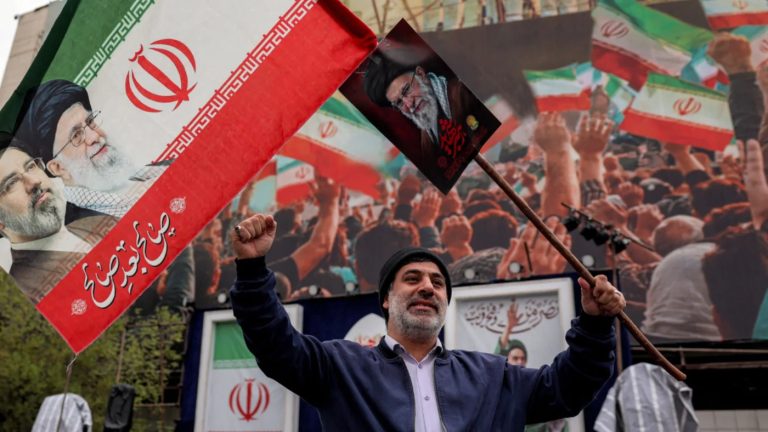
Four weeks ago, Iran was absorbing the most intensive opening air campaign in modern history. Today, it is telling Washington what a peace deal must contain and warning that “the end of the war will occur when Iran decides it should end.” That shift — from survival to leverage — is the central strategic development of the past week, and it is reshaping the prospects for any negotiated exit from a conflict that neither side has a clean path out of.
Iran’s confidence, analysts say, is not irrational. Despite losing its supreme leader, most of its senior military command, and roughly 90% of its declared ballistic missile capacity, Tehran has achieved something no one in Washington or Jerusalem fully anticipated: it turned the Strait of Hormuz into a sustained chokehold. Hundreds of vessels remain paralyzed in the waterway. Oil prices have risen more than 50% since February 28. Last week alone, Iranian forces struck Qatar’s main gas hub — wiping out 17% of its export capacity — within hours of an Israeli attack on Iran’s South Pars field. The message was deliberate and precise: every action will be matched.
That “eye for an eye” doctrine has done something strategically significant. It has re-established deterrence — the thing Iran lost when the war began — without requiring a conventional military victory. Iran cannot win in the air or at sea against the United States. It has found a different kind of winning.
Two Proposals, No Common Ground
The Trump administration’s 15-point proposal, delivered through Pakistani intermediaries, offered full sanctions relief in exchange for Iran dismantling its nuclear program, capping its missile arsenal, and cutting ties with Hezbollah, the Houthis, and allied Shia militias across Iraq and Syria. It was, in essence, a demand that Iran surrender every strategic asset it possesses in exchange for the lifting of restrictions it has lived under for decades.
Iran’s counter-conditions go in the opposite direction. Tehran wants reparations for wartime destruction, binding guarantees against future U.S. and Israeli attacks, inclusion of its allied groups in any settlement — and formal recognition of its right to regulate Strait of Hormuz passage.
“There is no diplomatic solution that leaves Hormuz under Iranian control,” noted one UAE political analyst. “There is one way to take it back — the military way.”
Washington has shifted somewhat from its original demands. The U.S. has reportedly proposed allowing Iran to retain up to 1,000 medium-range missiles — a significant concession from earlier positions calling for full dismantlement. The Trump administration also temporarily waived sanctions on 140 million barrels of Iranian oil at sea, a quiet signal that economic pressure is running in both directions. None of it has moved Iran toward the table.
The Man Now Running Iran’s Security
The most telling signal of Iran’s intentions came Tuesday, with the appointment of Mohammad Bagher Zolghadr as secretary of the Supreme National Security Council. Zolghadr is a career IRGC commander — not a diplomat, not a technocrat, and not someone associated with the cautious, calculating style of the officials now largely dead.
His predecessor, Ali Larijani, had spent years cultivating backchannel relationships across the region and had participated in multiple rounds of indirect contact with Western governments. Zolghadr has no comparable profile. Analysts interpreting the appointment suggest a system “preparing to manage prolonged confrontation” rather than one positioning for a deal. Combined with Foreign Minister Araghchi’s statement that “our policy is the continuation of resistance,” the institutional direction is consistent: Iran is organizing itself for a long fight, not a quick settlement.
The trust deficit compounds everything. The U.S. attacked Iran while negotiations were active in June 2025 and again on February 28, days after talks in Geneva. Any Iranian concession — especially on nuclear infrastructure — now requires guarantees that Washington structurally cannot provide, because no president can bind his successor and no treaty can survive a future executive order.
Original analysis inspired by Virginia Pietromarchi from Al Jazeera. Additional research and verification conducted through multiple sources.