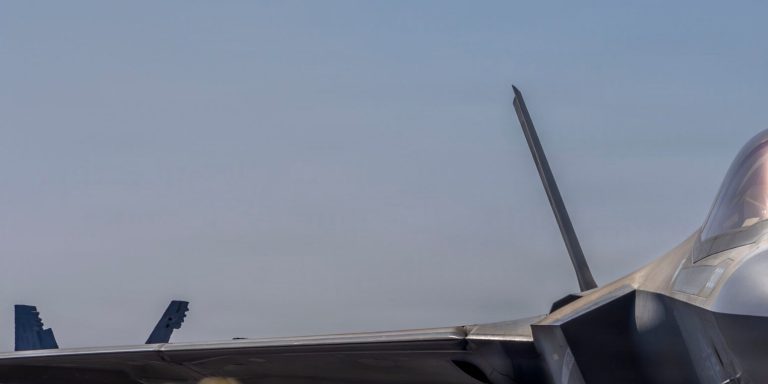
Two aircraft carriers, over 150 fighter jets, and an estimated 15,000 additional troops — the largest American military concentration in the Middle East since the 2003 invasion of Iraq — are now positioned within striking distance of Iran. The Islamic Republic faces both the threat of a U.S. military strike and new protests at home. Against that backdrop, US envoy Steve Witkoff and Iranian Foreign Minister Abbas Araghchi are due to sit down in Geneva on Thursday for a third round of indirect nuclear talks. The question hanging over the negotiations is not just whether a deal can be reached, but what kind of deal Washington should pursue — and a sharp new analysis from a leading restraint-oriented think tank argues that less, in this case, means more.
The case is straightforward: Iran will accept serious nuclear restrictions. It will not simultaneously surrender its missiles, cut ties with regional armed groups, and open the door to regime change. Insisting on all four amounts to insisting on none — and risks dragging the United States into a war it does not need to fight.
The Maximalist Trap
Four potential goals have surfaced in Washington’s policy debate: preventing Iran from building a nuclear weapon, capping its ballistic missile program, severing its ties with groups like Hamas and Hezbollah, and encouraging regime change. Rosemary Kelanic, director of the Middle East Program at Defense Priorities, told the Washington Examiner that Trump could face serious political consequences if he opts the U.S. into a hot war with Iran. “Even if the Iranians won’t agree to a stronger nuclear deal, it is still better that Trump offramp the U.S. from the current standoff than start a war with Iran merely to save face or ‘preserve credibility,'” she said.
The tension inside the administration is real. Trump himself has said a nuclear-only agreement could be “acceptable.” But hawkish voices — and Israeli Prime Minister Benjamin Netanyahu — insist any deal must also cover missiles and militant proxies. Tehran has long insisted that any negotiations should only focus on its nuclear program, and has refused to discuss wider U.S. and Israeli demands that it scale back its missile program and sever ties to armed groups. Iran’s foreign minister told CBS that the missile program represents national “dignity and pride” and is non-negotiable. Loading all four demands onto a single negotiation guarantees deadlock — and deadlock, with this military buildup, could easily become war.
The Defense Priorities paper argues that Iran views its nuclear program, ballistic missiles, and regional proxy network as three pillars of an asymmetric deterrence strategy against far stronger adversaries. No state would surrender all three at once with no compensating security guarantee. Kelanic framed it bluntly: “One country is much stronger, but the weaker country cares more. And historically, the country that cares more often wins by outlasting the stronger one.” She added: “Iran is trying to signal resolve as strongly as it can, but it likely doubts U.S. resolve — because from Tehran’s perspective, the stakes for Iran are existential, while the stakes for the United States are not.”
Why Nuclear Comes First
The opportunity on the nuclear file is real and time-limited. Iran’s enrichment infrastructure was severely damaged during the 12-Day War last June, when US B-2 bombers struck Natanz, Fordow, and Isfahan under Operation Midnight Hammer. Iran says it hasn’t been enriching uranium since U.S. and Israeli strikes on Iranian nuclear sites in June. At that time, Trump said the strikes had “obliterated” Iran’s nuclear sites, but the exact damage is unknown because Tehran has barred international inspectors. That degradation has, paradoxically, created diplomatic space. Ali Vaez of the Crisis Group told Al Jazeera there is space for agreement on the nuclear front, “simply because Iran’s nuclear programme has been degraded on the ground.”
A framework proposed by mediators from Qatar, Turkey, and Egypt goes well beyond the 2015 JCPOA. It includes a three-year halt on all uranium enrichment, after which enrichment would be limited to below 1.5 percent — with no sunset clauses. Iran’s stockpile of highly enriched uranium would leave the country entirely. In exchange, Washington would provide phased sanctions relief tied to verified compliance. Araghchi told CBS there are “elements that could be much better than the previous deal.”
A successful agreement would restore IAEA verification infrastructure — the only reliable mechanism for ensuring Iran never builds a bomb. Airstrikes can set back a program; they cannot eliminate the knowledge, the personnel, or the national will to rebuild. Satellite imagery already shows Iran hardening tunnel entrances at Natanz with fresh concrete and completing a concealed bunker at the Parchin military complex. ISIS president David Albright warned the facility “may soon become a fully unrecognizable bunker, providing significant protection from aerial strikes.” Only inspectors on the ground — not bombs from the sky — can verify dismantlement.
The Missile and Proxy Mirage
The paper’s most provocative argument concerns missiles. Iran’s ballistic arsenal tops out at 2,500 kilometers — enough to hit US bases in the Gulf, but nowhere close to reaching the American homeland. The program exists because Iran has no air force worth the name (its fleet of pre-revolution F-4s and F-14s was grounded during the 12-Day War to avoid destruction), no meaningful air defenses, and no other way to deter adversaries with overwhelming conventional superiority. Demanding that Tehran dismantle its sole deterrent while offering no security guarantee in return is not a serious negotiating position.
The proxy question is even murkier. Hamas, Hezbollah, and the Houthis emerged from local conditions — Israeli occupation of Lebanon, Palestinian resistance, Yemeni civil war — not from Iranian design. Iran cultivated these relationships, but alignment is not command-and-control. Even if Tehran cut all funding and withdrew all IRGC advisors tomorrow, these organizations would continue to exist. And unlike centrifuges, which can be counted and enrichment levels measured, clandestine relationships between a state and non-state actors cannot be meaningfully verified by any inspection regime.
As for regime change, Trump himself said it “would be the best thing that could happen” in Iran — a statement that directly undermines the credibility of US assurances that it won’t attack Iran after it hands over nuclear materials. The challenge the Trump administration faces is not with the severity of its threats but with the credibility of the assurances it can provide. For coercive diplomacy to work, the US must issue believable threats, but also meaningful assurances “that Iran won’t suffer the threatened consequences — or other repercussions — if it acquiesces to U.S. demands.”
Walk Away, Don’t Strike
The paper’s final argument is its most important: if negotiations fail, the United States should walk away rather than escalate. Kelanic put it plainly: “There’s no imminent threat from Iran that justifies a major war that could cost the lives of U.S. soldiers. American voters are tired of unnecessary wars in the Middle East and could punish Trump in the midterms for starting a new one.”
Vaez of the International Crisis Group warned that Iran is unlikely to limit its response as it did after the June strikes. Iran had previously signaled its retaliation in advance, “allowing American and Qatari air defense to be ready and doing little damage.” But now, he said, Iranian leaders have concluded “the only way that they can stop this cycle is to draw blood.” The 2,500 US troops in Iraq and 1,000 in Syria sit in small outposts without the missile defense systems that protect larger Gulf bases — a vulnerability that any escalation would immediately expose.
Thursday’s session in Geneva may be the last real chance for diplomacy before the military logic takes over. The smart bet, this analysis argues, is to take the nuclear win that’s available — stronger than the JCPOA, verifiable by international inspectors, and achievable precisely because Iran is weak — rather than chase a grand bargain that no Iranian government could accept and no American bomb could enforce.
Original analysis inspired by Rosemary Kelanic from Defense Priorities. Additional research and verification conducted through multiple sources.