Donald Trump has spent the past eighteen days oscillating between two fantasies. In one, Iran collapses under the weight of American firepower and offers “unconditional surrender.” In the other, he declares victory, walks away, and moves on to the next news cycle. A sharp new analysis in The Atlantic argues that neither scenario is realistic — because neither reflects any understanding of the adversary Washington is fighting.
The Islamic Republic of Iran was not designed to govern in peacetime. It was forged in revolution, tempered by an eight-year war with Iraq, and hardened through four decades of sanctions, covert operations, and internal repression. Its institutions — particularly the Islamic Revolutionary Guard Corps — are built to absorb exactly the kind of shock that the US and Israel have delivered. Destroying Iran’s air defenses and missile launchers is an operational achievement. Translating that into political collapse is something no air campaign in modern history has accomplished against a regime this deeply embedded in its own society.
Born in Crisis, Strengthened by Threat
The pattern is consistent across Iran’s modern history: external pressure consolidates the regime rather than fragmenting it. When Saddam Hussein invaded in 1980, the revolution was barely a year old and its factions were still competing for power. The eight-year war that followed did more to entrench the Islamic Republic than any internal ideology could have. It transformed the IRGC from a revolutionary militia into the dominant institution in Iranian military, economic, and political life.
Today, the IRGC’s influence extends far beyond the battlefield. Its commanders occupy key positions across the state apparatus. Its economic empire spans energy, infrastructure, construction, and telecommunications — representing perhaps 20% to 40% of Iran’s GDP, though exact figures are impossible to verify. These institutional entanglements mean that the Islamic Republic is not a government sitting atop a society. It is woven into the society itself. Removing it would require not a decapitation strike but a comprehensive dismantling of the country’s entire power structure — something that airpower alone has never achieved anywhere.
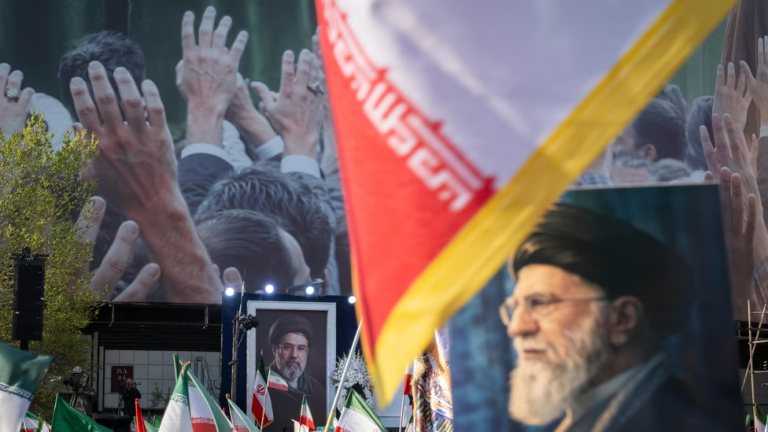
The succession of Mojtaba Khamenei reinforces this point. The younger Khamenei has long been viewed as a key intermediary between the clerical establishment and the IRGC. His elevation ten days after his father’s assassination suggests what analysts at the Crisis Group warned before the war: the most likely outcomes for leadership change in Iran are also the least auspicious for US interests. A new supreme leader drawn from the Khamenei orbit would extend the system’s most destabilizing policies. That is precisely what has happened.
The Insurgency Logic
The Atlantic analysis, by Pegah Banihashemi and Paul Poast, frames Iran’s position through the lens of asymmetric conflict: The Islamic Republic knows that it is fighting for its life, and that all it has to do, as the saying goes about insurgencies, is not lose. This is the foundational insight that Washington appears to have missed.
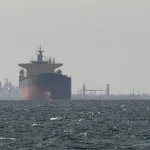
Iran does not need to match American firepower. It needs to survive it. Every day the regime remains standing is a day Trump’s victory narrative erodes. Every tanker that burns in the Gulf is a reminder that military dominance does not equal political control. Every Shahed drone that forces a million-dollar interceptor into the sky shifts the cost calculus further in Tehran’s favor.
The regime’s toolkit for survival extends well beyond conventional weapons. It can disrupt maritime shipping through the Strait of Hormuz with mines, fast-attack boats, and explosive drones — as it has done continuously for eighteen days. It can activate regional partners, as it has in Lebanon, where Hezbollah has launched over 280 attacks since joining the war. It can conduct cyber operations — Israeli authorities have already identified dozens of Iranian breaches into security cameras since the war began. And it can wage economic warfare by threatening to target US-linked banks and Gulf energy infrastructure.
Each of these capabilities is low-cost, deniable, and difficult to neutralize from the air. Together, they constitute what Iranian military doctrine calls mosaic defense — a distributed, decentralized system designed to keep fighting even when central command is degraded, communications are severed, and infrastructure is destroyed. As Iran’s foreign minister said in the war’s first week: We’ve had two decades to study defeats of the US military to our immediate east and west. We’ve incorporated lessons accordingly.
The War That Won’t End When Trump Says It Does
The analysis identifies the deepest structural problem facing the administration: wars do not end when one side declares them over. Iran’s leadership shows no sign of viewing the current conflict as a decisive defeat. As long as the regime believes it still has the capacity to resist, the confrontation may not cease.
Even if Trump declares victory tomorrow, the consequences would persist. Iran would retain its highly enriched uranium — buried under rubble but not eliminated. It would retain its regional network — weakened but not destroyed. And it would retain a motive for revenge that the assassination of its supreme leader has only deepened. The younger Khamenei’s first public statement vowed to avenge the blood of our martyrs — language that signals a long-term commitment to retaliation, not accommodation.
Banihashemi and Poast predict that the most likely outcome is not victory or defeat but transformation. Overt fighting could give way to a kind of subterranean conflict, defined by deniable actions, covert retaliation, and indirect pressure. Instead of visible military exchanges, the countries would engage in a shadow struggle of mutual sabotage — attacks on shipping routes, pressure through regional militias, cyber operations, and covert strikes designed to impose costs without triggering full-scale war.
This is the scenario that should alarm Washington most — not because it represents Iranian strength, but because it represents the worst of both worlds: a regime too damaged to negotiate but too resilient to collapse, an adversary too weak to win but too determined to lose, and a conflict that has no front line, no timeline, and no endpoint that any president can control.
The Historical Precedent Nobody Wants to Mention
The closest parallel may not be Iraq 2003 but rather the Iran-Iraq War of 1980-1988 — a conflict that lasted eight years, killed over a million people, and ended in a stalemate that neither side could acknowledge as such. Khomeini accepted the ceasefire only by comparing it to drinking a cup of poison. The Islamic Republic survived. The institutions it built during that war — the IRGC, the Basij, the provincial command structure, the culture of martyrdom — are the same institutions now absorbing American bombs and promising to fight for months.
Trump’s dilemma is structural, not tactical. He can destroy every missile launcher, sink every fast-attack boat, and flatten every military base in Iran — and the regime will still be there, battered but functional, sustained by institutions that were designed for exactly this scenario. The choice he faces is not between victory and defeat. It is between an indefinite air campaign with diminishing returns and a political settlement with a regime that has no reason to offer one — because it believes, with four decades of evidence behind it, that it can outlast any American president who tries.
Original analysis inspired by Pegah Banihashemi and Paul Poast from The Atlantic. Additional research and verification conducted through multiple sources.