Twenty-two days into a war he declared largely won, Donald Trump on Saturday night issued the conflict’s most explosive ultimatum yet. The president threatened to attack Iran’s power plants if freedom of navigation is not fully restored at the Strait of Hormuz within 48 hours — a deadline that expires Monday evening. The threat landed hours after Iranian missiles struck southern Israeli cities and marked a sharp reversal from the tone Trump struck just 24 hours earlier.
The move signals a dramatic reversal from just a day earlier, when Trump floated ending the war without reopening the strait, suggesting the Hormuz crisis has become the issue he can’t walk away from. On Friday, he even told reporters the U.S. doesn’t need the strait — urging China, Japan, and NATO allies to handle it themselves. By Saturday night, he was threatening to obliterate Iranian infrastructure over it. The whiplash is hard to ignore.
What’s Actually at Stake
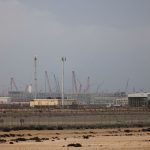
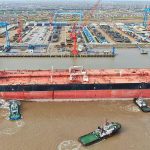
Iran has effectively blockaded the Strait of Hormuz since the U.S. and Israel attacked on February 28, and the effective closure of the narrow chokepoint — through which about a fifth of global oil and LNG supplies normally transit — has caused the worst oil crisis since the 1970s. The consequences are already reaching American households: the U.S. national average for a gallon of gas hit $3.94 Sunday morning, up more than a dollar from a month earlier. Goldman Sachs said Friday that elevated prices could persist through 2027.
Iran’s position is deliberately ambiguous. Tehran says the strait is open to all except the U.S. and its allies, with Foreign Minister Abbas Araghchi saying he had been “approached by a number of countries” seeking safe passage for their vessels. Araghchi went further on Sunday, arguing the blockade is effectively self-inflicted: “Ships hesitate because insurers fear the war of choice you initiated — not Iran. No insurer — and no Iranian — will be swayed by more threats.”
Threat Meets Counter-Threat
Tehran’s response to Trump’s ultimatum was immediate and symmetrical. Iran’s Parliament Speaker Mohammad Bagher Ghalibaf warned that critical infrastructure and energy facilities across the region could be “irreversibly destroyed” should Iranian power plants be targeted, writing that “vital infrastructure as well as energy and oil infrastructure across the entire region will be considered legitimate targets.” The IRGC went a step further: it warned that the strait would be “completely closed” in the event of an attack on the country’s energy grid, and would not be reopened until Iran’s power plants are rebuilt.
The threat to power plants also raises serious legal questions. Under international law, power plants that benefit civilians can be targeted only if the military advantage outweighs the suffering caused, legal scholars say. Their destruction could lead to widespread blackouts impacting hospitals, water treatment facilities, and food supply chains. National Security Adviser Mike Waltz backed the threat on Sunday television, but when pressed on whether targeting energy infrastructure could constitute a war crime, he pivoted to citing Iranian actions rather than providing a direct legal justification.
A Gap Between the White House and the Pentagon
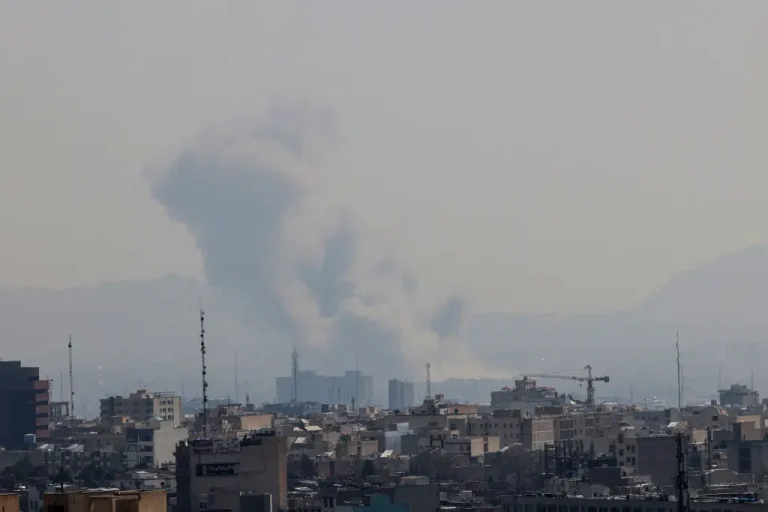
One of the more telling tensions in this standoff is the disconnect between what Trump is demanding and what the U.S. military says it has already achieved. The head of U.S. Central Command, Admiral Brad Cooper, asserted that Iran’s ability to attack vessels on the strait had been “degraded” after 5,000-pound bombs were dropped on an underground coastal facility used to store anti-ship cruise missiles and mobile missile launchers. Al Jazeera’s correspondent in Washington noted there seemed to be a “gap between what the White House appears to want and what the U.S. military says they have already accomplished.”
Meanwhile, the UAE joined 21 other countries — including the U.K., Germany, France, and Japan — in expressing “readiness to contribute to appropriate efforts to ensure safe passage.” NATO Secretary General Mark Rutte said he is “absolutely convinced” the alliance will be able to reopen the strait, though Trump had just days earlier criticized NATO for lacking the courage to act. Britain, while not participating in U.S.-Israeli strikes, has allowed U.S. bombers to use its bases, with the U.K. government confirming on Friday that Diego Garcia could be used to attack sites threatening ships in the strait.
As the 48-hour clock runs down, the world is watching a standoff in which both sides have now publicly committed to escalation if the other moves first — a posture that leaves almost no room for the kind of quiet off-ramp diplomacy this conflict urgently needs. IAEA Director General Rafael Grossi has expressed hope that nuclear talks between the U.S. and Iran could be reestablished in the event of a ceasefire — but for now, the trajectory points in the opposite direction.
Original analysis inspired by Anna Young from New York Post. Additional research and verification conducted through multiple sources.