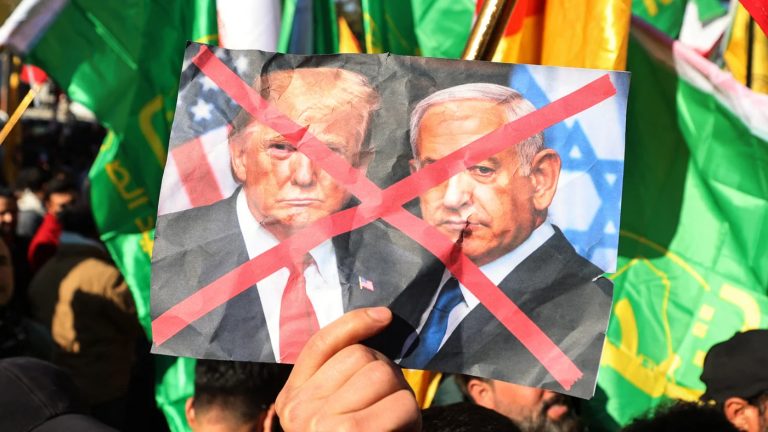
The numbers are not ambiguous. Poll after poll, conducted by organizations across the political spectrum, tells the same story: the war on Iran is the most unpopular conflict the United States has launched in a generation. A Pew Research Center survey found that 59% of Americans believe the initial decision to use military force was wrong, while only 38% consider it the right call. Even a Fox News survey found 58% of American voters oppose the war. That level of opposition — crossing demographic lines, political affiliations, and geographic boundaries — has turned the conflict into a domestic political crisis as much as a foreign policy one.
The disconnect between Washington’s decisions and American public opinion has been building for months. One University of Maryland poll found Americans roughly divided, with only 31% saying the war would most advance American interests, while 35% said it would primarily advance the interests of other parties — with 16% specifically identifying Israel as the main beneficiary. That perception — that the United States is fighting someone else’s war — has become one of the defining political fault lines of 2026.
Eight Million in the Streets
On March 28, the accumulated frustration took physical form. Organizers estimate that some eight million people participated across 3,300 sites nationwide, protesting against Trump’s crackdowns on immigration, his allegedly antidemocratic policies, and the Iran war. It was the largest single-day protest in American history. The No Kings movement — which had already drawn five million people in June 2025 and seven million in October — has grown with each successive demonstration, and the Iran war added new fuel.
What distinguishes these protests from earlier anti-war movements is their geographic spread. Organizers said two-thirds of the RSVPs for protest events came from outside major urban centers, including in conservative-leaning states like Idaho, Wyoming, Montana, Utah, South Dakota and Louisiana. After the 2026 Iran war began, organizers also described the protests as including opposition to “senseless war.” That combination — anti-war sentiment overlapping with broader anti-authoritarian activism — has created a coalition that extends well beyond the Democratic base.
The partisan divide is real but not as clean as the White House would like. 34% of Americans strongly or somewhat support the war, and 53% oppose it, with almost all Democrats opposed (84%), a majority of independents against it (57%), but most Republicans in favor (67%). Yet even within the Republican coalition, cracks are visible. Non-MAGA Republicans back the military action at a significantly lower rate than MAGA ones, and a handful of key GOP lawmakers have grown increasingly uneasy about the administration’s apparent lack of transparency about how the war is being handled or funded. The war has become a stress test for the Republican Party’s internal contradictions — between its interventionist hawks and its America First wing.
The Israel Question
Beneath the polling numbers lies a more sensitive political dynamic: the question of whose interests this war actually serves. A poll released by IMEU Policy Project and Demand Progress, conducted by Data For Progress, found a majority of voters disapprove of Trump’s strikes on Iran and believe the war benefits Israel more than America — with voters found to be less likely to support Republicans in the November midterms as a result.
That finding has electoral consequences that go beyond the next news cycle. The share of voters saying the US is “too supportive” of Israel reached its highest level since Quinnipiac first asked the question in 2017, surpassing even the previous high recorded in June 2025. More strikingly, Republican voters are about evenly divided in a primary between a candidate who would reduce support for Israel and one who prioritizes it — with 61% of Republicans under 45 preferring the candidate who would reduce support. The generational divide within the GOP on Israel is now statistically significant, and the Iran war has accelerated it.
On the Democratic side, the political calculus is sharper still. A Democratic congressional candidate who says they would reduce support for Israel to prioritize domestic issues gains a 15-point edge over one who says they will prioritize supporting Israel. That gap has reshaped how candidates in competitive districts are positioning themselves, with many making a deliberate pivot away from unconditional support for Israeli military operations.
The Midterm Gamble
With the mounting costs eating into Americans’ pockets and threatening Trump’s campaign message of affordability, even some Republicans have grown concerned that the war may hurt the party in the November midterms, where they are defending a razor-thin majority in Congress. The economic damage from the Strait of Hormuz closure — spiking gas prices, rising food costs, inflationary pressure — has given the Iran war a domestic dimension that pure foreign policy opposition rarely achieves. 62% of Americans say gas prices are going up a lot where they live, and those who report local price increases are significantly less likely to support the war — a gap that persists across Democrats, independents, and Republicans alike.
What makes this moment genuinely unusual is that opposition to the war is not confined to one party or one demographic. Majorities disapprove across most major demographic subgroups, including both men and women, White, Black and Latino adults, and all age groups. That kind of broad-based opposition is rare in American political history. Most wars initially generate a rally-around-the-flag effect. This one never did. Nearly six in ten Americans disapproved of the decision to take military action in Iran from the very first days of the conflict.
The ceasefire announced on April 7 paused the military campaign. It did not resolve the domestic political fallout. With Islamabad talks underway and the two-week window closing fast, the question now is whether a diplomatic agreement can be reached before the midterms turn this into the defining issue of the November cycle. 54% of Americans disapprove of how Trump is handling Iran — a figure that has only risen since the war began. The administration launched a war it expected to win in weeks. It may yet pay for it at the ballot box instead.
Original analysis inspired by Hamid Dabashi from Middle East Eye. Additional research and verification conducted through multiple sources.