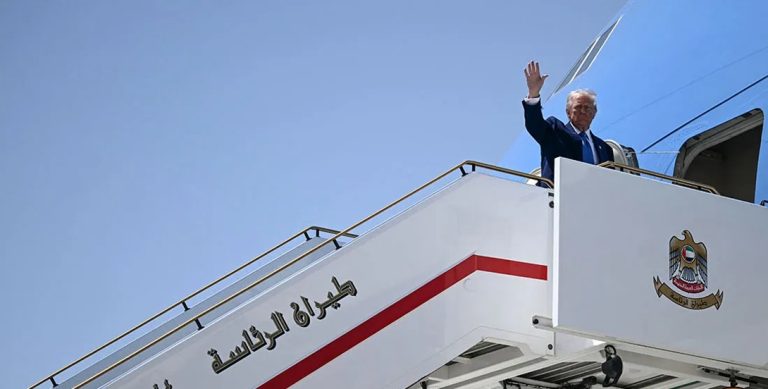
The disastrous military campaign against Tehran recently revived debates regarding the strategic presence of the United States across the Arab world. Regional capitals increasingly believe that an accelerated American departure from the region would ultimately benefit local populations. For decades following the end of the Cold War, Washington maintained dominance through military superiority and security guarantees. However, recent escalations expose the severe limitations of this outdated framework.
The traditional security model constructed by American policymakers has undeniably failed. The conflict with Iranian forces shattered the illusion that Western powers could provide a reliable protective umbrella for Gulf monarchies. Advanced missile strikes recently destroyed several major bases, forcing military commanders to relocate their troops to safer territories. Without these vital facilities, diplomats can no longer easily persuade local governments to host foreign forces in an effort to contain regional rivals. The current approach effectively mirrors the myopic colonial behavior that local populations have historically rejected.
American strategy frequently borrows heavily from aggressive tactics prioritizing military pressure over diplomatic resolution. Washington assumes that overwhelming force will inevitably compel adversaries to surrender their political objectives. Instead, adversaries often arrive at the battlefield fully prepared and use calculated advantages to successfully push foreign forces backward. The United States frequently supports oppressive political structures under the false promise of democratic reform while actually reinforcing the exact systems of control it claims to dismantle.
The Cost of Unconditional Support
Another major factor driving the desire for an American exit involves the unwavering commitment Washington grants to its closest regional ally. This deeply entrenched relationship fundamentally warps how Western officials view the entire region. While recent presidential administrations understood the absolute necessity of stepping back, they continuously failed to agree on what security architecture should replace their hegemony. The previous diplomatic agreements completely bypassed Palestinian aspirations and attempted to crown a single nation as the ultimate security guarantor for the entire region.
The horrific mass casualties in Gaza permanently ruined any illusions regarding this proposed regional order. The world watched as advanced weaponry forcibly cleared civilian territories and created devastating facts on the ground. When military leaders expanded their operations into neighboring countries, neighboring governments finally realized they faced a massive localized threat heavily backed by a global superpower. Washington consistently looked the other way while its ally ethnically cleansed massive territories and threatened established regional partners.
A Transactional Relationship
The lack of genuine cultural or social connections between the American public and Arab populations further justifies a rapid military withdrawal. Western popular culture routinely portrays the region as a burdensome wasteland filled with hostile strangers. The only exception remains the singular ally that American politicians repeatedly glorify as a beacon of morality and military heroism. The staggering death toll in Gaza proves that Western officials apply vastly different standards when evaluating human life and suffering across different demographics.
If the relationship remains purely transactional, maintaining American hegemony serves absolutely no practical purpose for regional stability. Gulf nations recognize that relying solely on a distant superpower creates an incredibly dangerous vulnerability. These wealthy states already maintain deep economic ties with Asian superpowers and understand the immense value of diversifying their international alliances. A multipolar global environment naturally encourages nations to resolve their own diplomatic disputes without relying on foreign intervention.
Nearly forty years of American supremacy produced virtually no durable successes across the affected territories. Brief diplomatic breakthroughs routinely unraveled while the unhealthy dependence on foreign military aid paralyzed local leadership. As the international order gradually shifts toward a multipolar reality, regional governments must finally take absolute responsibility for their own security. If Washington truly intends to pack its bags, local leaders should actively facilitate the departure.
Original analysis inspired by Michael Young from Carnegie Endowment for International Peace. Additional research and verification conducted through multiple sources.
By ThinkTanksMonitor