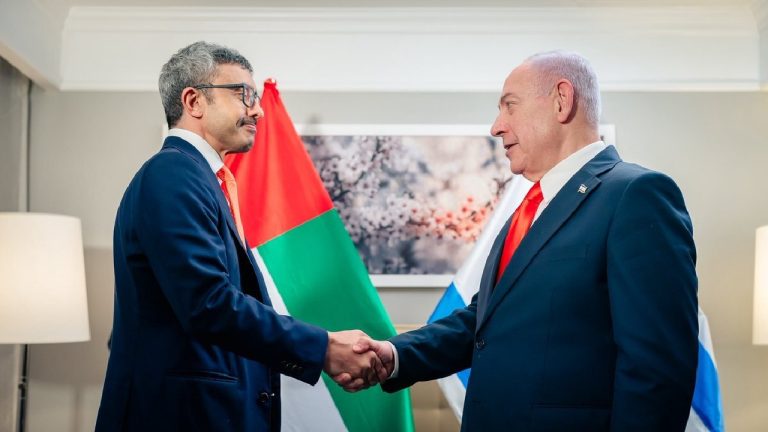
Long-standing tensions between Saudi Arabia and the United Arab Emirates over Yemen have intensified dramatically as emerging cooperation between Abu Dhabi and Tel Aviv transforms regional power dynamics. The partnership forged through the 2020 Abraham Accords between Israel and the UAE, overseen by the Trump administration, reflects shared interests in countering Iran, restricting Islamist political movements, and maintaining American regional protection.
Following Sheikh Zayed bin Sultan Al Nahyan’s death in 2004, the UAE abandoned his consensus-oriented pan-Arab approach. His son Mohammed bin Zayed charted a dramatically different course, initially serving as influential figure under his father’s successor before formally assuming presidential powers in 2022. Former US Centcom commander James Mattis famously characterized the UAE as “Little Sparta” over a decade ago, recognizing its outsized military ambitions despite limited native population and geographic constraints.
UAE Military Strategy and Demographic Context
Emirati militarism operates through proxy forces financed by substantial petroleum revenues, largely insulated from domestic political pressure. The UAE’s demographic composition—where Emirati nationals constitute merely 10 percent of the nation’s 11 million inhabitants—renders internal opposition effectively negligible. This population structure enables leadership to pursue regional military interventions without meaningful domestic accountability.
The Arab Spring uprisings prompted concern among ruling circles even within the UAE’s restricted citizenry. Voices emerged demanding governance participation, particularly from intellectuals associated with the Muslim Brotherhood who had maintained administrative presence since British decolonization. Authorities identified these Brotherhood-affiliated figures as responsible for encouraging aspirations beyond accepted boundaries.
Regional Campaign Against Political Islam
The UAE subsequently partnered with Saudi Arabia to combat Islamist electoral movements throughout the region, countering Turkish and Qatari support for such groups from Egypt to Libya. Turkish government officials allege UAE involvement in the 2016 failed coup attempt, reflecting the depth of this conflict. For Abu Dhabi, parallel to Israeli objectives, the Gaza conflict represented opportunity to eliminate Hamas and Muslim Brotherhood influence. UAE presidential adviser Anwar Gargash declared in October that “maximalist views on the Palestinian issue are no longer valid,” though Hamas and key Palestinian factions accept two-state solutions, leaving unclear what additional concessions Abu Dhabi seeks.
Yemen Military Intervention and Proxy Forces
Saudi Arabia invited UAE participation in its 2015 military campaign to remove the Houthi movement from power in Sanaa, following the group’s expulsion of the Gulf Cooperation Council-backed government in 2014. Concerned by potential Iran-backed, Hezbollah-style antagonism along its border, Riyadh continued supporting Yemen’s Islamist al-Islah party. Egypt, Pakistan and other nations declined providing troops for what they anticipated would become protracted quagmire, leaving Riyadh dependent on Abu Dhabi despite naive assumptions about Emirati intentions.
UAE interests rapidly manifested as establishing southern Yemen as its sphere of influence through proxy arrangements. The Giants Brigades emerged in 2015, followed by the Southern Transitional Council in 2017, and National Resistance Forces subsequently. These structures provided Emiratis leverage over strategic ports and the vital Bab al-Mandab Strait.
Both UAE and Saudi Arabia secured mercenaries from Sudan’s paramilitary Rapid Support Forces, though Abu Dhabi developed substantially deeper relationships—currently facing accusations of supporting RSF against Sudan’s government despite documented atrocities. UAE collaboration with Israel extends to establishing military installations, radar arrays and surveillance infrastructure on Yemen’s strategic islands including Socotra, Perim, Abd al-Kuri and Zuqar.
Israeli Recognition of Somaliland
Israel’s recent recognition of Somaliland represents the logical outcome of Emirati infrastructure development in the breakaway Somali region through road construction, Berbera port facilities, Hargeisa airport upgrades, and military installations—all while maintaining nominal support for Mogadishu. Turkey, the region’s primary sponsor of Brotherhood-affiliated Islamist organizations, maintains its own military and commercial presence across the Horn of Africa with substantial investments in Somalia, Sudan, Djibouti and Ethiopia.
Abu Dhabi has established its southern Yemen sphere within formal support frameworks for the Yemeni republic and exiled government. UAE backing for at least three Presidential Leadership Council members—Aidarous al-Zubaidi, Abdulrahman al-Muharrami, Faraj al-Bahsani—two of whom represent STC separatists, has effectively paralyzed the governing body.
Saudi Arabia’s Strategic Miscalculation
STC leader al-Zubaidi understands the necessary support structure for eventual independence requires UAE and Israeli backing to overcome American skepticism about fragmenting a nation already considered problematic. Throughout the past year, al-Zubaidi has promoted the narrative that only two viable powers exist in Yemen: northern Houthis and southern STC. Recognizing the south offers expedient stability on Western terms while further isolating Iran-backed Houthis, whom Americans fear are gravitating toward China and Russia.
During September UN General Assembly proceedings, al-Zubaidi explicitly stated the STC was preparing his future state to join the Abraham Accords. Since 2022, when UN-brokered truce was agreed, Riyadh has viewed Houthi peace negotiations as optimal for securing interests—particularly critical given $1.25 trillion in major projects launching over the next decade as the kingdom transitions from ultraconservative isolation toward mass tourism.
The October Gaza ceasefire enabled Riyadh to quietly resume normalization discussions with Houthis, suspended after October 7, 2023 attacks. Disrupting these talks represents key STC-UAE objective, since Saudi-Houthi peace agreements were anticipated to trigger government-Houthi negotiations on new Yemen arrangements dividing revenues, including petroleum and natural gas receipts from southern fields.
Recent Military Escalation
Concerned that Saudi Arabia and Oman were supporting nascent Hadrami separatist movement threatening the southern project, the STC acted in December 2025 to seize military control of inland Hadhramaut and Mahrah. Saudi Arabia has simultaneously deployed its affiliated National Shield militia throughout Mahrah over the past year.
For the UAE, the broader strategy appears to involve close Israeli cooperation in weakening major regional powers—Saudi Arabia, Turkey and Iran—fragmenting the regional order as optimal means for two rogue political entities to survive in current forms while resisting pressure for change.
Original analysis by Andrew Hammond from Middle East Eye. Republished with additional research and verification by ThinkTanksMonitor.