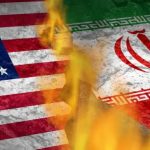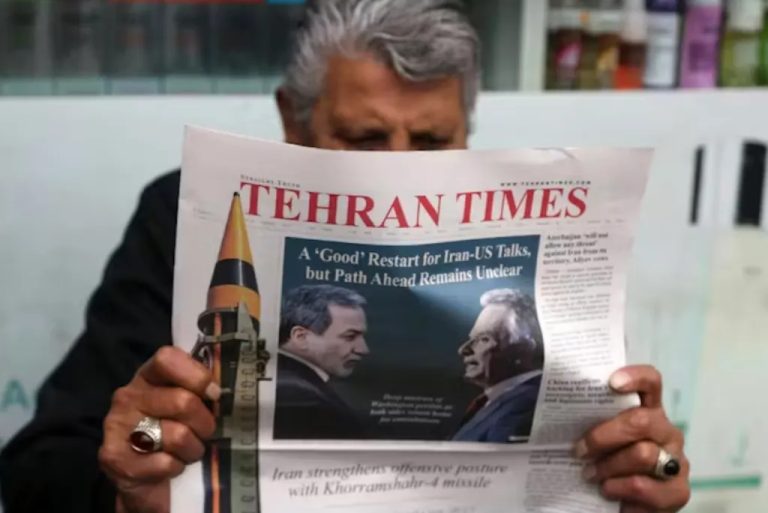
On the morning of February 27, 2026, Oman’s Foreign Minister Badr Albusaidi sat before CBS cameras in Washington and delivered what should have been the biggest diplomatic story of the year. Iran had agreed during indirect talks with the United States never to stockpile enriched uranium, he announced — “a very important breakthrough that has never been achieved” in prior negotiations, because “if you cannot stockpile material that is enriched, then there is no way that you can actually create a bomb.” Tehran would down-blend its existing stockpile to natural levels, convert it into irreversible fuel, and submit to “full and comprehensive verification by the IAEA.” “A peace deal is within our reach,” he said, “if we just allow diplomacy the space it needs to get there.” Thirty-six hours later, American and Israeli missiles began striking Iran. The talks, the breakthrough, and any remaining shred of U.S. diplomatic credibility were incinerated together.
Twice Burned
This was not the first time. In June 2025, while its representatives were in talks with Iran over that country’s ability to produce nuclear weapons, Washington launched Operation Midnight Hammer, targeting three Iranian nuclear facilities in Fordow, Natanz and Isfahan. The sixth round of US-Iran talks, scheduled for June 15 in Oman, were indefinitely suspended. Talks resumed months later, and by February 2026, Omani mediators were describing what amounted to the most far-reaching nuclear concessions Iran had ever offered — going beyond the terms of the 2015 JCPOA that Trump had scrapped during his first term. “The most important achievement is the agreement that Iran will never possess nuclear material capable of producing a bomb. This is entirely new — unlike the deal negotiated during President Obama’s time — and makes the enrichment debate less relevant. With zero stockpiling, it becomes impossible to build a bomb.”
Iran had also signaled openness to discussing its missile program. “Iran, I believe, is open to discussing all issues, including ballistic missiles, though it insists this round remain focused on the nuclear file. Other matters can follow in due course under an appropriate framework.” The Omani diplomat suggested that the broader political components of a deal could be finalized imminently, with implementation completed within 90 days.
Then came Operation Epic Fury. The United States and Israel launched coordinated strikes on Iran after Trump declared nuclear negotiations a failure. The attack killed Supreme Leader Khamenei, dozens of senior officials, and — most consequentially for the future of arms control — whatever trust remained that the United States could be relied upon to negotiate in good faith.
A Wound Beyond Iran
The damage extends far beyond the Persian Gulf. Conducting military strikes against a country that is engaged in negotiations to reduce its nuclear capacity sets a dangerous precedent. The conflict has jeopardized all future diplomacy to limit the spread of nuclear weapons. Iranian negotiators working with mediators have reportedly told interlocutors they “don’t want to be fooled again” and fear any new diplomatic process could serve as cover for further attacks.
The message has already reached Pyongyang. North Korean destroyer Choe Hyon successfully test fired a sea-to-surface strategic cruise missile on March 4 — less than a week after the Iran strikes began. The 5,000-ton destroyer is said to have nuclear weapons capabilities, with its cruise missiles and tactical ballistic missiles carrying nuclear warheads. North Korea uses the term “strategic” on its missile systems to indicate nuclear warhead capability. Kim Jong Un oversaw a second round of cruise missile launches the following week and declared that arming his navy with nuclear weapons was making “satisfactory progress.” North Korea has repeatedly rejected Washington and Seoul’s calls to resume diplomacy aimed at winding down its nuclear program. Any prospect of bilateral negotiations with the U.S. on Pyongyang’s weapons programs now carries an obvious caveat: Washington bombed the last country that came to the table.
A former State Department official who worked on nuclear diplomacy with North Korea warned that the same dynamic that followed the collapse of six-party talks in 2009 — a more unstable East Asia and renewed interest by South Korea in developing nuclear weapons — is now playing out in the Middle East. Should the Iranian regime survive, it may commit to developing nuclear weapons given that the lack of them proved no deterrent to U.S. military action.
The Credibility Collapse
The pattern is now unmistakable. Trump withdrew from the JCPOA in 2018 while Iran was in compliance. He bombed Iran during active negotiations in June 2025. He bombed Iran again during active negotiations in February 2026 — this time killing the country’s supreme leader. Key to a nation’s credibility during negotiations is the reputation that it builds from its past actions. Both instances of the U.S. bombing Iran while negotiating with it will make it very unlikely that other countries will engage with Washington in future nuclear diplomacy.
Those countries that want to take part in nuclear diplomacy involving the U.S. will likely ask that other, trusted countries participate as well. They will also likely seek security guarantees before engaging in negotiations. This will mean that China and the European Union will likely have to be a part of any such diplomacy — not as observers but as guarantors that Washington will honor its commitments. Pakistan’s Deputy Prime Minister reportedly traveled to Beijing last week seeking precisely this: Chinese guarantees for any future U.S.-Iran agreement.
Loss of trust in the United States’ good faith will likely continue across future U.S. administrations after the Trump presidency. This will be because of uncertainty over the credibility of international commitments made by the United States. An agreement made by one president can be shredded by the next. A breakthrough announced on Thursday can become a bombing campaign by Saturday. The loss of trust and good faith has substantially reduced the ability of the U.S. to diplomatically address not only broader nuclear and missile nonproliferation concerns but also its own national security needs. Under these circumstances, military action might be the most tempting option for Washington to secure these goals — and that is dangerous.
The lesson that every government on earth is now absorbing is brutally simple: negotiating with the United States does not protect you from the United States. And in a world where diplomacy has been devalued to this degree, the incentive to acquire nuclear weapons — the one thing that actually does deter American military action — has never been stronger.
Original analysis inspired by Debak Das from Asia Times. Additional research and verification conducted through multiple sources.