The two American carrier strike groups converging on Iran’s perimeter are not just a message to Tehran. They are a signal Beijing is parsing with intense interest. As Washington ratchets up military pressure while simultaneously pursuing indirect nuclear talks in Geneva, Chinese analysts see an adversary trapped between its own escalatory logic and the political need to appear strong ahead of midterm elections. For Beijing, the US-Iran crisis is both a threat to its energy security and a strategic opportunity to cast American power as reckless and overextended.
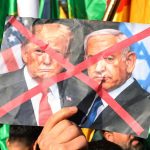
China’s reading of the crisis begins not with carrier deployments but with Iran’s domestic upheaval. When Grand Bazaar merchants in Tehran launched protests in late December 2025 — driven by inflation, economic exhaustion, and unmet reform hopes following the 12-day war — Beijing initially treated the unrest as an internal affair. That changed when Reza Pahlavi, Israel, and the United States publicly backed the demonstrators. Chinese state media quickly framed the violence as externally engineered, a narrative that fit neatly into Beijing’s broader story about Western interference in sovereign states. When Iran’s security apparatus crushed the protests through a brutal crackdown that killed thousands, Chinese observers concluded that Washington had been caught off guard by the regime’s resilience — and that the current military standoff is partly a reaction to that surprise.
Talks Under the Shadow of Warships
The gap between American demands and Iranian red lines is where Beijing focuses its sharpest criticism. Washington wants Tehran to halt enrichment, cap missile ranges, and abandon proxy networks. Israel’s demands go further — transferring enriched material abroad, dismantling nuclear infrastructure, and restricting missiles to a 300-kilometer range. Iran has signaled willingness to discuss its nuclear stockpile, proposing dilution of its 440 kilograms of 60-percent enriched uranium rather than removal, but insists on complete sanctions relief in return. Missiles remain off the table entirely; Tehran views them as the regime’s ultimate guarantee of survival.
Chinese analysts argue these positions could be bridged — but only without Israeli involvement distorting the process. The February 17 Geneva round, mediated by Oman and involving Iranian Foreign Minister Araghchi and US envoys Steve Witkoff and Jared Kushner, yielded modest progress on guiding principles. But Trump has since shortened his deadline to just 10–15 days, warning of “bad things” if no deal materializes. For Beijing, this compressed timeline is evidence that domestic political theater, not diplomatic strategy, is driving Washington’s approach.
The Oil Lever and Beijing’s Bet
China sits at the center of a key pressure point. Nearly 80 percent of Iran’s oil revenue flows to Chinese buyers, and Trump has threatened a 25-percent tariff on any country that continues trading with Tehran. Beijing dismisses this as a bluff. As analysis from the Clingendael Institute noted, Iranian crude offers China discounted barrels and flexible terms that serve both its energy needs and its broader contest with Washington. Chinese strategists calculate that the United States, already managing tariff disputes across multiple fronts, lacks the appetite for a full-blown trade confrontation over Iranian oil.
The expiration of the snapback clause in UN Security Council Resolution 2231 in October 2025 stripped Washington of its automatic multilateral sanctions lever, leaving military threats as the primary bargaining tool. Beijing reads this as a structural weakness: without institutional backing, American coercion depends entirely on credibility — and credibility erodes when threats are repeated without follow-through.
The Trap of Dual Carriers
The military arithmetic troubles Chinese analysts most. Two carrier strike groups — the USS Abraham Lincoln already in the Arabian Sea and the USS Gerald R. Ford transiting toward the Mediterranean — represent enormous firepower but also enormous cost. Maintaining dual carrier operations is financially draining and operationally unsustainable over months. Chinese observers expect that if diplomacy stalls by mid-March, Washington will face a binary choice: strike or withdraw. Either outcome carries serious risk. A strike could ignite a wider regional war involving Iranian proxies in Iraq, Lebanon, and Yemen, while a retreat would undermine American deterrence across the region.
Beijing’s own military assessment, echoing what Trump’s advisors reportedly told him in mid-January, is that airstrikes could destroy nuclear and military infrastructure but would not topple the regime — and would almost certainly trigger retaliation through the Strait of Hormuz, the Red Sea shipping lanes, and the Persian Gulf. Any disruption to these corridors would hammer global energy prices and trade flows, hitting China’s economy directly.
For Beijing, the bottom line is straightforward. An American strike destabilizes a region where China has deep energy and trade interests. But an American deal that normalizes US-Iran relations would be equally unwelcome, potentially reducing Tehran’s dependence on Chinese patronage. As The Diplomat recently argued, sustained tension between Washington and Tehran — managed just below the threshold of open conflict — may in fact serve Beijing’s strategic interests better than either war or peace. China’s preferred outcome is a crisis that drains American attention and resources without spilling over into a conflagration that disrupts Chinese commerce. Whether that balance holds depends on a timeline that Trump himself keeps shortening.

Original analysis inspired by Atul Kumar from ORF / The Week. Additional research and verification conducted through multiple sources.