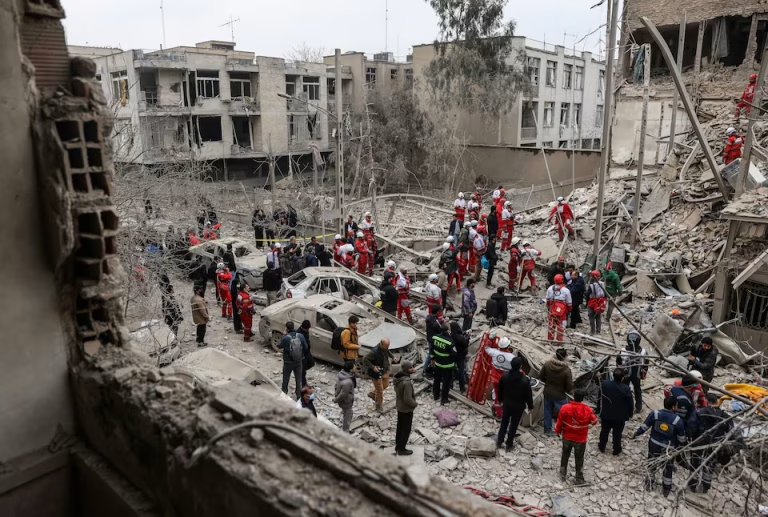
Three weeks into Operation Epic Fury, the gap between what Donald Trump says is happening and what is actually happening has become the defining feature of the war. The president declared on Friday that the campaign was “Militarily WON.” Iran responded by launching a fresh wave of missile strikes across the Gulf and tightening its grip on Strait of Hormuz shipping. Both things happened on the same day. The contradiction is no longer manageable with a Truth Social post.
What is becoming clear — to allies, to analysts, and increasingly to Republicans on Capitol Hill — is that the administration entered this war without a serious plan for what came after the opening strikes. The targets that could be destroyed from the air largely have been. Iran’s navy has been degraded, its ballistic missile arsenal significantly depleted, and roughly 30 senior officials killed. But the regime survives, the strait remains effectively closed to U.S.-linked vessels, and Brent crude above $110 a barrel is doing daily damage to the economic narrative Trump needs heading into the midterms. The military logic of the campaign was worked out in detail. The strategic logic of what follows was not.
Isolated in Washington, Defied in Tehran
The diplomatic picture is arguably worse than the military one. When Trump called on NATO allies to deploy their navies to help reopen the strait — warning the alliance faced a “very bad” future if they declined — they said no. The refusal reflects something more durable than disagreement over this specific conflict. Fourteen months of public humiliation, tariff threats, and deliberate alliance erosion have left Washington with few partners willing to absorb political risk on its behalf. Trump reversed course and claimed he never needed help, but the reversal was visible to everyone.
Differences with Israel have also begun to surface. Trump publicly stated he had no advance knowledge of the Israeli strike on Iran’s South Pars gas field — a strike that sent oil prices to their highest level since 2008. Israeli officials said it was coordinated. That public contradiction between Washington and Tel Aviv, over a major escalatory action in a war they are fighting together, is the kind of fissure that adversaries notice and exploit. Iran noticed.
Senior analysts who have tracked U.S. Middle East policy across multiple administrations are blunt about what went wrong. The administration, in their assessment, failed to model how Iran would respond to a conflict it perceives as existential — not as a limited strike designed to produce concessions, but as an attempt at regime destruction. Tehran drew that conclusion and responded accordingly: drones, missiles, Hormuz access weaponized as leverage, and a deliberate strategy of raising the economic cost to the American public until political pressure forces a rethink.
The Box With No Door
Trump now faces a set of options that range from bad to worse:
- Escalation: Seizing Kharg Island or deploying troops along Iran’s coast to hunt mobile missile launchers. This leads toward a ground commitment the American public has no appetite for.
- Disengagement: Declaring victory and leaving, which leaves Gulf allies facing a wounded, hostile Iran still possessing enough nuclear material to assemble a crude weapon within weeks.
- Negotiation: Currently blocked by both sides publicly rejecting talks, though back-channel signals suggest this position is not permanent.
The domestic political erosion is accelerating. Thousands of additional Marines and sailors are deploying to the region. Gas prices have risen by roughly $1.00 per gallon since inauguration day. MAGA influencers who built audiences on anti-interventionist messaging — Tucker Carlson prominently among them — are describing the war as a betrayal of the movement’s foundational promises. Republican strategists are watching midterm polling with anxiety they are no longer entirely concealing. Trump’s hold over his coalition has always rested on the perception of winning; a war that demonstrably isn’t going according to plan is the one scenario his political identity was least equipped to survive.
The frustration is leaking into Trump’s public behavior. He has accused news organizations of “treason” for reporting battlefield setbacks, attacked the Federal Reserve for not cutting rates during a war-driven inflation spike, and cycled through contradictory rationales for why the campaign was launched. The message discipline that characterized his 2024 campaign is gone. Former advisers describe a president struggling to drive a news cycle that keeps generating facts he didn’t authorize.
The hardest question is not whether Trump can win in Iran — by conventional measures, he may already have. The question is whether what he has won is worth what it is costing, and whether anyone in the West Wing has a serious answer to what comes next.
Original analysis inspired by Matt Spetalnick and Nandita Bose from Reuters. Additional research and verification conducted through multiple sources.