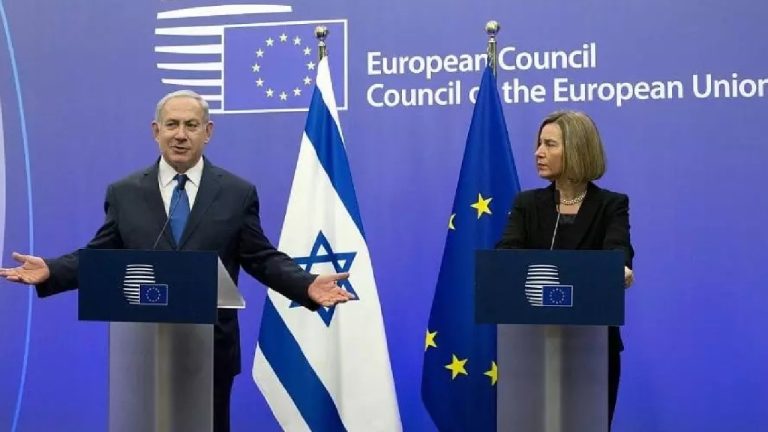
International alliances operate according to strategic calculations involving economic interests, security cooperation, and shared values. Nations forge partnerships based on mutual benefit, whether through trade relationships, defense agreements, or resource access. Israel has utilized frameworks like the Abraham Accords to expand its diplomatic network, while the United States under President Trump has facilitated significant regional agreements.
However, diplomatic relationships remain subject to reassessment based on policy developments and international law obligations. Recent tensions between European nations and Israel have emerged following military operations in Gaza, prompting several European countries to reconsider aspects of their bilateral relationships.
Foundational Alliance Structures
The United States and Israel maintain robust bilateral ties across diplomatic, military, and intelligence domains. This partnership has endured across multiple administrations, demonstrated through coordinated security operations and consistent political support. The relationship encompasses military cooperation, intelligence sharing, and economic collaboration that positions both nations as close strategic partners.
European engagement with Israel presents a more complex picture. The EU-Israel Association Agreement, in force since 2000, established comprehensive economic and political cooperation frameworks. The agreement stipulates that relations “shall be based on respect for human rights and democratic principles, which guides their internal and international policy and constitutes an essential element of this Agreement.”
Shifting European Positions
Recent developments have prompted European nations to reassess their approach to Israeli relations. In May 2024, Spain, Ireland, and Norway formally recognized Palestinian statehood, joining eight other EU member states that had previously taken this step. This diplomatic initiative triggered strong reactions from Israeli authorities, who characterized the move as rewarding terrorism.
The EU imposed sanctions on Israeli settlers in the occupied West Bank for the first time in April 2024, and again in July, citing human rights violations against Palestinians. These represent unprecedented measures within EU-Israel relations, signaling growing European willingness to employ economic pressure in response to settlement activities.
Spain and Ireland have called for suspension of the EU-Israel Association Agreement, arguing that Israel’s policies violate the agreement’s human rights provisions. Former EU foreign policy chief Josep Borrell supported this position, though the European Commission has not implemented suspension measures.
Legal Framework Considerations
The International Court of Justice ruled in July 2024 that Israel’s occupation of Palestinian territories was unlawful, creating legal obligations for European states. The court indicated that states are “under an obligation not to render aid or assistance in maintaining the situation created by Israel’s illegal presence in the Occupied Palestinian Territory.”
This ruling has intensified debates over European arms sales to Israel. Several European states including France, Spain, Italy, Belgium and the UK have reduced arms exports to Israel, though Germany continues providing substantial military equipment. UN experts stated in May 2024 that weapons transfers to Israel may constitute serious violations of international humanitarian law and risk state complicity in international crimes.
Economic Relationship Dynamics
Despite diplomatic tensions, Israel remains the EU’s 31st largest trading partner, representing almost 0.8% of the EU’s total trade in goods. The EU serves as Israel’s biggest trading partner, accounting for 32% of Israel’s total trade. Total trade in goods between the EU and Israel in 2024 amounted to €42.6 billion.
Israel participates in numerous European programs, including Horizon 2020 Research Programme and Erasmus+ for education and youth mobility. Between 2015 and 2022, 9,592 Israeli students and staff traveled to Europe while 7,481 European counterparts visited Israel under Erasmus+. Israel benefitted from Horizon 2020 projects worth close to €170 million annually during 2017-2020.
Political Divergence Points
European positions on Israeli policies have increasingly diverged from US stances. The Venice Declaration of 1980 marked an early turning point, with the European Community becoming the first to recognize Palestinian self-determination rights while affirming Israeli security concerns. This approach distinguished European policy from the strongly pro-Israel position traditionally held by Washington.
Contemporary developments have amplified these differences. European leaders have expressed concern over humanitarian conditions in Gaza and called for compliance with international humanitarian law, while the US has maintained more consistent support for Israeli military operations.
Future Trajectory Considerations
The sustainability of traditional European-Israeli cooperation frameworks faces uncertainty. Calls for reviewing the EU-Israel Association Agreement continue, with proponents arguing that maintaining preferential trade relations while Israel violates international law undermines European credibility and the rules-based international order.
However, significant obstacles remain to implementing major policy changes. Several EU member states, particularly Austria, Hungary, Germany and the Czech Republic, maintain strong support for Israel and would likely oppose comprehensive sanctions or agreement suspension. Decisions of this magnitude require unanimity among EU members, making dramatic shifts unlikely without broader consensus.
The evolution of European-Israeli relations reflects broader tensions between maintaining established partnerships and responding to concerns about international law compliance. How European nations navigate these competing pressures will significantly influence regional dynamics and transatlantic coordination on Middle East policy.
Original commentary from The Jerusalem Post. Republished with additional research and verification by ThinkTanksMonitor.