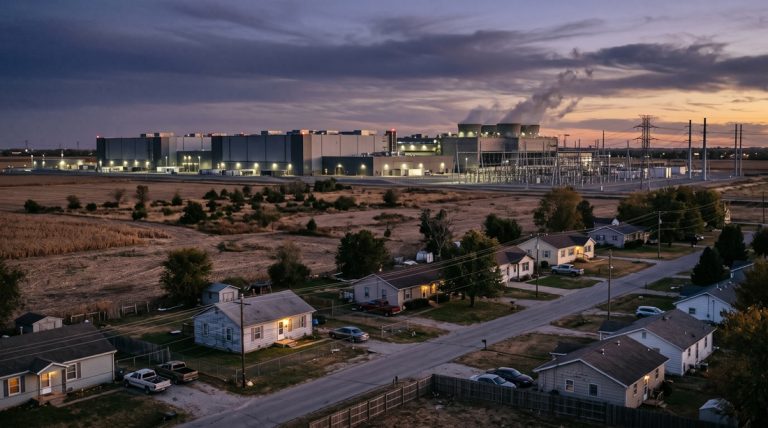
America’s artificial intelligence boom has encountered an obstacle that faster chips cannot solve: public consent. In November’s local elections, voters repeatedly chose limits on the facilities that make advanced computing possible. The result challenges an industry accustomed to presenting expansion as an unavoidable economic necessity. For communities hosting that expansion, the immediate questions concern electricity, water and control over development.
The scale of the rejection is striking. Ballotpedia recorded votes favoring restrictions in 40 of 41 local contests on November 3, although the measures differed considerably in scope and legal effect. Some communities approved outright bans, others restricted larger facilities, and several backed temporary pauses or advisory questions. These results demonstrate opposition in the places that voted, rather than a nationwide referendum on artificial intelligence itself.
Physical pressures help explain why the debate has moved beyond abstract arguments about innovation. The International Energy Agency reported that global data center electricity demand rose 17 percent in 2025, while demand from facilities focused on AI increased 50 percent. Improved efficiency per task has not prevented aggregate consumption from climbing as usage expands. National growth figures also conceal the much sharper pressures that concentrated development can place on individual power systems.
Water creates a second test for local decision makers. Lawrence Berkeley National Laboratory estimated that American data centers directly consumed 66 billion liters in 2023, a historical estimate rather than a measurement of today’s usage. Conditions vary with cooling technology, location and climate, so that total cannot establish the impact of a particular project. It does establish why developers should provide credible local forecasts before asking residents to accept their promises.
The political response need not wait for an entirely new theory of AI regulation. The Federal Trade Commission finalized an order against DoNotPay in 2025 that prohibited unsupported claims about its chatbot’s ability to perform like a lawyer and required monetary relief. That case concerned consumer advertising, not infrastructure permits, but it illustrates a useful principle: technological novelty does not remove the obligation to substantiate commercial claims. Regulators can examine specific conduct while lawmakers debate broader rules.
A change in congressional control alone will not settle these disputes. Congressional investigations can expose costs and conflicts, but federal enforcement also depends on executive agencies, while local approvals and utility decisions operate through separate institutions. This divides the contest over Big Tech into several arenas, each with different powers and constraints. Industry commitments will therefore matter most when they become measurable conditions rather than general expressions of goodwill.
For developers, securing permission to build increasingly means demonstrating who pays for supporting infrastructure and who bears the risk if projected demand disappoints. For public officials, the challenge is to distinguish useful investment from arrangements that leave households carrying disproportionate costs. The election results give those questions political force. The next test is whether that force produces enforceable protections after the campaign signs disappear.
Original analysis inspired by Sara Goudarzi from Bulletin of the Atomic Scientists. Additional research and verification conducted through multiple sources.