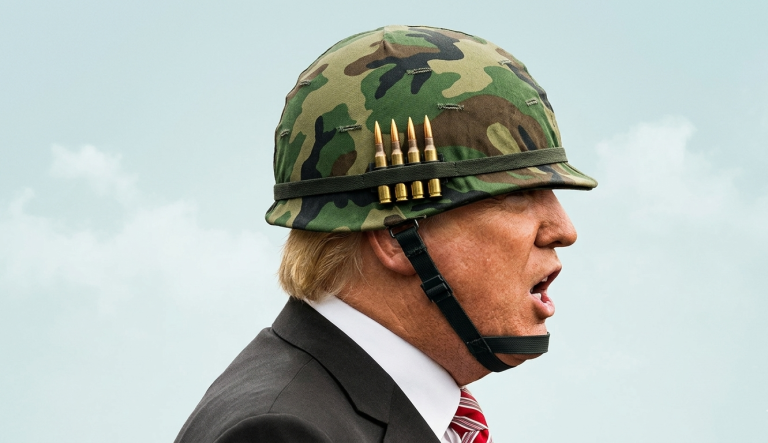
Donald Trump has defied political gravity so many times that betting against him has become a fool’s errand. The January 6 insurrection should have ended his career; instead, it became a prelude to a second term won with a larger share of the vote than his first. But the war against Iran, now entering its fourth week, is doing something no domestic scandal or legal proceeding managed to do: it is stripping away the political tools that made him formidable in the first place, and doing so in full public view.
The structural problem isn’t the war’s morality or legality — it’s that this conflict is perfectly designed to neutralize the three things Trump does better than any politician of his generation. He shapes reality through sheer assertion. He extracts compliance through leverage. And he holds his party together through the promise of winning. Iran is eroding all three simultaneously, and the timeline for recovery is not short.
When Reality Fights Back
Trump declared victory over Iran before the month was out. On Truth Social, he claimed the country had been “blown off the map” and that the campaign was running “weeks ahead of schedule.” The problem is that war generates its own facts, independent of presidential messaging. Iran’s regime remains functional. Its uranium stockpile — roughly 440 kilograms of near-weapons-grade material — has not been secured or destroyed. Senior officials have been killed, including Ali Larijani and Supreme Leader Khamenei, but the state apparatus has not collapsed. Meanwhile, Brent crude spiked above $110 a barrel on March 18 following an Iranian missile strike on a Qatari gas hub — a number that tells a different story than the one coming from the White House.
Iran understands this asymmetry and is leaning into it. Every day the Strait of Hormuz remains effectively closed, oil prices creep higher and the gap between Trump’s declared reality and the market’s verdict widens. The regime cannot win in any conventional military sense, but it doesn’t need to. It just needs to outlast the narrative.
The Leverage Problem
Leverage is Trump’s signature instrument — in trade, in diplomacy, in domestic politics. It works when the other side believes the threat is credible and the cost of resistance is unbearable. Iran has spent four decades preparing for a confrontation with the United States, and it has responded not by capitulating but by accumulating its own leverage. Signaling it will grant safe passage to ships from “friendly” countries while continuing to threaten U.S.-linked vessels is a deliberate strategy — turning Hormuz access into a negotiating asset rather than a military problem to be solved by force alone.
The same erosion of leverage is visible in Trump’s dealings with allies. When he demanded that NATO partners help reopen the strait, warning of a “very bad” future for the alliance if they refused, they declined. Trump reversed course, claiming he never needed their help to begin with — but the reversal was itself revealing. Countries have learned that resisting Trump’s pressure carries manageable consequences, and that knowledge is spreading.
A Party Beginning to Fracture
Republican support for the war is holding, but it is softening in ways that matter. Fuel prices have surged significantly since inauguration — gasoline and diesel both up by more than half a dollar per gallon — and thirteen American service personnel have already died. A vocal MAGA faction, led publicly by Tucker Carlson, is framing the war as a betrayal of the populist mandate Trump was elected to deliver. In private, elected Republicans are increasingly uneasy, particularly about the prospect of ground operations — whether to recover uranium stockpiles or seize Kharg Island.
The political math for the November midterms is shifting against Republicans. Forecasters now assess the probability of Democrats retaking the Senate at roughly 50%, a ten-point increase since the war began. If both chambers flip, Trump enters the back half of his term as a lame duck with limited ability to shape his own succession — or protect himself from whatever legal and legislative exposure follows.
The deeper danger may not be a weakened Trump but a cornered one. A president who cannot win the war, cannot end it cleanly, and cannot absorb the political cost of losing it is a president with incentives to escalate, distract, or retaliate in other arenas. That could mean intensified pressure on the Federal Reserve over interest rates, renewed attacks on media outlets, or aggressive moves against perceived domestic enemies ahead of the midterms. History suggests Trump responds to political threat not with restraint but with acceleration. The war may be weakening him. That is precisely when he becomes harder to predict.