The central question in the confrontation between Washington and Tehran is no longer simply whether American forces will strike again. It is whether economic pressure can produce an agreement before it encourages another round of fighting. On November 10, Iranian security official Mohsen Rezaei said that negotiations were not underway and that Tehran still awaited an explicit American response to its conditions. The gap between diplomatic messages and actual negotiations remains consequential.
Washington continues to expand the machinery of pressure. US Central Command announced Task Force Iron Gate on November 7, assigning approximately 20 civilian and military personnel to coordinate efforts against prohibited shipments through Iranian land borders and the Caspian Sea. This extends the campaign beyond maritime enforcement into the networks that could sustain Iranian military production. Yet an expanding enforcement apparatus does not itself establish that Tehran is moving closer to accepting American terms.
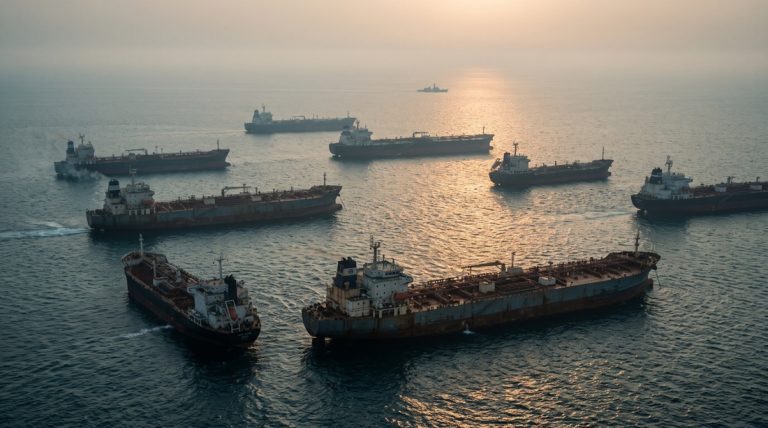
The distinction matters because coercion can change an opponent’s calculations in more than one direction. Financial damage may encourage compromise, but it can also strengthen the argument that continued restraint offers no economic reward. Chatham House examines that danger in its November 9 assessment, identifying a blockade that harms Iran without necessarily delivering the concessions Washington seeks. For leaders who associate endurance with political survival, absorbing further losses may appear less dangerous than accepting terms they cannot defend at home.
Iran has presented its own sequence for ending the confrontation. Foreign Ministry spokesman Esmaeil Baghaei defended a proposal on November 9 that would permit talks within two days, conditional on Washington lifting sanctions and the blockade and ending hostilities. Secretary of State Marco Rubio had rejected some Iranian demands. Their disagreement concerns not only the final settlement but also which government must demonstrate compliance first.
That sequencing dispute carries costs beyond the two capitals. The US Energy Information Administration records average petroleum flows through the Strait of Hormuz of 20.9 million barrels per day during the first half of 2025. This historical benchmark shows the scale of commerce exposed to disruption, rather than describing current traffic. Energy exporters, importers and shipping companies therefore have a direct interest in an arrangement that restores predictable passage without waiting for every nuclear disagreement to be resolved.
Reports of a phased American proposal suggest that such an approach remains under consideration. The Times of Israel reported, citing Emirati reporting, that an initial exchange could combine partial blockade relief with reopening Hormuz, followed by nuclear negotiations and further economic measures. That report should not be mistaken for a confirmed agreement, particularly after Rezaei’s subsequent comments. Its significance lies in the possibility of dividing an otherwise overwhelming dispute into observable, reciprocal steps.
A workable arrangement would need to make the first exchange credible to both sides. Clear implementation dates, verifiable maritime commitments and an agreed response to violations would matter more than declarations of victory. Until those details exist, the blockade remains an instrument of pressure whose political destination is uncertain.
Original analysis inspired by Bilal Y. Saab from Chatham House. Additional research and verification conducted through multiple sources.