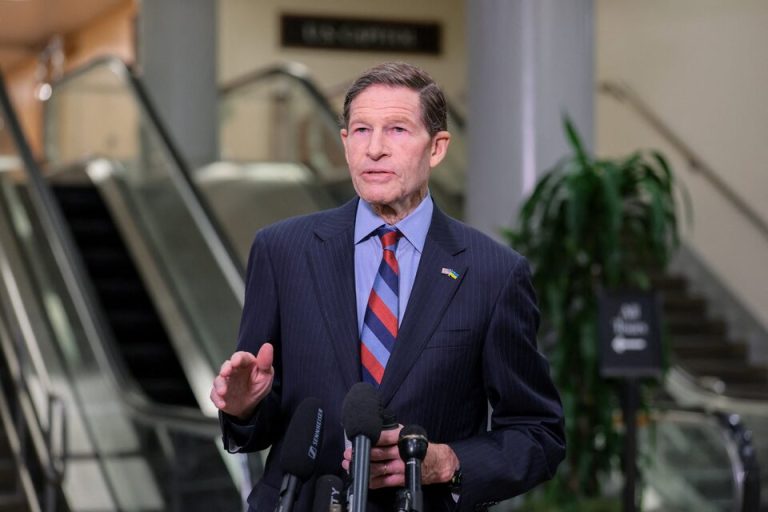
When Senate Democrats emerged from a classified briefing on March 10, their alarm was barely contained. The session with administration officials had answered almost none of the questions lawmakers said they needed answered: How long will this war last? What will it cost? And is the administration seriously considering sending American troops into Iran? The briefings, one senator said afterward, “left us with more questions than answers.” That is not a reassuring posture for a conflict that has now drawn in Russian intelligence services and is edging toward ground operations.
The institutional backdrop matters here. Congress has not declared war, nor provided any specific statutory authorization for hostilities involving U.S. armed forces against Iran. That constitutional gap was tested almost immediately: on March 4, the Senate rejected a war powers resolution by a 47–53 vote that sought to force Trump to get congressional consent for military action; a day later, a similar resolution failed in the House. Both votes broke almost entirely along party lines, with Republican Rand Paul joining Democrats, while Democratic Senator John Fetterman crossed over to vote against it.
Russia Is Now in This War Too
The debate over legal authority is serious. But the security dimension that alarmed Democratic senators most was something else entirely. Russia has been providing Iran with intelligence about the locations and movements of American troops, ships, and aircraft—the first indication that Moscow has sought to get involved in the war, with much of the intelligence consisting of imagery from Russia’s constellation of overhead satellites.
An Iranian drone struck a makeshift facility housing U.S. troops in Kuwait, killing six American service members. While officials note that no single attack can be definitively linked to Russian targeting data, the pattern is hard to dismiss. Russian intelligence support for Iran’s retaliation—alongside concerns that China may also be helping Tehran—demonstrates deepening ties among U.S. adversaries.
Trump’s own response to this was characteristically dismissive. When a reporter raised the subject, the president called it “a stupid question.” He later suggested on Fox that Putin “might be helping them a bit,” adding: “He probably thinks we’re helping Ukraine… They do it, and we do it.” That framing—moral equivalence between Russian intelligence support for Iranian forces and U.S. military assistance to Ukraine—landed badly on Capitol Hill. Ukrainian President Zelensky directly accused Russia of providing intelligence to Iran to prolong the conflict, saying the situation had become “more complicated” and was “emboldening Russia.”
The Russia-Iran intelligence axis is not an improvised arrangement. Russia and Iran have cooperated for at least three years on missile and drone technology, with Iran supplying Shahed drones for use in Ukraine. What has changed is that Moscow is now actively using that relationship to feed targeting data against American military assets—a threshold with no clear precedent in recent decades.
The Ground Troops Question
The classified briefings have not resolved the most consequential question: whether Trump will order a ground operation. Several lawmakers dismissed the need for authorization because the U.S. was striking from the air, but Senator Josh Hawley was explicit: “My view has always been, ground troops will require congressional authorization.” This creates a potential political tripwire. If Trump orders paratroopers to seize Kharg Island or deploy along Iran’s coast—scenarios the Pentagon is actively planning—he would likely face a new authorization fight.
Public opinion polls show roughly 60% of Americans oppose the war against Iran, making congressional approval for a formal use of force effectively impossible. Democrats are signaling that the appropriations process is their next lever; Senator Tim Kaine noted that Democrats are considering using funding restrictions to weigh in on the conflict—a slower but more durable constraint than resolutions.
The deeper issue is what happens when a war launched without congressional buy-in starts producing American casualties at scale. Six service members have already died. Thousands more are being prepared for potential deployment. The political accountability for those losses will fall entirely on the administration and the lawmakers who voted to give it a free hand.
Original analysis inspired by Patricia Zengerle from Reuters. Additional research and verification conducted through multiple sources.