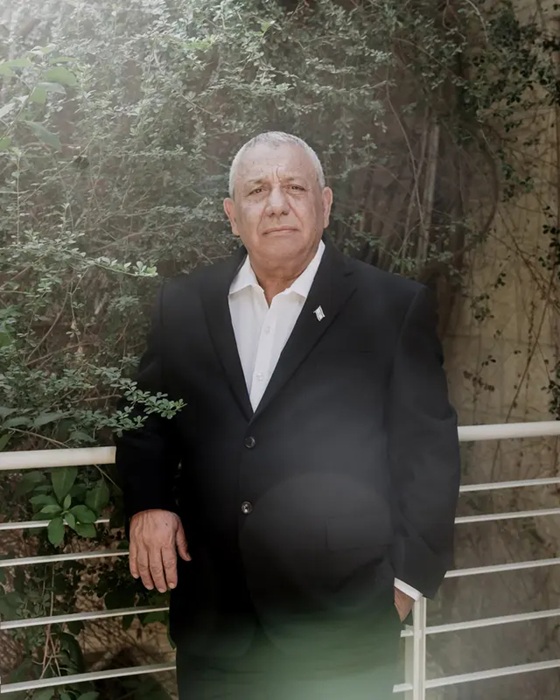
Gadi Eisenkot is offering Israeli voters a change in political leadership without a complete departure from the security assumptions that have shaped the Netanyahu era. His appeal rests on competence, accountability and an end to permanent domestic confrontation. The harder question is whether those promises can produce a workable political settlement when he continues to reject Palestinian statehood.
In his October 25 interview, Eisenkot outlined an agenda combining an inquiry into the October 7 failures, action against illegal settlement outposts and efforts to repair Israel’s international relationships. He also described a preference for a diplomatic arrangement in Gaza while retaining military force as an alternative. These are consequential distinctions from Netanyahu’s approach, particularly if they alter the incentives that have prolonged conflict. They do not amount to a commitment to Palestinian sovereignty.
His proposed West Bank arrangement captures the central contradiction. A reformed Palestinian Authority would exercise greater responsibility for civilian affairs, but Israel would retain military control. Such an arrangement might change daily administration without settling who ultimately holds power. For Palestinians, the difference between improved management and genuine political independence would remain decisive.
Restoring legitimacy requires policy choices
The international environment makes that distinction difficult to avoid. Britain recognized Palestine in September 2025, explicitly connecting the decision to a future involving two states. An Israeli leader who rejects that outcome would still face disagreement with partners even if personal relations improved. Diplomatic goodwill can create room for negotiation, but it cannot resolve incompatible positions by itself.
Legal obligations also extend beyond the identity of the prime minister. The International Court of Justice’s July 2024 advisory opinion found Israel’s continued presence in the occupied Palestinian territory unlawful. An advisory opinion differs from a criminal judgment, but its findings remain relevant to proposals that preserve indefinite control. A new government would inherit those questions rather than reset them.
Eisenkot’s promise to rebuild ties with Americans addresses a measurable problem. Pew Research Center recorded an unfavorable view of Israel among 60 percent of US adults in March 2026. The finding concerns attitudes toward the country, not only its leader. Replacing Netanyahu therefore offers no automatic guarantee that public opinion will recover.
Gaza presents the most immediate test of whether a different approach can deliver practical results. The World Bank’s April 2026 economic outlook linked Palestinian recovery to continued ceasefire and stability. Reconstruction requires predictable access, functioning institutions and security for residents, rather than funding pledges alone. Any governing arrangement must also establish who is accountable to Palestinians themselves.
Eisenkot’s candidacy should consequently be assessed through decisions rather than biography. His military experience and personal losses help explain his political authority, but they do not settle the contradictions in his platform. A durable alternative would need to translate accountability inside Israel into a different relationship with the people under Israeli control. Otherwise, a new leadership style could coexist with the same unresolved conflict.
Original analysis inspired by Eric Cortellessa from TIME. Additional research and verification conducted through multiple sources.