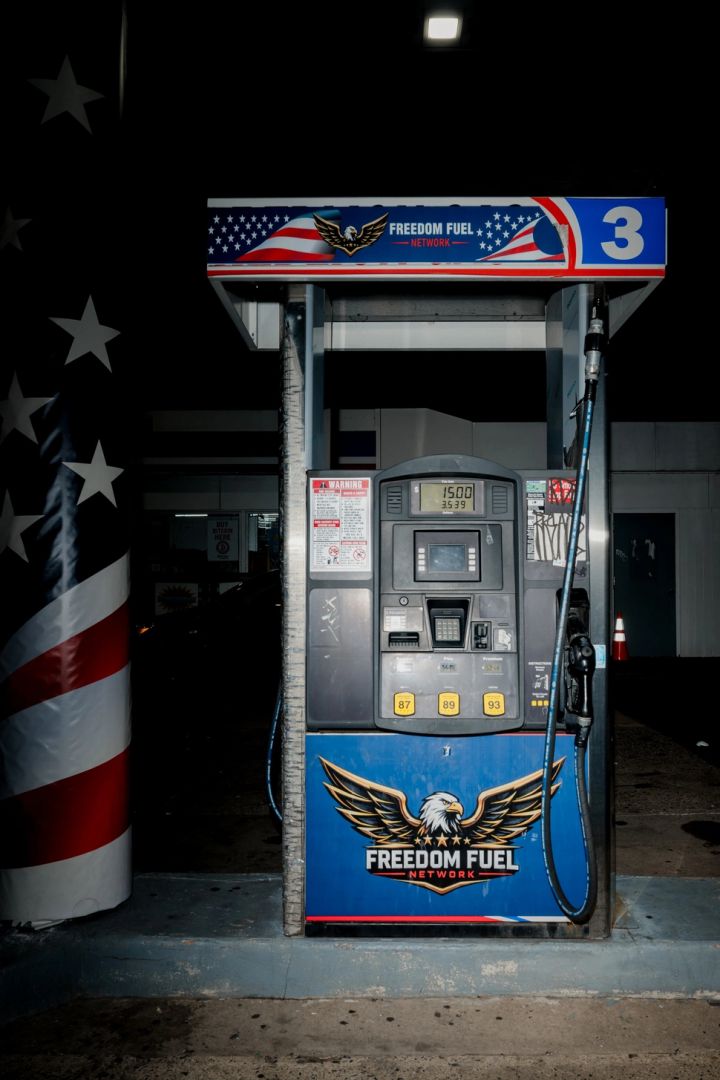
Donald Trump has made gasoline prices a visible test of his promise to ease household costs. Freedom Fuel Network appeared to offer an immediate answer when stations around Philadelphia and South Jersey began selling gasoline for $3.47 a gallon this summer. The White House soon promoted the network, and later credited its roughly 50 cent discount as an example of private businesses responding to the president. Yet questions about who financed those prices and whether they could last have turned a simple affordability message into a test of political transparency.
The economics matter because fuel remains painful for American households. The Energy Information Administration reported that regular gasoline averaged $4.331 per gallon nationally on October 12, with the Central Atlantic region at $4.347. September gasoline prices had already climbed sharply as crude markets reacted to renewed conflict in the Middle East. Federal analysts traced much of the pressure to higher crude prices and disruptions associated with fighting involving Iran.
Cheap Gas Meets Market Reality
Freedom Fuel initially stood out because its $3.47 price was substantially below nearby competitors. That advantage did not remain as dramatic for long. By late July, The Philadelphia Inquirer found several locations charging about $3.92, leaving some stations only around 10 cents below nearby rivals. Local fuel retailers had already questioned how such large discounts could be sustained in a business where margins are often narrow.
The uncertainty became more serious as details about companies connected to the network emerged. POLITICO reported that a fuel supplier accused KRSM Inc., led by Syed Kazmi, of taking nearly $4 million in fuel without paying and supplying some Freedom Fuel locations. The company disputed the accusation as an accounting disagreement, while Freedom Fuel itself was not named as a defendant. Mansfield Oil later filed an amended complaint naming Shamikh Kazmi, another fuel operator associated with stations in the network.
Those allegations do not establish wrongdoing by Freedom Fuel. They do, however, raise a different question for the White House: how much scrutiny should precede presidential promotion of a private company? A presidential endorsement can provide publicity that would otherwise cost a business heavily, especially when official government channels repeat the message. That makes transparency about ownership, financing and operating practices relevant even when no public subsidy is involved.
Affordability Has Become a Political Liability
The controversy arrives as Trump faces growing pressure over prices before the November midterm elections. September inflation accelerated as gasoline costs rose, while surveys have shown broad dissatisfaction with the cost of living. Cheap fuel is therefore more than a consumer benefit. It is politically valuable evidence for an administration trying to convince voters that its economic strategy is working.
Freedom Fuel illustrates the risk of replacing broad energy policy with highly visible commercial success stories. Twenty five discounted stations can help individual motorists, but they cannot materially change national fuel prices driven by crude oil markets, refinery conditions, international conflict and supply flows. When political leaders attach themselves closely to a private venture, unanswered questions about that venture can also become questions about government judgment.
The larger issue is not whether motorists should welcome cheaper gasoline. They clearly have reason to do so. The question is whether temporary discounts offer a credible answer to an affordability problem affecting millions of households. For Trump, lasting relief at the pump will ultimately depend less on branding and presidential promotion than on whether energy markets actually deliver lower prices across the country.
Original analysis inspired by Kathy Gilsinan and James Bikales from Politico. Additional research and verification conducted through multiple sources.