Tensions between Washington and Tehran reached unprecedented levels during the recent diplomatic gathering in New York. The Iranian president used his address to mount a fierce defense of his nation following intense rhetoric from the American leadership. This extraordinary exchange unfolded as the two nations remain entangled in a severe military conflict that erupted earlier this year. The proceedings marked a historic moment since no leader actively fighting American forces had ever attended the global assembly.
Rejecting American Accusations
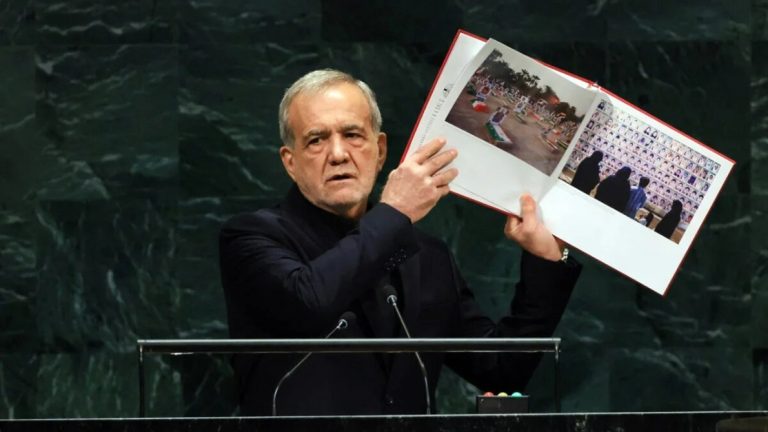
Masoud Pezeshkian furiously rejected claims labeling his country as a sponsor of global unrest. He instead portrayed his citizens as victims while displaying photographs of school children killed during early American military operations. His forceful delivery aimed to reshape the international narrative surrounding the origins of the current warfare. The leader insisted that recent military actions were purely defensive maneuvers imposed upon his people by aggressive foreign powers.
The Iranian delegation carefully avoided any mention of their regional militant allies during the official remarks. Instead the president directly accused Israeli authorities of perpetrating severe atrocities against civilian populations in Gaza. He pointedly criticized the international community for intensely monitoring Iranian atomic sites while entirely ignoring Israeli nuclear capabilities. The address framed the pursuit of atomic technology as a strictly civilian endeavor meant to advance scientific progress rather than build offensive weaponry.
The Path Toward Diplomacy
Despite projecting unwavering defiance the Iranian chief executive left the door open for potential resolutions. He explicitly stated that his administration remains ready for genuine diplomatic negotiations if foreign adversaries abandon forceful coercion. Domestic political factions in Tehran heavily scrutinized this willingness to engage with western adversaries. The decision to participate in the summit despite active hostilities required significant political maneuvering against domestic skeptics who preferred complete isolation.
Curiously American officials [suspicious link removed] that representatives from both nations actually met quietly on the sidelines of the main summit. This subtle engagement suggests that backchannel communications continue functioning beneath the layers of public hostility. Both capitals urgently need a resolution strategy as the conflict threatens to engulf the broader region. The contrasting displays of public outrage and private dialogue reveal how leaders attempt to balance domestic expectations with pragmatic survival strategies.
By ThinkTanksMonitor Editorial