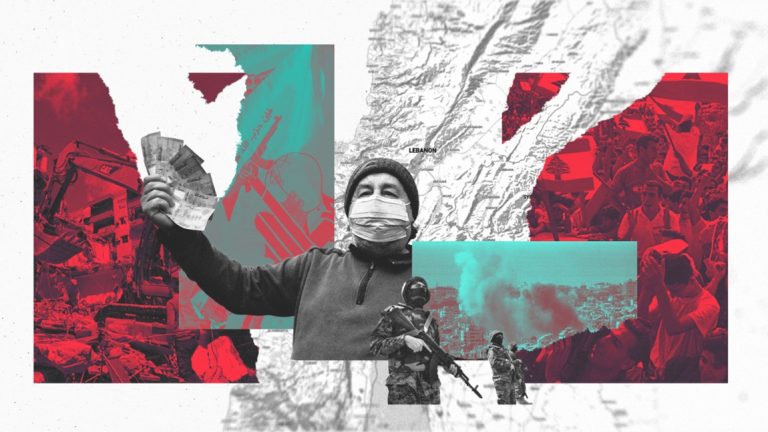
Lebanon currently faces a familiar political crossroads where international reconstruction funds serve as explicit leverage for state sovereignty. Recent diplomatic proposals suggest a controversial exchange where Hezbollah relinquishes its formidable arsenal in return for massive financial bailouts. This arrangement closely mirrors the historic agreements that originally concluded the brutal civil war more than three decades ago. However the proposed framework merely refinances the exact same political elite directly responsible for the modern economic collapse.
Disarmament as a Financial Catalyst
The postwar order established in 1990 essentially allowed warring factions to peacefully administer the shattered national economy. Warlords officially entered state institutions and converted their military authority into permanent political dominion through lucrative public contracts. Today the international community offers a remarkably similar bargain to stabilize the volatile southern border. The core demand requires the armed movement to completely disarm and transfer all southern territorial control directly to the national army.
In exchange for this sweeping military concession the state would finally receive extensive lending from the World Bank and a comprehensive stabilization program from the International Monetary Fund. Gulf investors would subsequently return to fund specialized economic zones while bilateral aid flows resume their historical pace. Yet this asymmetrical demand places the entire burden of structural change squarely onto one armed faction while completely sparing the broader corrupt system. The governing factions are never actually asked to surrender the systemic networks they utilize to maintain power.
The Persistent Patronage Network
Implementing this international framework requires local agencies to effectively manage millions of dollars in upcoming recovery funds. These incoming resources must naturally flow through the same domestic ministries that were carefully apportioned among sectarian leaders three decades ago. Past experiences dramatically illustrate how these exact agencies historically functioned as massive conduits for political patronage and systemic theft. Previous funds meant to resettle displaced citizens ultimately enriched the very officials managing the massive accounts.
When international organizations approve a new infrastructure project the subsequent decisions regarding who receives compensation remain entirely political. Appointed local boards consistently dictate which neighborhoods get prioritized and which private contractors win the lucrative rebuilding tenders. The same politicians who destroyed the banking sector will happily distribute these new external loans to reward their loyal constituencies. Consequently the promised institutional resuscitation essentially buys a state with one unified military force without actually changing the predatory nature of the government itself.
Bypassing Genuine Structural Reform
The prospect of external financial salvation effectively removes any lingering domestic pressure to enact genuine accountability. True recovery would logically force the entrenched political class to legally divide the immense banking losses among themselves and their wealthy allies. Meaningful legislation would aggressively restructure the national tax base and eventually eliminate the rigid confessional formula that paralyzes standard governance. However the ruling elites will simply never vote to willingly dismantle their own protected financial accounts and deeply rooted authority.
Instead of pursuing difficult internal corrections the state prefers to constantly borrow fresh external capital to temporarily mask its terminal dysfunction. While restoring sovereignty over the southern border remains an absolute necessity for regional stability treating disarmament as the ultimate solution ignores the underlying domestic rot. Until international donors actively refuse to legitimize this corrupt machinery the cycle of crisis and bailout will permanently endure. The people waiting for their homes to be rebuilt will remain completely abandoned by a state entirely focused on its own survival.
Original analysis inspired by Karim Salam from The New Arab. Additional research and verification conducted through multiple sources.