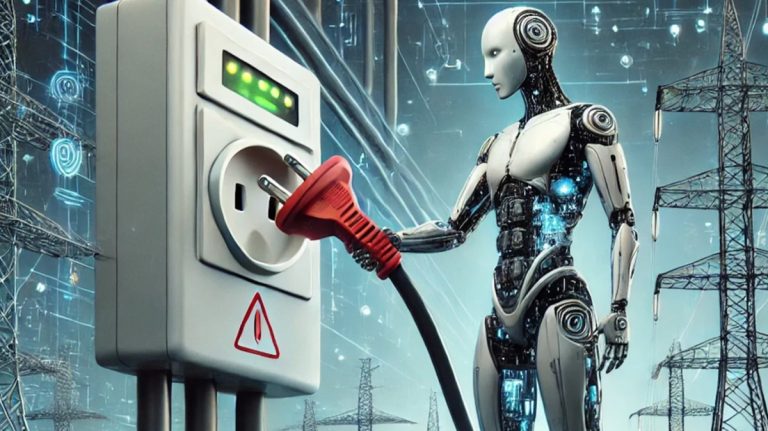
The numbers are staggering. Electricity demand from data centers soared by 17% in 2025, well outpacing growth in global electricity demand of 3%. The US grid, much of which was built before the internet existed, is now being asked to power an AI revolution that nobody fully planned for. And the forecasts meant to guide that planning? They carry a dangerous margin of error with real consequences for millions of ordinary people.
Lawrence Berkeley National Laboratory predicts that data center demand will grow from 176 terawatt hours in 2023 to between 325 and 580 terawatt hours by 2028 — a range so wide it reflects how little certainty actually exists. That gap between best and worst case is not a minor technical detail. The forecast ranges for AI data center demand vary widely, complicating efforts to build new generation while insulating residential customers from rate increases. When the forecasts are wrong, the costs fall on someone. That someone, historically, is the ratepayer.
A $2.25 Billion Warning from 1983
The story of the Washington Public Power Supply System — mockingly dubbed “Whoops” — offers the most instructive parallel. In the early 1970s, planners in the Pacific Northwest saw electricity demand growing at 7% annually and projected those trends forward. What they got wrong was almost everything that came next. Funds for paying interest and principal on the debt dried up after the nuclear projects were abandoned in January 1982, less than half complete, due to financing problems, skyrocketing construction costs and an energy surplus in the Pacific Northwest. In July 1983, WPPSS defaulted on $2.25 billion of municipal bonds, the second largest municipal bond default in US history. Thousands of trusting bondholders lost massive amounts of money.
The lesson was not simply that forecasters made a mistake. It was that the financial architecture around those forecasts gave no one a reason to be cautious. The ratepayers bore the risk. The builders did not.
Today’s AI infrastructure boom risks repeating that dynamic at a larger scale. US data center power demand is forecast to more than double to 66 GW in 2027 from 31 GW in 2025, driven by an accelerating buildout of AI infrastructure. Power reliability risks are elevated in the Mid-Atlantic, Mid-Continent, and Northwest markets because their planned generation capacity additions are limited relative to the flood of incoming data center demand. The same regions. The same structural mismatch. A different technology.
Under-forecasting carries its own dangers. On August 14 and 15, 2020, California’s grid operator was forced to institute rotating electricity outages in the midst of a West-wide extreme heat wave. Ultimately, 492,000 customers lost power on August 14 for between 15 and 150 minutes, and 321,000 customers lost power on August 15 for between 8 and 90 minutes. That was a heat wave pushing demand beyond what planners had anticipated. Add a cluster of hyperscale data centers and the same scenario becomes worse.
Why Getting the Forecast Right Is So Hard
The forecasting problem starts before a single number is calculated. No complete national inventory of data centers and their electricity consumption currently exists. Developers apply for grid connections in multiple territories simultaneously, withdraw when costs climb, and switch markets when incentives shift. Only about 50 to 60% of data center capacity scheduled for the next one to two years is expected to come online on time amid delays and cancellations.
Policy changes can erase years of work overnight. Texas is set to provide over $1 billion in subsidies for data centers in 2025, and Virginia offered $732 million in 2024. Should those incentives disappear, the geography of demand shifts entirely. At least nine states have considered repealing their data center tax incentives. New York has floated a full one-year moratorium on large data center construction. A single governor’s signature can render years of capacity planning irrelevant.
Then there is the AI variable itself. Power consumption per AI task is declining rapidly, with efficiency improving at an unprecedented rate in energy history. However, more people are using AI, and energy-intensive uses such as AI agents are on the rise. Whether efficiency gains or usage growth wins that race is unknowable. The AI market has collapsed twice before — what analysts call an “AI winter” — and there is nothing preventing a third.
Shifting the Risk Back Where It Belongs
The good news is that policymakers are beginning to act. On March 4, 2026, President Trump issued a proclamation establishing the Ratepayer Protection Pledge, marking a notable shift in federal posture toward data center energy consumption toward a policy explicitly conscious of consumer energy costs. Signatories agreed to fund all new electricity generation required by their facilities, whether by constructing their own power plants, entering into long-term commitments, or acquiring output from newly developed generation assets, rather than drawing incremental power from the existing grid.
States are moving in the same direction. Pennsylvania’s utility regulator reinforced the principle that customers driving new infrastructure needs should be responsible for the associated costs, with utility upgrade costs recovered directly from large load customers and requirements for deposits and collateral sufficient to fully cover infrastructure upgrade costs. The long contract terms, termination penalties, take-or-pay minimums, and full collateral in Oregon, Virginia, and Pennsylvania frameworks all exist to protect ratepayers fro`ZAQ1 ~m stranded costs driven by speculative load.
These are serious moves. But financial safeguards only work if the underlying forecasts are honest about their uncertainty. Electricity consumption from data centers is set to double by 2030, and power use from those focused on AI is poised to triple. If that trajectory even partially materializes, the grid needs to be ready. If it does not, ordinary consumers should not be left holding the debt. The “Whoops” lesson has been sitting there for four decades. There is no excuse for learning it again.
Original analysis inspired by Stephen Bessasparis ~ from The Bulletin of the Atomic Scientists. Additional research and verification conducted through multiple sources.