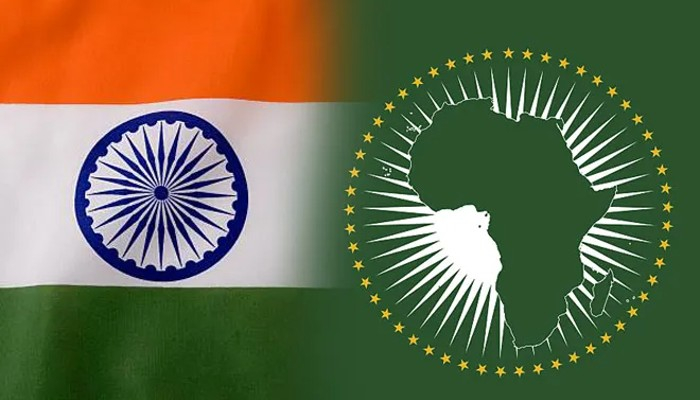
India and Africa are entering a decisive phase in their relationship. The fourth India-Africa Forum Summit, scheduled for May 31, 2026, in New Delhi, comes after more than a decade without a full summit-level reset. That gap weakened momentum, but it also gives both sides a rare chance to redesign the partnership around today’s realities: demographic weight, strategic competition, technology, maritime security, and the future of the Global South.
The partnership is often described through history, anti-colonial solidarity, and Indian Ocean links. Those foundations still matter, but sentiment alone cannot carry the relationship. Africa now has more suitors, including China, Türkiye, the UAE, South Korea, Brazil, Europe, and the United States. India’s advantage lies not in matching China dollar for dollar, but in offering a development model built around capacity building, affordable technology, democratic experience, private enterprise, and people-to-people trust.
The economic case is strong. CII’s 2025 India-Africa report put bilateral trade at $103 billion in FY2025, with room to reach $200 billion by 2030 if both sides reduce bottlenecks and expand sectoral cooperation. Yet trade remains uneven and too concentrated in a few markets and commodities. A more ambitious strategy would align Indian investment with Africa’s own priorities under Agenda 2063 and the African Continental Free Trade Area.
That means moving beyond buyer-seller ties. India should support African manufacturing, agricultural processing, digital infrastructure, healthcare delivery, green energy, and vocational training. The MEA has already identified energy, agriculture, healthcare, infrastructure, capacity building, and digital public infrastructure as long-term areas of collaboration. The challenge is implementation at scale.
Skills, Security, and Sea Power
Human capital should be the first pillar of the next phase. Africa’s young population can become one of the world’s great economic engines, but only if education, training, and job creation move together. India has experience in low-cost higher education, digital learning, public technology platforms, and technical training. Expanding scholarships, vocational institutes, university partnerships, and digital skilling programs would serve both sides better than symbolic announcements.
This is also where Indian industry must play a larger role. Training programs should be linked to jobs in manufacturing, logistics, healthcare, information technology, renewable energy, and agribusiness. Without private-sector participation, capacity building risks becoming a diplomatic slogan rather than an economic tool.
The second pillar should be maritime cooperation. India’s AIKEYME exercise with African partners in Dar es Salaam showed how security cooperation can be practical rather than rhetorical. Piracy, illegal fishing, trafficking, terrorism, disaster response, and port security affect both African littoral states and India’s Indian Ocean interests. Regular naval exercises, information sharing, coast guard training, and blue economy projects can turn maritime security into a daily partnership.
Blue economy cooperation should also include fisheries, marine tourism, offshore renewable energy, port logistics, and ocean research. These are not separate from development; they are part of Africa’s growth story and India’s wider Indo-Pacific strategy.
The summit should therefore produce more than a declaration. India and Africa need an annual strategic dialogue with the African Union, deeper engagement with regional economic communities, a practical trade roadmap, a green-industrial partnership, and a network of India-Africa think tanks to generate policy ideas between summits. Holding the forum every three years would also prevent another long drift.
India and Africa together represent a major share of the world’s future population, labor force, and political voice. Their partnership will matter most if it becomes less ceremonial and more operational. The next summit should mark that shift: from nostalgia to delivery, from promises to institutions, and from broad goodwill to measurable strategic cooperation.
Original analysis inspired by Rajiv Bhatia from Carnegie India. Additional research and verification conducted through multiple sources.