
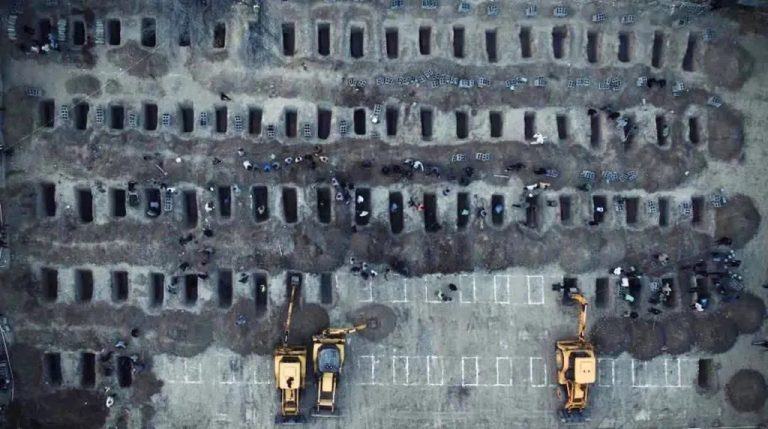
Eleven days into the US-Israeli war on Iran, the strike that may define the conflict hit not a missile silo or a command bunker but a girls’ elementary school in the coastal city of Minab. On February 28, 2026—the first day of the conflict—the Shajareh Tayyebeh girls’ school was destroyed by a missile strike that Iranian authorities say killed at least 168 people, the majority of them schoolchildren. Nearly 100 others were wounded. Trump, without evidence, told reporters it was “done by Iran,” claiming their munitions are “very inaccurate”. However, open-source investigators at Bellingcat and major news outlets have authenticated video showing a US-made Tomahawk cruise missile striking an adjacent facility while smoke already rose from the school site. The US is the only party to the conflict known to possess Tomahawks.
What makes the Minab tragedy more than a single catastrophic failure is what preceded it. A year before the first bombs fell on Iran, the Trump administration had systematically dismantled the Pentagon’s only dedicated program for preventing exactly this kind of disaster—and replaced its mandate with a single word: “lethality”.
Built Over a Decade, Destroyed in Months
The Civilian Harm Mitigation and Response program (CHMR) was the product of two decades of mistakes. Past failures—such as the 2015 destruction of a Médecins Sans Frontières hospital in Kunduz and the 2021 Kabul drone strike that killed ten civilians—drove the Biden administration to formalize the program in 2022. CHMR was designed to create new institutions, such as the Civilian Protection Center of Excellence, to provide commanders with better information to mitigate civilian harm during operations.
Defense Secretary Pete Hegseth’s arrival ended that focus. Hegseth, who has advocated for “fight[ing] to win,” made “lethality” his organizing principle. Within weeks, he replaced senior military lawyers—the judge advocates general who ensure operations comply with international law—calling their oversight a “roadblock”. Approximately 90% of the CHMR mission was reportedly eliminated, and the Civilian Protection Center of Excellence was left without a mission, mandate, or budget. At US Central Command, a 10-person civilian protection team was cut to a single advisor.
A Pattern Before Iran
The consequences showed up well before Minab. Since the start of the current administration, the Defense Department has systematically weakened the mechanisms intended to ensure compliance with the laws of war. Hegseth abolished “civilian environment teams” and rolled back restrictions on antipersonnel landmines. He has publicly dismissed existing rules of engagement as “stupid rules” that interfere with military success.
Even before the campaign in Iran, US strikes worldwide increased significantly. Human rights groups have warned that the race to adopt AI-driven targeting without adequate civilian protection frameworks is putting non-combatants at unprecedented risk.
The Minab Question
The school in Minab was located immediately adjacent to an IRGC naval base. While the school building was once part of that complex, it had been clearly marked as a separate civilian facility for years. Visual forensics by The New York Times and BBC Verify concluded that the school was struck during precision hits on the naval base, suggesting a possible target misidentification or a “double-tap” strike pattern.
Under the old CHMR framework, teams would have mapped the “civilian environment” around potential targets months in advance and maintained robust no-strike lists. Instead, US officials have stated the incident is “under investigation” while initially deflecting responsibility. UN human rights experts have called for an independent, impartial investigation into whether the attack violated international law.
Already, more than 1,200 Iranian civilians are reported to have been killed in US-led strikes since the conflict began. Retired military leaders have long warned of “insurgent math”—that for every innocent person killed, ten new enemies are created. As search operations end and the victims are buried, the 168 small coffins in Minab have become the most visible product of a military culture that has prioritized speed and lethality over civilian protection.
Original analysis inspired by Hannah Allam from Asia Times / ProPublica. Additional research and verification conducted through multiple sources.
By ThinkTanksMonitor


