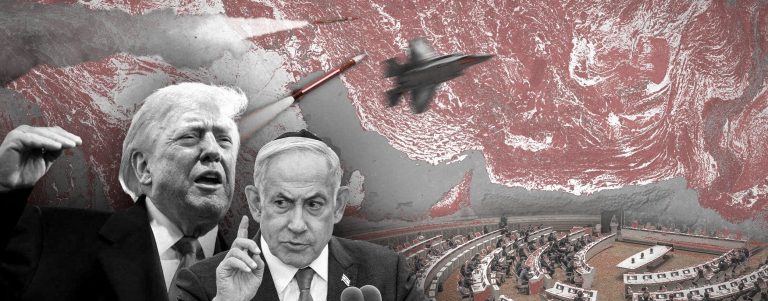
When the UN Security Council passed Resolution 2817 in mid-March, it affirmed the territorial integrity of Bahrain, Kuwait, Saudi Arabia, and the UAE while condemning Iranian strikes on Gulf infrastructure. What the resolution did not do — could not do, given the U.S. veto — was address how those same Gulf states had hosted the military bases from which American and Israeli forces launched the February 28 attacks that started the war. The result was a document that blamed the country absorbing the largest share of military violence while shielding the countries facilitating the campaign against it.
The legal framework governing the use of force is not ambiguous. Under UN Charter Article 51, the right of self-defense applies when an armed attack has already occurred. Neither the United States nor Israel was attacked by Iran before February 28. No Security Council resolution authorized offensive operations against Tehran. The two legal justifications subsequently advanced — the “responsibility to protect” (R2P) doctrine and pre-emptive self-defense — both fail on examination.
What Proportionality Actually Requires
If the initiation of the war sits on legally shaky ground, the conduct of it raises separate questions. Customary international law requires that force used in self-defense be both proportionate and necessary.
The School Strike: The killing of at least 165 schoolgirls in a strike on a girls’ elementary school on the war’s opening day satisfies no proportionality test.
Targeting Asymmetry: Iran’s legal position is, by contrast, stronger than the UNSC resolution implies. Tehran has directed the overwhelming majority of its strikes at military installations directly linked to operations against it. The confirmed civilian death toll from Iranian strikes remains under 50.
The laws of armed conflict do not prohibit all civilian harm; they prohibit attacks designed to cause it as an end in itself. On that standard, the asymmetry between the two sides is visible.
The Legal Logic of the Blockade
The Strait of Hormuz closure is also legally more defensible than Western commentary suggests. The San Remo Manual on international law applicable to armed conflicts at sea permits blockades if they are declared and effectively enforced — both conditions Iran has met.
Furthermore, UN General Assembly Resolution 3314 defines aggression to include permitting one’s territory to be used for attacks against a third state. This provides a legal basis for arguing that Gulf states hosting U.S. and Israeli operations forfeited their neutral status. China and Russia made this argument before abstaining on Resolution 2817, criticizing it as unbalanced and failing to address root causes.
When the Enforcement Mechanism Breaks Down
International law is often enforced selectively by the powerful against the weak. When institutions designed to constrain that pattern instead ratify it, their authority erodes. For states facing existential military threats, a legal framework that shields aggressors while condemning those defending themselves eventually stops functioning as a constraint on behavior.
The real damage of Resolution 2817 may not have been to Iran, but to the credibility of the UN system itself. By failing to acknowledge the role of host nations in the initial strikes, the Security Council has signaled that “territorial integrity” is a selective privilege rather than a universal right.
Original analysis inspired by Aidan J. Simardone from The Cradle. Additional research and verification conducted through multiple sources.