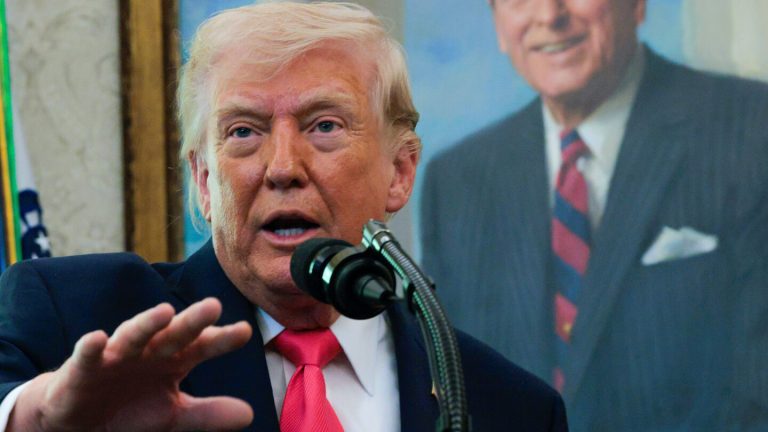
Tuesday, March 24, offered the war’s most contradictory 24 hours yet. Donald Trump told reporters in the Oval Office that Iran is “making sense” in ongoing negotiations and that a deal is close. Simultaneously, the Pentagon was preparing orders for thousands of additional troops to deploy to the Middle East, Israeli strikes continued across Iran and Lebanon, and a projectile struck the grounds of the Bushehr nuclear power plant for the second time in a week. The diplomacy and the escalation are happening in parallel, and neither appears to be slowing the other.
The Pentagon plans to send around 3,000 soldiers from the Army’s elite 82nd Airborne Division to support operations against Iran. Between 2,000 and 3,000 paratroopers have received written orders to deploy, drawn from the division’s Immediate Response Force, which can mobilize worldwide within 18 hours. Combined with two Marine Expeditionary Units already moving toward the Persian Gulf, this could bring 6,000 to 8,000 U.S. ground troops into close proximity to Iran. That is a significant force — though military analysts are careful about what it signals. The 2003 invasion of Iraq required around 160,000 troops for a country a quarter the size of Iran; the combat force currently deploying consists of roughly 3,600 soldiers total. The force being assembled is “consistent with discrete, time-limited operations, not a sustained ground campaign” — rapid-response, modular units designed for raids and seizures of key terrain.
Three Missions, No Final Decision
The scenarios under active consideration include seizing or blockading Kharg Island, clearing Iran’s coastline to reopen the Strait of Hormuz, and — in the most consequential scenario — securing Iran’s nuclear material. Secretary of State Marco Rubio told a congressional briefing that the U.S. may need to physically secure nuclear material inside Iran, saying simply: “People are going to have to go and get it.” No decision on a ground operation has been made final. The decision to put boots on the ground in Iran hasn’t been finalized yet, though either way the move would mark a significant shift in a conflict that has largely been an air campaign.
The nuclear dimension sharpened considerably on Tuesday. A strike targeted the area near Iran’s Bushehr nuclear power plant, marking the second such attack on the vicinity of the critical facility in recent days. A projectile landed inside the plant’s compound but caused no damage, Iran’s atomic energy organization said, accusing the United States and Israel of attacking the facility. Responsibility remains unattributed. The IAEA’s response was pointed: the head of the UN’s nuclear watchdog warned that strikes near Bushehr risked crossing the “reddest line” of nuclear safety, noting that a direct hit on an operating reactor could trigger a severe radiological incident. Russia’s state nuclear agency Rosatom subsequently evacuated another group of its employees from the plant, with 163 people departing Tuesday morning.
A Deal in the Room — or Just in Trump’s Head?
Trump said direct negotiations with Iran are underway, involving Secretary of State Marco Rubio, Vice President Vance, special envoy Steve Witkoff, and Jared Kushner. “The other side, I can tell you, they’d like to make a deal,” the president said. Publicly, Iran has dismissed reports of ongoing negotiations as “fake news” intended to steady oil markets. The gap between those two positions is not small.
Trump said Iran had given the United States a “significant prize” worth a “tremendous amount of money,” adding that it was related to the Strait of Hormuz. The gift, he clarified, “wasn’t nuclear related. It was oil and gas related.” Iran submitted a counterproposal that includes safeguards against future attacks and the country’s right to “sovereignty over the Strait of Hormuz,” according to Iranian state media. That condition — sovereignty over the strait — is unlikely to be acceptable to Washington in any form.
Iran closed the Strait of Hormuz in response to U.S. and Israeli airstrikes, which began on February 28. Iran attacked some 20 ships during three weeks of conflict, with the chokehold interrupting global supply of natural gas and fertilizer, over 1,000 ships stranded near the strait, and about 20,000 seafarers in limbo. Brent crude was trading near $103.67 on Tuesday afternoon — down from above $104 earlier in the day — a market reading that oil traders are interpreting as cautious optimism about talks rather than confidence in their outcome.
The regional picture keeps widening. Israel struck a weapons production facility in Isfahan and continued operations in Lebanon, killing at least six people. Hezbollah fired rockets into northern Israel, killing one Israeli. An Iranian ballistic missile was intercepted over Lebanon. Pakistani Prime Minister Shehbaz Sharif said his country “stands ready” to facilitate talks between the U.S. and Iran — one of several countries now positioning themselves as potential intermediaries in a conflict that began without consulting almost any of them.
Original analysis inspired by Al-Monitor Staff from Al-Monitor. Additional research and verification conducted through multiple sources.