When the ceasefire in Gaza took hold in October 2025, a less visible front went quiet too. The ISNAD influence network — a sprawling, volunteer-driven digital operation that had spent nearly two years flooding Israeli social media with fake Hebrew-language accounts — suddenly lost its reason for being. The war that had unified tens of thousands of activists and given their posts emotional urgency was over. Engagement dropped. Activists drifted. The campaign’s central message — stop the fighting — no longer applied.+1
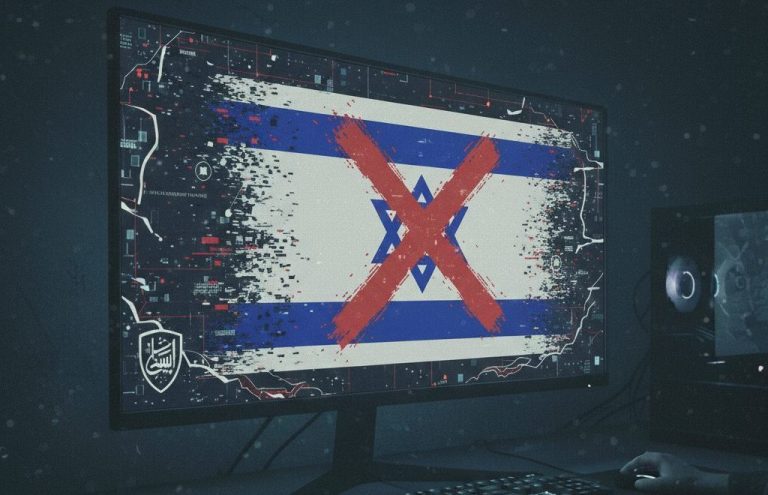
But ISNAD didn’t shut down. It evolved. The campaign tries to assist Hamas by flooding the Israeli discourse on X with narratives aimed at stopping the war and weakening Israeli society from within. Now, according to a new assessment by Israel’s Institute for National Security Studies (INSS), it has pivoted from crisis-driven agitation to something its leaders call “sociological warfare” — a slow-burn strategy aimed at eroding Israeli social cohesion, delegitimizing state institutions, and encouraging emigration. The shift raises fresh questions about how democracies defend themselves against influence operations that disguise themselves as grassroots activism.+1
From Wartime Flooding to Permanent Erosion
ISNAD is a civil-Islamist foreign interference campaign launched in December 2023 by Azeddine Dawidar, a former Egyptian opposition activist in exile and supporter of the Muslim Brotherhood. Operating from Turkey, Dawidar built ISNAD into one of the most unusual information operations ever documented. ISNAD stood out due to its size and discipline. Tens of thousands of participants operated through Telegram, while most impersonation activity occurred on X. They employed artificial intelligence, automation, and social media tactics to pose as authentic Israelis.+1
At its peak during wartime, the network claimed to have published over 800,000 Hebrew-language posts. Unlike Russian or Iranian influence campaigns that are conducted by paid employees, the participants in the ISNAD campaign demonstrate commitment driven by ideological beliefs. That ideological fuel — and the emotional charge of an active war — made the campaign difficult to kill. ISNAD showed unusual resilience. When platforms deleted accounts, new ones quickly appeared. Leaders compared the process to tunnels being destroyed and rebuilt — always returning, sometimes stronger.+2
The INSS assessment identifies a clear pivot after the ceasefire. ISNAD’s leader outlined a three-phase strategic plan: the first phase was violent struggle over the past two years; subsequent phases involve creating internal conflict within Israel by dismantling social cohesion and isolating the country globally from its allies and from the Jewish diaspora. The concept of “sociological warfare” — borrowed from Arabic academic terminology — frames this not as a temporary campaign but as a permanent one, detached from any single conflict event.+2
New Narratives, Same Infrastructure
The new messaging architecture reflects this shift. During the war, ISNAD’s posts focused on casualties, government failures, and hostage-family grief. Now the narratives have reorganized around five themes: delegitimizing Israel’s leadership and institutions; promoting calls for civil disobedience or even civil war; deepening polarization across the political spectrum; fostering despair and encouraging emigration; and amplifying Israel’s international isolation.
The emigration narrative is especially telling. Messages emphasize a “lack of future,” economic erosion, and diplomatic decline, presenting departure from Israel as a rational individual choice. This kind of messaging doesn’t seek to change policy — it seeks to change psychology, chipping away at collective commitment to the national project over months and years.+1
Operationally, ISNAD has also tightened its structure. The campaign has created designated units with distinct responsibilities — influence, support, and defense — and established what it calls “Unit 308,” an internal security body tasked with identifying infiltrators and non-authentic accounts. A new application called BugHunter allows volunteers to report suspicious activity within the network itself. Recruitment has shifted from anonymous mass sign-ups to a more selective model requiring identity verification.+2
These changes were partly driven by real threats. Platform-level changes on X — including new features revealing account origins — have increased the risk of exposure. An Israeli citizen was indicted for allegedly operating within the network, participating in media production and extensive communication with campaign operatives abroad. Despite the repeated campaigns seeking to interfere with Israel’s democratic processes, INSS researcher David Siman-Tov argued that the country is lagging behind the West in its response. “In Israel, there still isn’t a government decision to deal with foreign influence campaigns… There is no single body that is tasked to deal with it. This whole issue sort of falls through the cracks,” he said.
A Template for Democracies Everywhere
ISNAD’s evolution matters beyond the Israeli context. The implications go far beyond Israel. ISNAD’s methods — emotional flooding of discourse, impersonation of citizens, use of advanced tools, and disciplined coordination — create a model others may replicate. Unlike Russian troll farms, ISNAD leveraged civilian-style activism, mobilizing large numbers of “volunteers” rather than relying only on trained professionals. The EU has classified this type of threat as Foreign Information Manipulation and Interference, or FIMI, and is developing systemic responses.+1
The ISNAD case also illustrates a gap in how governments conceptualize the threat. Most democratic counter-influence frameworks — from Romania’s annulled 2024 election to Germany’s struggle with Russian disinformation networks — focus on state-backed operations with clear attribution chains. ISNAD blurs that line. It presents as a volunteer movement while its scale, discipline, and ideological alignment suggest possible backing by an unidentified strategic actor. The campaign’s narratives align closely with Hamas and the Muslim Brotherhood, raising the possibility that the “civilian” façade masks the hand of a strategic actor. Behind the activism lies a political weapon directed not only against Israel, but potentially also against Egypt, Jordan, and other American and Israeli allies.+1
Whether ISNAD can sustain its post-war momentum remains an open question. Its visibility in mainstream Israeli media appears lower than during active fighting. But the shift to “sociological warfare” is designed precisely for reduced attention — a long game played in the background of Israeli political life, exploiting divisions that need no foreign help to deepen but that foreign hands can quietly widen.
Original analysis inspired by David Siman-Tov and Reut David from the Institute for National Security Studies (INSS). Additional research and verification conducted through multiple sources.