When global observers evaluate the strategic reach of the Islamic Republic, they routinely single out the Quds Force as the primary instrument of regional power. This singular focus creates an incomplete picture of how Tehran manages rapid escalations and local skirmishes. Instead of relying on a centralized elite formation for emergency responses, the country utilizes a deeply integrated system spanning multiple defense branches. If a sudden threat targets an island garrison or a critical border facility, the initial responders belong to specialized, highly adaptable formations that operate largely outside international headlines.
The backbone of this distributed approach rests within the Islamic Revolutionary Guard Corps (IRGC) ground units. Western military doctrines typically favor consolidated special operations teams designed for rapid global deployment and immediate extraction. Conversely, Iranian defense planners prioritize sustained presence and asymmetric warfare capabilities across different provincial sectors.
The Saberin units exemplify this strategy, functioning less as a monolithic entity and more as an advanced skill set embedded throughout regional corps. These operatives rotate continuously through volatile zones, managing low-intensity conflicts and securing borders against insurgent factions. Other localized formations, such as the Salman Farsi Brigade, reinforce this provincial defense web. They operate seamlessly between local law enforcement and higher-tier strategic commands to neutralize sudden vulnerabilities. This integrated approach ensures that specialized combatants are already positioned near potential flashpoints rather than waiting for deployment orders from a distant headquarters.
Beyond the IRGC, the regular army maintains its own distinct operational tradition. The Artesh commands the 65th Airborne Special Forces Brigade, widely recognized as NOHED. These paratroopers train rigorously for conventional direct action and reconnaissance, closely resembling classical airborne rangers. While typically reserved for national defense, their unusual 2016 deployment for expeditionary missions in Damascus demonstrated Tehran’s willingness to project regular military power abroad when conditions demand it.
Internal security relies heavily on the paramilitary Basij, which provides crucial tactical support and manpower. Certain elite Basij elements, particularly the Fatehin units, receive advanced training tailored for infantry fighting. During periods of domestic unrest, they frequently execute complex urban operations to secure critical infrastructure. By integrating these local volunteers directly into regional defense plans, commanders guarantee immediate reinforcements during the initial hours of any confrontation.
Strategic Maritime Dominance
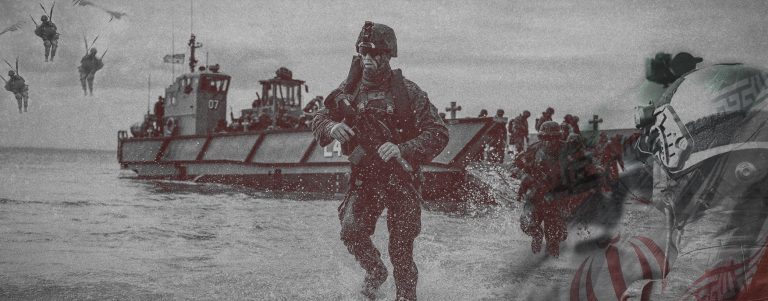
The clearest manifestation of Tehran’s specialized operational capacity exists at sea. The IRGC Navy controls the Sepah Navy Special Force (SNSF), a specialized marine unit stationed across Persian Gulf outposts like Forur Island. These naval commandos execute amphibious assaults, combat diving, and rapid vessel interdictions. Their operational footprint is undeniably visible, having executed numerous counter-piracy patrols and boardings over the past decade.
This naval focus reflects a calculated geopolitical strategy. In any potential conflict with heavily armed external adversaries, Tehran expects to fight limited, geographically confined engagements rather than massive continental wars. Consequently, the ability to swiftly control or disrupt maritime traffic through vital energy corridors remains a top military priority. If an adversary attempts a limited coastal raid, SNSF speedboats and amphibious teams would rapidly swarm the area to deny access.
Ultimately, mapping these forces requires abandoning direct comparisons to Western counterparts. The strength of the Iranian military apparatus lies not in a single recognizable emblem, but in its overlapping, shock-absorbing layers. By combining local Basij responsiveness, decentralized Saberin mobility, and Artesh airborne reserves, the state maintains a continuous defensive posture that is exceptionally difficult for adversaries to dismantle.
Original analysis inspired by Peiman Salehi from The Cradle. Additional research and verification conducted through multiple sources.