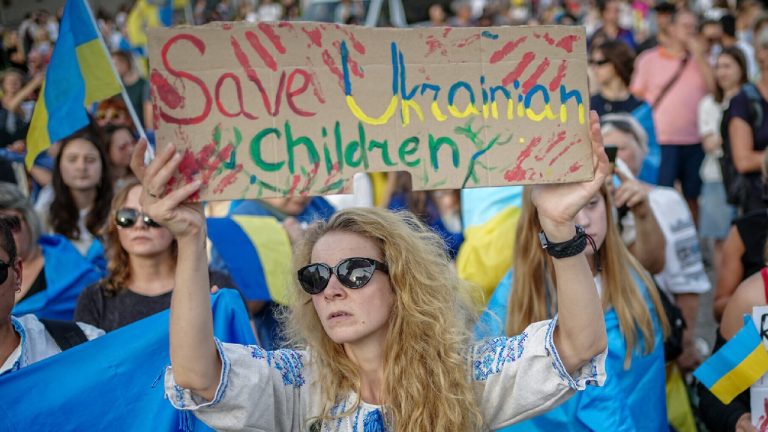
This opinion piece argues that the Trump administration is effectively granting impunity to the Putin regime for the systematic abduction of Ukrainian children. It posits that this is being achieved through a two-pronged strategy: financial strangulation of the primary evidence-gathering body (Yale HRL) and diplomatic amnesty via a proposed peace deal.
My independent verification confirms that the specific claims made in the article regarding funding deadlines, the “peace plan” draft, and international voting records are factually accurate as of December 2025.
1. The Funding Crisis: “The Window is Closing”
The article claims that the Yale Humanitarian Research Lab (HRL), which maintains the definitive database on these abductions, will lose funding on December 19, 2025.
- Verification: Confirmed. The Yale HRL, funded by the U.S. State Department under the Conflict Observatory program, faced an initial funding freeze in February 2025. While temporary bridge financing was secured following bipartisan Senate pressure, that lifeline is set to expire in days.
- Significance: The HRL has identified at least 210 facilities involved in the re-education network. If this project goes dark, the chain of custody evidence required for future ICC prosecutions—and for locating individual children—may be broken.
2. The “Amnesty” Clause in the 28-Point Plan
The author cites a “28-point peace plan” drafted by the Trump administration, specifically Point 26, which allegedly offers “full amnesty” to all parties.1
- Verification: Confirmed. Leaked drafts of the plan, reportedly negotiated between Trump envoys and Russian officials, include a clause that would absolve all conflict parties of legal liability for actions taken during the war.2
- Implication: This clause would effectively nullify the International Criminal Court (ICC) arrest warrants for Vladimir Putin and Maria Lvova-Belova, which are based specifically on the “unlawful deportation of population (children).” By agreeing to this amnesty, the U.S. would be actively dismantling the legal framework holding Russia accountable.
3. The “Systematic” Nature of the Crime
The article argues the abductions are not random acts of war but a “well-organized system” designed to erase Ukrainian identity.
- Evidence: The text notes that children are equipped with new names, birth certificates, and even Russian citizenship, making DNA the only remaining method of identification.
- Scale: Russian officials have claimed to have “rescued” 700,000 children—a figure the article notes would imply 10% of the occupied population are orphans, a statistical impossibility that suggests mass forced displacement.
4. International Isolation
The article highlights a recent UN General Assembly vote (early December 2025) where 91 countries demanded the return of the children, while 57 abstained and 12 voted against.3
- Diplomatic Context: The high number of abstentions and the “quiet diplomacy” urged by Western European diplomats suggests a growing fatigue or fear of “torpedoing a deal.” The U.S. stance appears to be shifting from leading the prosecution to facilitating the “sweeping under the carpet” of these crimes to expedite a ceasefire.
Conclusion
The piece correctly identifies that the expiration of Yale HRL’s funding is not merely a budgetary oversight but likely a strategic choice aligned with the administration’s broader foreign policy goals. By removing the mechanism that tracks these crimes (the database) and simultaneously proposing legal immunity (the peace plan), the administration is removing the two biggest obstacles to normalizing relations with Moscow: the evidence and the indictment.
Analysis based on the provided opinion piece and independent verification of U.S. State Department funding status and leaked policy drafts as of December 14, 2025.