Economic competition between Abu Dhabi and Riyadh has long ceased to be “healthy rivalry for investment” and is increasingly turning into struggle over region’s center of gravity. Through Vision 2030 and regional headquarters regime, Saudi Arabia is trying to shift managerial core to Riyadh, while UAE is working to retain role as traditional hub. In politics, same logic shows up in competition for mediation platforms and influence in conflict zones from Sudan to Yemen, where different bets on local actors and different approaches to settlement generate not synergy, but friction.
Behind façade of shared declarations, there has almost always been delicate contest of interests—where pragmatic alliances coexisted with quiet competition, border disputes with struggles for leadership, and persistent efforts to entrench influence through security, economics, and ties with external patrons. Early crises over borderlands toward Kuwait and mid-20th-century Buraimi dispute when Saudi side attempted to secure foothold in Al Buraimi oasis area left lasting imprint on political memory. 1974 Jeddah Treaty intended to settle border dispute produced long-running disagreements in interpretation and mutual grievances, with Saudi demands viewed as exceptionally tough.
Regional Headquarters Battle
Key nerve of this rivalry is battle to become region’s premier business hub. For more than three decades, UAE—above all Dubai, increasingly Abu Dhabi—has systematically attracted regional headquarters, financial flows, and service infrastructure global business relies on. Saudi pivot strikes at heart of Emirati model. For Riyadh, old configuration means “leakage” of decision-making beyond Kingdom’s borders—and with it, loss of tax revenues, high-skilled jobs, contracts, consulting, legal services, and banking support.
Kingdom’s principal instrument is regional headquarters program. As of January 1, 2024, rules came into force effectively restricting access to public-sector contracts for companies without regional headquarters in Saudi Arabia. RHQ participants offered privileges including zero rate of corporate income tax and withholding tax for extended period, against backdrop of standard 20% corporate tax rate applied to foreign companies in Saudi Arabia. Impact is visible in pace: October 2024 figure was 540 companies with regional headquarters in Riyadh; by October 2025, it reached 675.
IMF recorded 4.5% growth in real non-oil GDP in 2024, while private non-oil investment rose 6.3% year on year. Riyadh is reshaping institutional environment. Investment regulation being updated around principle of equal treatment for domestic and foreign investors, and special economic zones—with tax and regulatory incentives—promoted to capture manufacturing and logistics projects.
For UAE, this is painful: since June 1, 2023, country has had federal corporate tax. Baseline rate is 9% on profits above threshold, while special regimes remain for parts of free-zone ecosystem. Old image of absolute tax exceptionalism fades at precisely moment when Saudi Arabia, by contrast, is handing out targeted super-incentives to very firms it wants to lure.
Logistics and Aviation Competition
Saudi National Transport Strategy targets global top 10 in logistics performance with 300+ million air passengers and 4.5+ million tonnes air cargo. In 2025, DP World and Saudi Port Authority launched upgraded South Container Terminal in Jeddah, capacity more than doubling from 1.8 million TEU to 4 million TEU. In 2023, agreements signed for nine logistics zones across ports, total investment exceeding 6 billion riyals ($1.6 billion).
UAE’s Jebel Ali Port reached 14.5 million TEU in 2023—highest since 2018. Saudi aviation strategy aims for 330 million passengers by 2030 and 30 million transit passengers, up from 3 million in 2019—direct challenge to Dubai-Emirates East-West transit dominance.
Financial Infrastructure and Political Competition
Dubai International Financial Center reported 7,700 active companies by mid-2025. Abu Dhabi Global Market: 2,972 companies, 42% increase in assets under management. Riyadh building alternative: private-sector lending at 69% of GDP (SAR 2,752 billion), 261 active fintech companies, locally managed assets around 1 trillion riyals ($266 billion).
Sudan civil war (April 2023 eruption) represents clearest political competition example. Saudi May 2023 mediation produced Jeddah Declaration, while UAE faced allegations of supporting Rapid Support Forces. Reuters reported UN panel investigating Emirati links to weapons; May 2025 Sudan announced break in relations with UAE.
Yemen split more painful. UAE backed Southern Transitional Council diverging from Saudi line supporting recognized government. December 8, 2025: Reuters reported STC declared control over south including Aden. December 12: joint Saudi-Emirati delegation arrived in Aden amid fighting, casualties in Hadramawt (32 killed, 45 wounded linked to STC-affiliated groups).
Integration and Stability Risks
Main danger for Emirates is not that someone will forcibly “take away” their current hub status, but that trajectory of region’s future growth is changing. Where once Gulf’s overall growth almost automatically capitalized in Dubai (and partly in Abu Dhabi), Riyadh is now trying to lock in rule under which that growth is capitalized primarily inside Saudi Arabia.
Paradox is that, despite sheer scale of resources on both sides, this race can start working against them. If rivalry hardens into zero-sum game, it will not so much consolidate one capital’s leadership at other’s expense as raise cost of regional instability for everyone. Investors and multinationals always sensitive to political risk and to signs of fracture among key players; capital markets and logistics especially vulnerable to uncertainty over rules of game and to geopolitical turbulence.
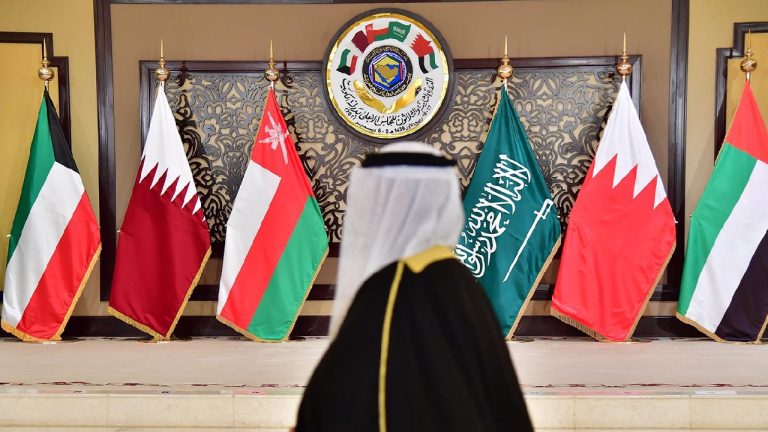
Over longer term, this dynamic could undercut plans for integration within Gulf Cooperation Council. Any meaningful integration requires at least minimal agreement on rules, coordination of economic policy, shared logistics and energy architecture, and basic foreign-policy alignment. If Council’s largest and most ambitious members instead move along logic of competitive divergence, this will inevitably dilute common agenda, reduce integration initiatives to set of declarations, and deepen internal fault lines.
Central question is not who will “win” contest of hubs and mediators, but whether Abu Dhabi and Riyadh can agree on boundaries of competition and on areas of compromise. If they cannot, rivalry will begin to erode both sides’ positions at once—along with resilience of entire regional architecture they both aspire to lead.
Original analysis by Murad Sadygzade, President of Middle East Studies, from RT News. Republished with additional research and verification by ThinkTanksMonitor.