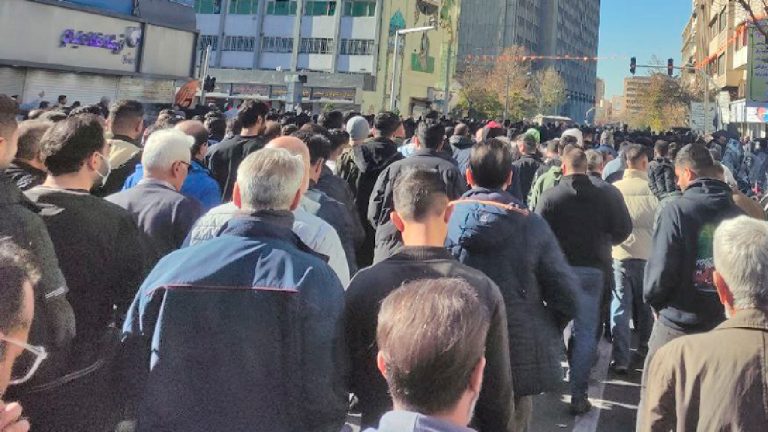
What began on December 28, 2025, as shopkeepers shuttering their stalls at Tehran’s historic Grand Bazaar has rapidly evolved into one of Iran’s most geographically expansive waves of unrest since 1979. The protests, now spreading across more than 70 towns and cities according to human rights monitors, have exposed deep fractures within Iranian society.
The Economic Catalyst: Currency Collapse and Dual Diagnoses
The immediate trigger is the catastrophic collapse of the Iranian rial, which lost nearly 30 percent of its value within a week, erasing millions of citizens’ savings. The Tehran bazaar controls approximately 40 percent of Iran’s consumer goods distribution, making its paralysis a critical signal for an economy already strained by decades of sanctions and mismanagement.
Perspectives diverge sharply on root causes. Research using synthetic control methods demonstrates that US sanctions led to a 17 percentage point annual reduction in Iran’s middle class between 2012 and 2019—a structural demolition of society’s stable center.
However, evidence from Iran’s business community presents a contrasting view. Foreign Minister Abbas Araghchi reported that Isfahan businessmen identified problems in the Central Bank, Customs Office, and various ministries rather than sanctions. A government poll shows 73 percent of Iranians point to domestic governance failures as the primary cause. The US State Department warns that violent crackdowns will trigger additional sanctions, while the International Monetary Fund monitors Iran’s deteriorating indicators.
A Dangerous Coalition: Breaking Historical Patterns
Unlike past movements led by students, this uprising forges a rare alliance between the urban middle class, bazaar merchants, and traditional working class. The bazaar’s historical role makes this particularly significant. For decades, analysts believed bazaaris would never rebel against the system they helped create in the Islamic Revolution. This defection shatters longstanding assumptions.
Demonstrations now span from peripheral regions to the clerical stronghold of Qom, where chants against Supreme Leader Khamenei were heard. The Human Rights Activists News Agency documents at least seven deaths, including minors. World Bank data shows Iran’s growing urban populations now experiencing downward mobility, while Carnegie Endowment research indicates cross-class coalitions pose the gravest threat to authoritarian regimes.
From Economic Grievance to Political Challenge
Protest slogans shifted rapidly from “Where is our money?” to “Death to the Dictator,” demonstrating a movement with political character from day one—the most serious challenge since 1979. President Pezeshkian cannot address demands because real decision-makers have different priorities.
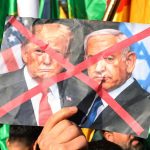
External factors complicate matters. Trump warned Washington would “rescue” protesters, triggering swift pushback. Parliament Speaker Ghalibaf warned US interests across the region would become “legitimate targets” if attacked. The Council on Foreign Relations notes current dynamics exceed historical precedents in geographic spread and cross-class composition.
The Regime’s Four Scenarios
The regime faces four possible scenarios: structural reform involving renewed Western diplomacy, prolonged unrest with calibrated repression (learning from Venezuela), foreign-led regime change exploiting Trump’s rhetoric, or fragmentation into civil conflict. The regime responds through symbolic concessions—the Central Bank governor’s resignation—and deployment of Basij and IRGC forces.
Human Rights Watch documents escalation patterns from tear gas to live fire. Internal contradictions emerge: senior adviser Ali-Akbar Velayati declared readiness to “eat grass” while financing regional resistance, contrasting sharply with President Pezeshkian’s acknowledgment: “We are sitting on treasures, yet people are struggling.”
The Sanctions Debate and Domestic Failures
The sharpest divide concerns whether international sanctions or domestic mismanagement caused the crisis. Research demonstrates that while sanctions decrease organized civil war risk through nationalist “rally-around-the-flag” effects, they create pressure cookers for civil disorder and terrorism—a paradox where sanctions produce polarization rather than regime change.
Yet domestic failures are substantial. An open letter by 180 Iranian economists insists solutions exist but require political change. The regime’s clientalization strategy subsidizes 5 million non-productive people while selling goods below cost, creating perverse incentives where petrol is smuggled abroad. The Peterson Institute finds mixed sanctions effectiveness, while Carnegie Middle East Center documents how IRGC-controlled parallel economies operate beyond accountability.
Vanity projects compound problems. Iran’s nuclear program hasn’t produced electricity or warheads after 30 years, while hosting 40,000 theology students diverts resources from economic development.
Regional Stakes and Internal Divisions
A critical tension exists between Iran’s dual power centers. The Supreme Leader focuses on military capabilities for confronting Israel, while Pezeshkian’s cabinet struggles to prevent economic unraveling. This creates failed dialogue: the government cannot pressure hardliners for concessions nor meet minimal demands. The European Council on Foreign Relations documents how competing authorities create governance paralysis.
For Ukraine, Israel, and the West, Tehran’s role as military supplier means internal instability has direct international security implications. The Institute for the Study of War tracks Iranian support to Hezbollah, Iraqi militias, and Houthis. Israeli Prime Minister Netanyahu states regime change must come from within, while Tehran views external support as justifying interference.
Exiled Crown Prince Reza Pahlavi has called for unity, but translating street anger into coherent alternatives remains formidable. The Brookings Institution highlights opposition fragmentation between monarchists, republicans, and federalists, while the International Crisis Group emphasizes external intervention typically strengthens authoritarian regimes.
Critical Factors Shaping Outcomes
Several factors will prove decisive: whether protests spread to oil and gas sectors monitored by the International Energy Agency, security force cohesion studied by the Center for Naval Analyses, international response balancing support with avoiding intervention as emphasized by the European Union, protest movement coherence across class and regional divides per Harvard’s Weatherhead Center research, and internal regime dynamics tracked by the Middle East Institute.
Conclusion: Uncertain Futures
The crisis emerges from intersecting failures: sanctions demolishing the middle class, governance dysfunction, costly proxy commitments, and resource mismanagement. What makes this moment dangerous is the convergence of internal fractures and external pressures, with the regime caught between hardline military preparations and economic collapse.
For Iranians, the question is whether their children have a future in Iran. The systematic middle-class destruction has created a society where professionals cannot afford necessities and savings evaporate overnight. The international community faces a dilemma: supporting democratic aspirations while avoiding interventions triggering nationalist backlash. Research demonstrates external pressure strengthens authoritarian resilience while increasing disorder—a volatile cycle victimizing ordinary Iranians caught between an uncompromising regime and unrelenting sanctions.
Whether Iran’s streets witness transformative change or brutal reassertion of control remains uncertain. The status quo—economic decline, political paralysis, widening repression—cannot hold indefinitely. The question is not whether change comes, but what form it takes and at what cost to the Iranian people.