
As the US-Israeli war on Iran entered its eleventh day on Tuesday, March 10, 2026, the conflict settled into a grim rhythm of escalation. Defense Secretary Pete Hegseth announced that “today will be, yet again, our most intense day of strikes inside Iran” — “the most fighters, the most bombers, the most strikes”. Meanwhile, Iran fired fresh volleys of drones and missiles at Gulf states, US intelligence detected signs that Tehran may deploy mines in the Strait of Hormuz, and the Pentagon confirmed for the first time that roughly 140 American service members have been wounded since fighting began on February 28.
Casualties and Regional Toll
The Pentagon released its first official tally of US casualties on Tuesday, stating that approximately 140 service members have been injured, with eight listed as severely injured. Most injuries were minor, and 108 wounded troops have already returned to duty. Seven US soldiers have died so far in the conflict.
The broader human toll is staggering. While reporting remains difficult to verify due to restricted media access in Iran, local health authorities and monitoring groups suggest heavy losses. The Kurdish human rights group Hengaw estimated over 4,000 Iranian military personnel have been killed in US-Israeli strikes, and over 1,200 people are reported killed in Iran overall. In Lebanon, the death toll from Israeli assaults has neared 400 according to the health ministry, with over 750,000 people displaced. Human Rights Watch has accused Israel of using white phosphorus munitions over residential areas in southern Lebanon.
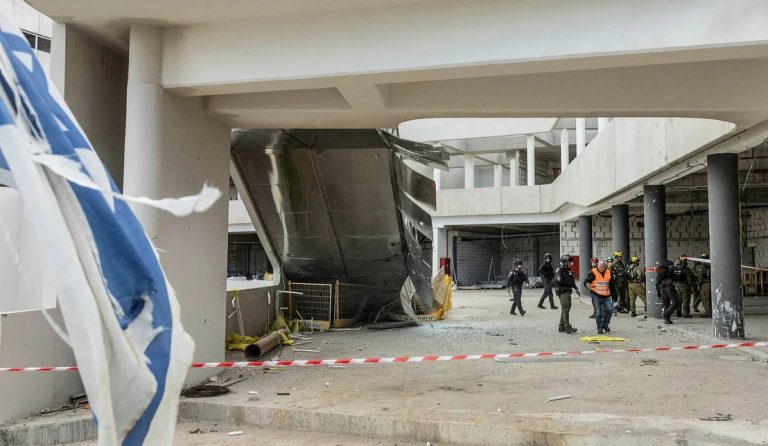
On Tuesday, Kuwait, the UAE, Saudi Arabia, and Bahrain all reported intercepting Iranian missiles and drones. At least four people were killed in the UAE, and the US consulate in Dubai reportedly caught fire after being hit by a suspected drone. In Israel, sirens sounded in Jerusalem and Tel Aviv as defense systems intercepted barrages, though submunitions from an Iranian cluster missile reportedly killed two workers near Tel Aviv.
The Hormuz Flashpoint
The most dangerous escalation is developing beneath the water. US intelligence detected indications that Iran is preparing to deploy naval mines in the Strait of Hormuz. Iran’s naval mine stockpile is estimated between 2,000 and 6,000, consisting of locally produced, Russian, and Chinese models that can be deployed by small, difficult-to-track boats.
Traffic through the strait, which handles 20% of the world’s crude oil, has ground to a near halt. Iran achieved this de facto closure through selective drone strikes and threats, causing insurers to skyrocket rates and shipping companies to voluntarily avoid the area.
Trump responded with a blunt threat on Truth Social: “If Iran does anything that stops the flow of Oil within the Strait of Hormuz, they will be hit TWENTY TIMES HARDER”. He warned that “Death, Fire, and Fury will reign upon them” and suggested the US would target sites that are “easily destroyable,” making it impossible for Iran to rebuild.
Confusion momentarily spiked when Energy Secretary Chris Wright appeared to suggest the US Navy was already escorting tankers through the strait; however, White House Press Secretary Karoline Leavitt corrected the record, stating the Navy has not yet escorted any vessels. Oil prices have seen massive swings, peaking near $120 a barrel on Monday before settling around $90 on Tuesday — still nearly 24% higher than when the war began.
Mixed Signals From Washington and Tehran
The White House continues to send varying messages about the war’s duration. Trump described the conflict as a “short-term excursion” and told CBS he believes the war is “very complete, pretty much”. In contrast, Israeli Prime Minister Benjamin Netanyahu vowed the campaign would continue until the Iranian people “cast off the yoke of tyranny,” adding that current actions were “breaking their bones”.
Tehran remains defiant. The Revolutionary Guard Corps (IRGC) stated that Iran would “determine the end of the war” and warned it would not allow “one litre of oil” to be exported from the region if strikes continue. Hundreds of thousands rallied in Tehran to support the new Supreme Leader, Mojtaba Khamenei, who was selected following the death of his father, Ayatollah Ali Khamenei, during the opening strikes of the war.
As the war enters its second week, the gap between Washington’s optimism and the reality on the ground remains wide. While the administration claims it is ahead of schedule, the humanitarian toll is mounting, and the threat of a prolonged blockade in the Strait of Hormuz looms over the global economy.
Original analysis inspired by Haaretz Editorial Staff from Haaretz. Additional research and verification conducted through multiple sources.
By ThinkTanksMonitor


