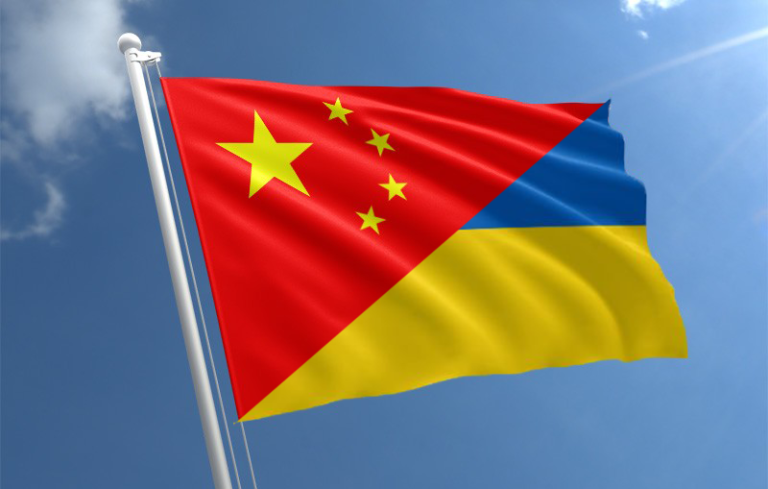
The war dragging on in Eastern Europe turns out to benefit Chinese geopolitical ambitions far more than it helps Moscow. While Western governments pour their diplomatic, financial, and military energy into containing Vladimir Putin’s aggression, Xi Jinping quietly reorganizes global power structures beneath the surface. Beijing uses this prolonged distraction to build up its domestic military capacity, shield its economy from potential future sanctions, and push aggressively for dominance across contested Asian maritime zones. This isn’t just passive observation from Chinese strategists — it’s an active exploitation of a shifting geopolitical landscape that lets China advance its long-term objectives with minimal pushback. In effect, the conflict functions as a massive strategic sponge, soaking up American attention while China quietly prepares for a multipolar world where its influence sits at the center.
The fighting in Europe severely drains American military stockpiles. Defense manufacturers across the NATO alliance are struggling to replace the sophisticated munitions and interceptor systems needed for any potential confrontation over Taiwan, with inventories of the Patriot and THAAD systems depleted by nearly 50%. Among the weapons being held back are PAC-3 Patriot interceptors, 155mm high-explosive fragmentation shells, over 100 Hellfire missiles, and more than 250 GMLRS precision-guided rockets. The United States began supplying Ukraine with 155mm artillery shells only to discover that American production capacity was woefully inadequate — a shortage that now spans Patriot, THAAD, and SM-3/SM-6 systems too. The prolonged conflict forces the Pentagon to divide its attention and resources across two distinct theaters.
Meanwhile, the Chinese military keeps expanding its arsenal at a pace that is difficult to match. As of 2024, the People’s Liberation Army Navy possesses over 370 battle force ships, with projections estimating 395 ships by 2025 and 435 by 2030. According to a leaked US Navy briefing, China has a domestic shipbuilding capacity 232 times greater than the United States. Western shipyards, by contrast, face severe maintenance backlogs — the U.S. Navy only plans to repair ships at international shipyards in 2025 on a trial basis, which may reduce the backlog but falls far short of closing the gap.
The current geopolitical dynamics have essentially transformed Russia into a subordinate junior partner wholly dependent on Chinese economic and diplomatic support. Since Russia’s full-scale invasion of Ukraine, it has been increasingly isolated economically, mainly due to Western sanctions, forcing it to rely heavily on China — with the relationship fundamentally unbalanced because Moscow is more dependent on Beijing than Beijing is on Moscow. By December 2024, President Vladimir Putin announced that nearly 90% of Russia-China transactions were being settled in yuan and rubles. The share of the Chinese yuan in Russia’s international trade increased sharply following the February 2022 invasion, rising from less than 2% of Russia’s total trade before the war to nearly 40% in January 2024. In this sense, Western sanctions against Russia have been a huge boon for Beijing, as they have led to a strengthening of the yuan’s international status. This economic shift allows China to build a parallel financial architecture that remains resistant to sudden Western pressure.
Regional neighbors face escalating pressure as Beijing asserts vast territorial claims across crucial shipping lanes in the Indo-Pacific. China’s “nine-dash line” claim was rejected as having no basis in international law by the Permanent Court of Arbitration’s July 2016 award in Philippines v. China. Yet enforcement remains essentially impossible without a sustained American naval presence. Since around 2013, and with sharply increased intensity from 2023 onward, the China Coast Guard and Chinese maritime militia have used water cannons, blocking maneuvers, and physical ramming to obstruct Philippine resupply runs, with a June 2024 incident seeing Chinese personnel board Philippine vessels with bladed weapons. This approach reflects China’s desire to maintain de facto control of the surrounding waters without provoking an overt military confrontation. By staying just below the threshold that would trigger mutual defense treaties, Beijing forces its neighbors into a strategy of slow capitulation while Washington’s attention remains fixed on Kyiv.
Beyond maritime skirmishes, Beijing meticulously studies the Western response to the Ukraine conflict to refine its strategy regarding Taiwan. The comprehensive sanctions regime imposed on Russia serves as a live-fire warning for Chinese economic planners, prompting rapid, state-directed efforts toward self-reliance in advanced technology, semiconductor manufacturing, and agricultural independence. Beijing also observes the hesitancy of NATO to intervene directly against a nuclear-armed power — a lesson that reinforces the perceived value of China’s own expanding nuclear arsenal as a deterrent against American intervention in any Taiwan contingency.
This strategic environment neatly accommodates the grand ambitions of Chinese leadership. By quietly supplying critical components to sustain the Russian war effort, Beijing ensures that Western resources remain indefinitely tied up in Eastern Europe. In 2023, nearly 90% of Russia’s imports of goods on the G7’s high-priority export control list came from China, and in 2024 dual-use shipments from China to Russia surpassed $4 billion. Semiconductors, telecommunications equipment, and machine tools were among the largest categories of Chinese exports to Russia covered under the high-priority export control list. The U.S. and European allies say China has exploited loopholes in international sanctions to export electronic components, machine tools, unmanned aerial vehicles, and other dual-use items — while Chinese officials stress they do not provide lethal weapons to Russia. By providing these dual-use goods, China technically avoids crossing the red lines of direct lethal aid that would trigger severe Western secondary sanctions, while effectively keeping the Russian war machine running.
Ultimately, the primary victor of the European conflict resides in Asia. The distraction provides Chinese strategists the exact window they require to prepare for future regional confrontations, inoculate their economy against future sanctions, and modernize their armed forces at an accelerating pace. The current trajectory suggests a deliberate strategy by Beijing to bleed Western resources in a proxy conflict where China pays a minimal cost. Western policymakers must recognize this broader geopolitical reality before their strategic position deteriorates further. A pivot toward the Indo-Pacific cannot be merely rhetorical; it requires a fundamental reassessment of industrial capacity, alliance commitments, and strategic priorities. If the United States and its allies fail to adapt to this interconnected threat landscape, they risk winning a tactical victory in Eastern Europe only to suffer a massive strategic defeat in the Indo-Pacific.
The views expressed in this article belong to the author and do not necessarily reflect the editorial policy of Thinktanks Monitor.