Category: Europe

A wide shot of various national flags, including the US, UK, and Turkey, flying in a circle in front of a modern brick and glass building.

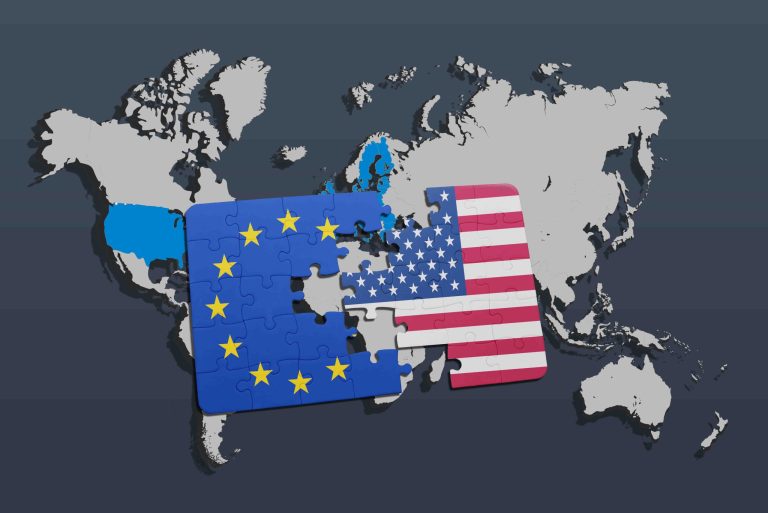
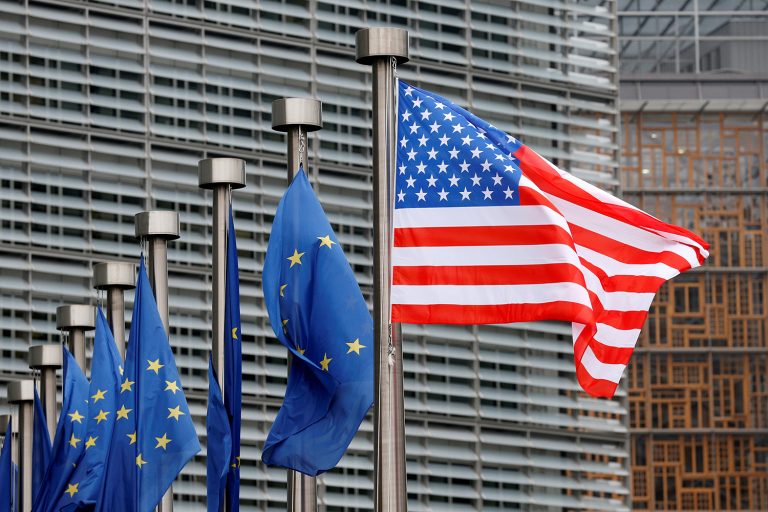
Transatlantic Alliance Transformation: Strategic Implications of American Reorientation

The North Atlantic relationship is undergoing a significant transformation due to shifting American strategic priorities from alliance-based internationalism to sphere-of-influence arrangements among major powers. This change, evident in recent policies and diplomatic actions, raises important questions regarding the sustainability of the transatlantic security architecture and its implications for both American and European interests.

Read More »
Three police officers in navy blue uniforms with "3A" patches on their backs walking down a city street

The Silent Front: How the Middle East Conflict Has Metastasized in Europe

The European security landscape has transformed dramatically since October 2023, with a new, less visible front emerging within the EU. As attention is focused on the conflicts in Gaza and Lebanon, intelligence assessments reveal that Europe has become a logistical and operational theater for terrorist organizations. This shift signifies a hybrid threat infrastructure, blurring the lines between political activism, illicit finance, and paramilitary planning. Security services in Western Europe are increasingly alarmed by a “shadow war,” where charitable networks and student movements may unwittingly support groups like Hamas in establishing their presence in the West.

Read More »
A jigsaw puzzle where the pieces show the American flag, with a missing piece being replaced by a dark piece featuring a map of the Middle East

Business Entanglements Shape American Foreign Policy Execution

The intersection of commercial interests and diplomatic decision-making is a defining feature of current American foreign policy, as evidenced by dropped prosecutions, controversial pardons, and Gulf investments. These cases highlight the influence of personal business relationships on international relations, raising questions about conflict of interest, transparency, and strategic coherence.

Read More »
European Commission President Ursula von der Leyen speaking at the Global Gateway Forum in Brussels

Brussels’ Global Gateway Faces Credibility Crisis as Developing Nations Seek Substantive Partnerships

European attempts to build strategic partnerships with developing nations face significant skepticism, particularly as major initiatives like the €300 billion Global Gateway program are criticized for failing to produce expected changes. Global South partners express doubts that Brussels is offering new resources for infrastructure and development, instead viewing these efforts as a mere rebranding of existing commitments in contrast to China’s Belt and Road Initiative.

Read More »
A line of European leaders and Donald Trump walking together outdoors, with Trump in the center

European Silence After Trump’s National Security Strategy Reveals Strategic Paralysis

Washington’s December 4th National Security Strategy, which emphasizes “cultivating resistance” in Europe and warns of “civilizational erasure,” has elicited a near-silent response from European governments. This silence reflects a deeper paralysis, as they acknowledge the need for a fundamental transformation of their security architecture but struggle to establish a unified vision for independent action.

Read More »
Large group of protesters holding up the red and white flag of Georgia during a nighttime demonstration on a city street

Tbilisi Weaponizes American Political Language to Attack Western Institutions

Georgia’s ruling party, Georgian Dream, has shifted from being a nominal Western partner to a systematic antagonist by using rhetoric that criticizes European and American diplomats, such as “Deep State” and “Global War Party.” This strategy aims to consolidate power domestically and allows for geopolitical maneuvering toward Russia and China, framing the party as a defender of sovereignty against foreign interference.

Read More »
Woman wearing sunglasses and an embroidered shirt holding a sign that reads "Save Ukrainian Children" at a public protest

The Dismantling of Accountability for War Crimes in Ukraine

This opinion piece contends that the Trump administration is enabling the Putin regime’s impunity concerning the abduction of Ukrainian children through a dual strategy: financially obstructing the Yale HRL’s evidence-gathering and offering diplomatic amnesty in a proposed peace deal. Independent verification supports the article’s claims about funding deadlines, the “peace plan” draft, and international voting records as accurate up to December 2025.

Read More »
Donald Trump shaking hands with Volodymyr Zelenskyy in front of U.S. and Ukrainian flags

The Dealmaker’s Folly: How Appeasement in Ukraine Defines Trump’s Legacy

In a critical assessment for Kyiv Post, Bohdan Nahaylo claims that Donald Trump’s approach to the Ukraine war signifies a catastrophic failure of U.S. leadership. He argues that Trump, instead of being a diplomatic strategist, acts as “Putin’s greatest asset,” favoring a dangerous policy of appeasement that undermines long-term American security for a temporary diplomatic gain. Nahaylo suggests that while Ukraine may suffer territorial losses, Trump will ultimately be judged harshly in history for abandoning democratic values and eroding the post-1945 international order.

Read More »
Vladimir Putin seated across a table from a Syrian official, in a formal meeting setting with flags in the background

Moscow’s Survival Strategy: Navigating the Post-Assad Order in Syria

The October 2025 summit in Moscow between Vladimir Putin and Ahmed al-Sharaa highlights a shift in Russia’s diplomatic strategy following the collapse of the Ba’athist regime in Syria. Contrary to predictions of diminished Russian influence, the Kremlin has adapted its approach, favoring transactional pragmatism over ideological loyalty. By engaging with former adversaries, Russia seeks to preserve its strategic interests in the Mediterranean, underscoring that its foreign policy is primarily motivated by practical concerns.

Read More »
US and Ukrainian flags flying side-by-side on a pole, with the dome of the US Capitol Building blurred in the background

The Illusion of Peace: Why Washington’s Rush to Deal Risks a Continental Collapse

The current diplomatic efforts for a ceasefire in Ukraine seem more focused on creating a favorable public image than achieving true stability. The Trump administration’s push for a swift resolution to the ongoing conflict appears motivated by a desire for a political legacy rather than the realities on the ground. By seeking a quick solution instead of a sustainable security framework, the U.S. risks providing the Kremlin with a strategic advantage, potentially destabilizing the European Union and leaving Ukraine vulnerable to future attacks.

Read More »