Category: Asia

A 3D silver "AI" logo next to a red map of China on a digital circuit board background.

How Washington, Beijing, and New Delhi Are Shaping the Global AI Landscape

The global AI landscape in 2026 is defined by a massive divergence in how the world’s three largest tech powers deploy capital and enforce rules. As the market moves toward an estimated $1.81 trillion to $2.4 trillion valuation by 2030, Washington, Beijing, and New Delhi have institutionalized three distinct “stacks” for the future of intelligence.

Read More »
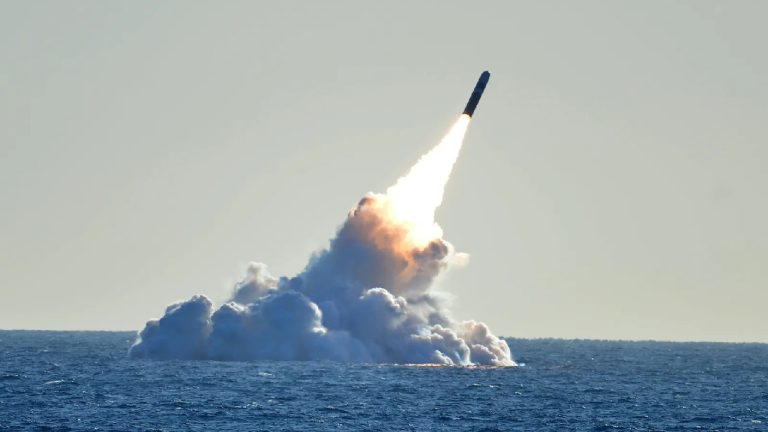
A dark missile launching vertically from the blue ocean with a large plume of white smoke and a bright fire trail at its base.

Allied Missile Defense Could Reshape East Asia’s SLBM Threat

This analysis examines how a trilateral, sea-based missile defense architecture between the U.S., Japan, and South Korea could neutralize the evolving North Korean Submarine-Launched Ballistic Missile (SLBM) threat. By moving away from the “sole defender” model depicted in the 2025 thriller A House of Dynamite, the alliance can leverage forward-deployed Aegis assets to create a layered, multi-azimuth defense that buys critical decision-making time.

Read More »
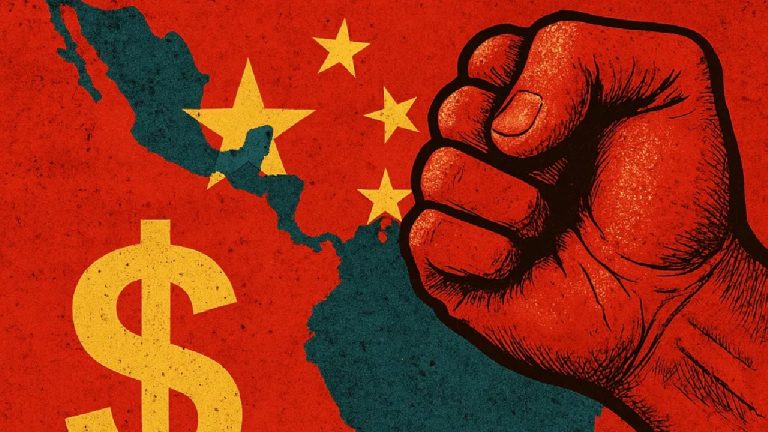
Illustration featuring a large red clenched fist on the right and a yellow dollar sign over a silhouette map of Central and South America on the left, set against a red background with yellow stars.

Economic Pragmatism Trumps Ideology in Latin America’s China Dilemma

This article examines how Latin America’s deep-seated integration into Chinese trade networks—exceeding $515 billion in 2024—overrides the region’s recent rightward political shifts. Using case studies from Argentina’s soy exports to Brazil’s response to U.S. tariffs, it argues that economic pragmatism and the “commercial logic of resource extraction” remain more influential than ideological alignment with Washington.

Read More »
A glass globe of the Earth sits atop a pile of various international banknotes, surrounded by glowing digital currency symbols and a rising arrow.

Strategic Realignment and the Gradual Erosion of Economic Influence

This analysis details how global actors are countering unpredictable U.S. trade policies through “accelerated pursuit of alternative partnerships” and financial diversification. It highlights the shift toward conventional multilateral agreements (like the EU-India and Canada-China deals) and the steady decline of the dollar’s share in global reserves—falling from 72% in 2000 to 56.9% by 2025—as nations hedge against geopolitical risk.

Read More »
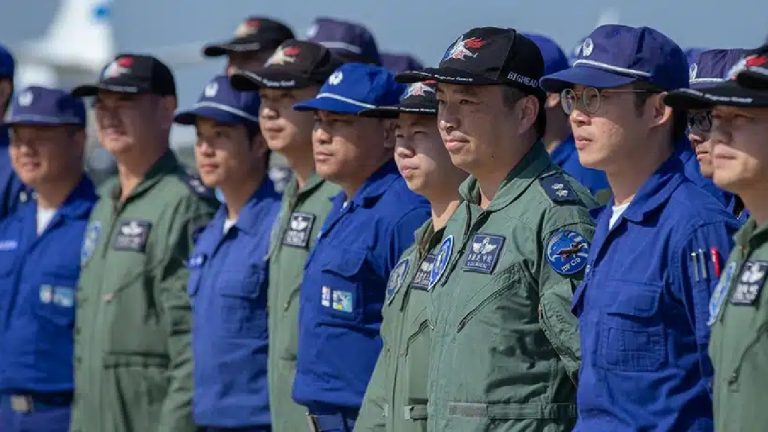
A group of military personnel in blue and green flight suits standing in formation.

Ukraine’s Defense Innovations Present Critical Lessons for Taiwan’s Security Strategy

In January 2026, the security of Taiwan is being redefined by “battlefield truths” exported from Ukraine. As Taipei faces intensifying pressure from Beijing—most recently via the “Justice Mission 2025” drills—it has fundamentally pivoted its defense strategy toward asymmetric “porcupine” warfare, prioritizing millions of low-cost drones over traditional “big toy” platforms like submarines and fighter jets.

Read More »
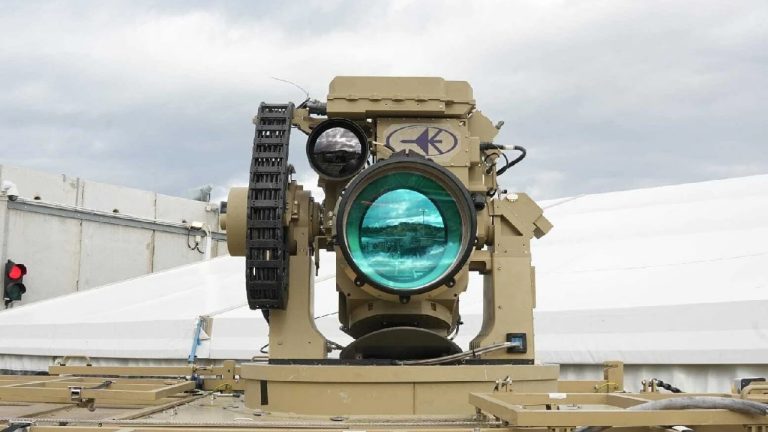
A sophisticated tan-colored laser or optical weapon system mounted on a platform.

Weaponizing AI Supply Chains: Washington’s Pax Silica Initiative Launches New Economic Warfare Front

On December 12, 2025, Washington launched Pax Silica, a strategic US-led initiative designed to secure the “silicon supply chain” and counter China’s dominance in the AI economy. Described by Under Secretary Jacob Helberg as the “G7 of the AI age,” the pact treats computing power and critical minerals as the strategic equivalents of 20th-century oil and steel.

Read More »
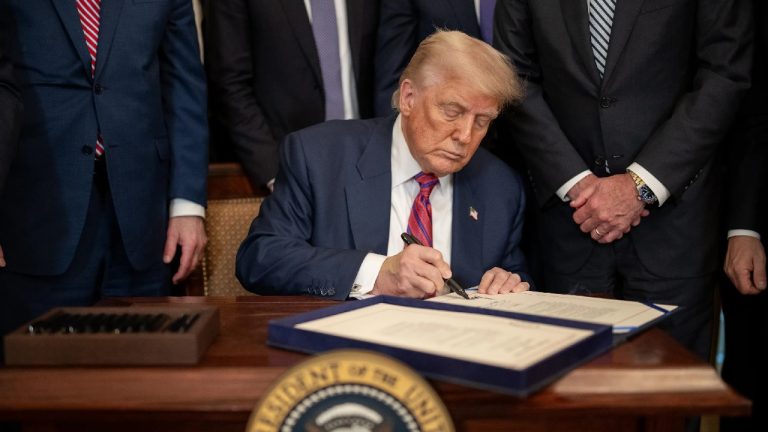
Donald Trump sitting at a dark wooden desk, focused on signing a formal document with a black pen, surrounded by people in suits.

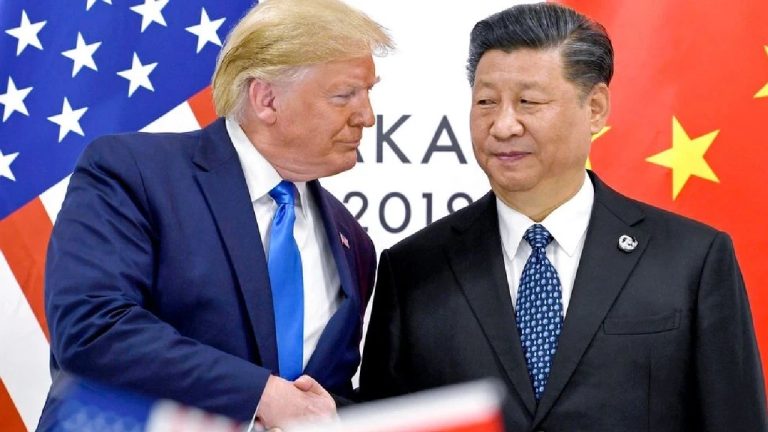
Pacific-Centered Strategy: Trump’s National Security Approach Redefines Global Competition

Trump’s 2025 National Security Strategy prioritizes economic competition over ideological warfare, reframing China as a commercial rival rather than a systemic threat. By reviving the Monroe Doctrine and demanding allies triple defense spending, the administration seeks “low-cost hegemony” while shifting America’s strategic center of gravity toward the Pacific Rim.

Read More »
Narendra Modi and Xi Jinping engaged in a conversation while standing on a wooden boat or deck with a lake and greenery in the background.

Navigating Rivalry: How India Manages Its Complex Relationship with China

As of late 2025, India’s relationship with China has evolved into a “managed rivalry.” Following the historic October 2024 border patrol agreement, both nations have completed initial troop disengagements at friction points like Depsang and Demchok. However, this tactical thaw has not resolved the underlying paradox: a hardened military standoff alongside a record-breaking trade deficit.

Read More »
Mohammed bin Salman in traditional Saudi attire shaking hands with Xi Jinping in a black suit, standing in front of a row of international flags.

Expanding Orbital Influence: China’s Strategic Space Partnerships in the Middle East and North Africa

China has transitioned from a traditional infrastructure builder to a primary provider of high-tech space solutions for the Middle East and North Africa (MENA). By offering launch services, satellite manufacturing, and the BeiDou navigation system, Beijing is establishing a “Space Silk Road” that challenges Western technological dominance while enabling regional powers to achieve “strategic autonomy.”

Read More »