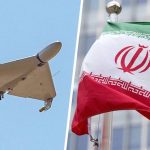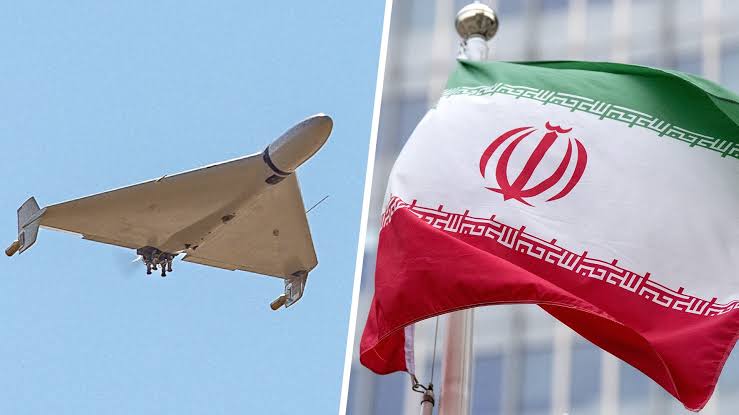
The war that opened on 28 February was supposed to be a short demonstration of American and Israeli airpower. The first day hit nuclear sites, missile bases, and the men who ran them. Ali Khamenei was killed. So were other senior officers. Six months later the Islamic Republic is still standing, his son holds the office, and oil still moves only when Tehran and Washington allow it. The political shock is not that Iran absorbed bombs. It is that cheap, accurate drones and missiles let a weaker state close the Strait of Hormuz and force richer armies to spend their best interceptors.
That is the lesson now traveling from workshop to workshop. A one way attack drone in the Shahed family costs tens of thousands of dollars. A Patriot interceptor costs about 4 million. A THAAD round costs far more. Defenders can still win a single shot. They lose the ledger when the attacker can fire again tomorrow and the factory can keep pace.
Iran planned for decapitation. It spread missile sites underground and kept production lines in many places rather than in a few obvious halls. American and Israeli aircraft wrecked a large share of the visible arsenal. They did not erase the ability to launch. Tehran could not match Tomahawks plane for plane. It did not have to. It could fire at bases, tankers, and energy sites until the price of stopping each wave became the story in Washington.
Stockpiles Run Faster Than Factories
By midsummer the United States had used nearly two thirds of its Patriot interceptors and about a third of its THAAD stock. Analysts at the Center for Strategic and International Studies put remaining Patriots near 800 and THAAD near 250. Partners in the Gulf are running low as well. Operations had already cost more than 33 billion dollars by late June, most of that in munitions. Those same magazines are the reserve that planners want for Taiwan and for Ukraine. Every round fired over the Gulf is a round that cannot sit in a Pacific warehouse.
Other capitals have drawn the same map. Poland raised spending on drones and counter drone gear from about 27 million dollars in late 2023 to roughly 6.9 billion this year and opened local plants. France, Germany, the United Kingdom, Italy, Poland, and Sweden signed a letter of intent for a shared one way munition with a range above 300 miles and a target price under 100,000 dollars. Japan requested a record 55.6 billion dollar defense budget and put cheap attack drones at the center of what Tokyo calls new ways of fighting. North Korea has taken Iranian designs through Russia. Saudi Arabia has shown its own long range copy. The club of states that can fire accurate mass is no longer a rich world monopoly.
Defense is trying to catch up and has not. Directed energy and microwave systems remain experiments. Ukraine fields interceptor drones for a little more than 1,000 dollars, which is the right price class, but those designs are not yet a global standard. Lockheed Martin has promised a cheaper Patriot variant. Promises do not refill a magazine in a month.
Artificial intelligence did give the United States a real edge in the opening blitz. Tools such as the Maven Smart System can turn satellite feeds into target lists faster than staff officers with slide decks. That speed also produced the war’s worst civilian disaster. On the first day a strike destroyed a girls school in Minab and killed 120 children, according to local prosecutors. Reporting later tied the target package to intelligence that mislabeled the site and to software that moves faster than human doubt. Speed is a weapon. It is also a way to outsource judgment.
The next contest is organizational, not poetic. American units still train around scarce, expensive aircraft and cruise missiles. Those systems remain hard to stop and still matter. They no longer decide a long war by themselves. Building thousands of cheap munitions requires different factories, different training, and officers who stay in place long enough to change habits. The Pentagon has been cycling leaders instead. If the defense budget shrinks, the temptation will be to protect the familiar fleet and call it prudence.
Iran did not invent this form of war. Ukraine made the economics obvious. Tehran made them matter to oil markets and to American inventory math. The states that treat cheap precision as a side project will keep winning the first night and losing the sixth month.
The views expressed in this article belong to the author and do not necessarily reflect the editorial policy of Thinktanks Monitor.