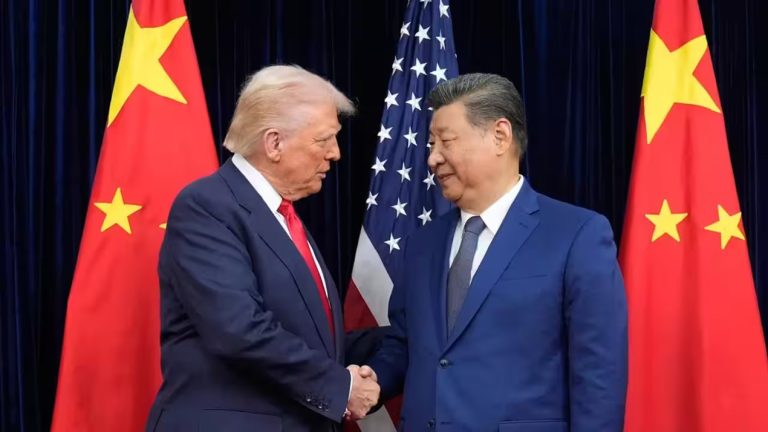
While international diplomats recently gathered in New York for the annual United Nations General Assembly, the true center of geopolitical gravity quietly shifted elsewhere. Chinese President Xi Jinping bypassed the broader international community to meet directly with President Donald Trump in Washington. This highly exclusive diplomatic engagement signals a profound departure from traditional multilateral frameworks. Instead of a rules based system, global governance increasingly relies on an informal bilateral power structure that dictates terms to the rest of the world.
Expanding Influence Through Indifference
This emerging dynamic heavily favors Beijing, which systematically exploits the current American appetite for high profile political theater. Chinese maritime forces continuously expand their presence around Taiwan and other contested Indo Pacific territories while Washington looks the other way. Simultaneously, Chinese strategic influence deepens across critical Middle Eastern maritime chokepoints. As Houthi militants seized control of the Bab el Mandeb Strait this month, Beijing leveraged its relationships with regional actors to ensure favorable navigation terms while American naval assets suffered heavy damages. The White House largely ignores these provocations to preserve the optics of its bilateral summits.
The consequences of this exclusive partnership extend into emerging technologies. During their recent meetings, both administrations agreed to establish parameters governing artificial intelligence. By attempting to define the regulatory landscape for such transformative technologies behind closed doors, these two nations effectively strip smaller countries of their voice in the matter. When only Washington and Beijing sit at the negotiating table, secondary nations must simply accept whatever operational rules the superpowers ultimately decide to implement.
The Fading Middle Powers
Traditional American allies find themselves increasingly isolated within this shifting landscape. European capitals frequently debate the necessity of strategic autonomy and the role of middle powers in the modern era. However, these philosophical discussions have failed to generate any tangible counterweight to the new Washington Beijing axis. The actual rules dictating future international relations are no longer written in Paris or Berlin, but rather through direct negotiations between the Oval Office and Zhongnanhai.
This trajectory raises profound concerns regarding the future stability of the international system. If American leadership continues to prioritize diplomatic spectacles over genuine strategic competition, this new arrangement will not function as an equal balance of power. Instead, tolerating unchecked territorial and economic expansion while bypassing global institutions will inevitably accelerate a permanent shift toward Chinese global dominance.
Original analysis inspired by Nico Lange from National Interest. Additional research and verification conducted through multiple sources.