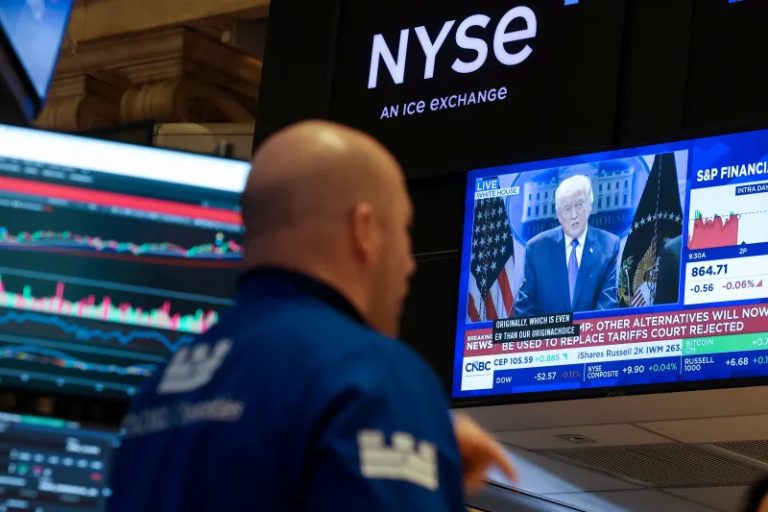
Corporate executives have largely remained on the sidelines as the current administration challenges established norms across Washington. While a handful of bank leaders have spoken in favor of keeping the central bank free from political interference, broader concerns about institutional integrity have drawn far less attention. This cautious approach persists even though the threats touch the basic conditions that let markets function effectively and deliver prosperity.
The rule of law serves as an essential foundation for economic activity in any advanced society. It creates the certainty companies require to enforce agreements, resolve conflicts fairly, and commit resources over long time horizons. Without consistent application of rules and procedures, volatility rises and investment decisions become far more difficult. Countries that allow these protections to weaken frequently see capital flight and slower growth as a result.
Institutional Safeguards and Market Independence
In the United States, several recent developments have tested these boundaries. Efforts to shape monetary decisions at the Federal Reserve prompted warnings from figures like Bank of America CEO Brian Moynihan that markets would ultimately punish any loss of independence. Such autonomy helps avoid politically driven cycles that harm businesses and households alike. Comparable concerns surround attempts to alter or dismiss officials responsible for producing objective economic statistics that guide corporate strategies from manufacturing schedules to inventory management.
Research institutions have encountered significant headwinds as well. American universities, supported in part by federal dollars, have generated breakthroughs from the internet to new medicines that generate substantial economic output. Sharp cuts and freezes in recent years disrupted thousands of projects and sent ripples through talent pipelines. When promising researchers look abroad for stable funding, the United States risks losing its edge in the technologies that drive future growth.
The information environment presents another challenge. As traditional media faces pressure and social platforms amplify unverified claims, companies find themselves vulnerable to sudden reputational hits. One widely circulated falsehood about a common medication wiped out a substantial portion of a major firm’s market value in days. Studies put the annual global bill from such disinformation at hundreds of billions of dollars in lost value and misguided decisions, a toll worsened by AI-generated content.
The Role of Corporate Responsibility
These patterns have not gone unnoticed by governance experts, who tie global corruption to enormous drags on prosperity through inefficiency and lost trust. Signs of self-dealing or favoritism in policy and contracting create unfair playing fields that ultimately raise costs for everyone. Business leaders once embraced broader responsibilities through the 2019 stakeholder initiative that expanded corporate focus beyond pure profit. Many also spoke out on voting access in 2021 and defended regulatory integrity where it affected entire industries.
The distinction now lies between routine policy disagreements—on taxes, trade, or immigration—and steps that erode the basic operating system of democratic capitalism. Corporate America does not need to weigh in on every controversy. But when core institutions that guarantee fair competition and reliable data come under threat, the risks extend far beyond any single company’s balance sheet.
Industry groups could play a useful role by quietly bringing executives together to identify shared red lines and prepare measured responses. Public statements from business carry weight precisely because they appear infrequent and nonpartisan. Employees, investors, and customers increasingly expect companies to protect the system that makes prosperity possible.
Silence may seem the safer short-term choice amid fears of retaliation. Yet history shows that economies suffer when business leaders fail to defend the legal and institutional guardrails that separate thriving markets from cronyism. America’s competitive advantage in the global economy depends on preserving trust in its rules and its capacity for discovery. Corporate leaders still have time to help safeguard both.
Original analysis inspired by Georgia Levenson Keohane from Foreign Affairs. Additional research and verification conducted through multiple sources.