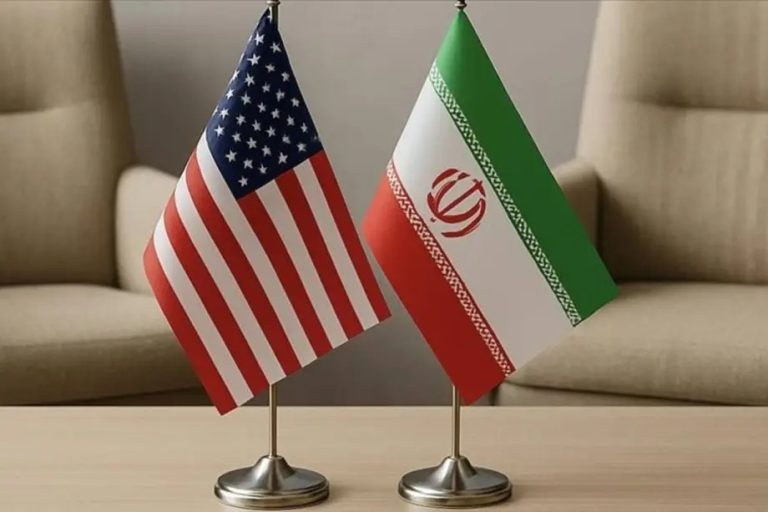
The talks were supposed to start Friday. By Thursday, three of Iran’s ten negotiating points had already been declared violated. The Strait of Hormuz, which was supposed to reopen as a condition of the ceasefire, showed no signs of returning to normal traffic. By April 9, there was no sign that the agreement to lift the Iranian blockade was being implemented, with ships once again being prevented from moving through the strait, and Israel and the United States being accused of violating the ceasefire through continued attacks. The truce announced on April 7 had survived less than forty-eight hours before its foundations were being openly questioned by all three parties.
That is not a crisis. It is, historically speaking, entirely predictable. Throughout modern history, numerous ceasefire deals have been negotiated with the hope of bringing an end to violence, only to falter due to violations, political disagreements, or mistrust — and the reality is that they rarely hold. The US-Iran truce now joins a long line of agreements that look durable on paper and dissolve in practice — because the structural conditions that produced the conflict remain not only intact, but in some cases more entrenched than before.
A Deal Nobody Can Agree On
The meetings come days after Washington and Tehran agreed to a Pakistan-mediated two-week ceasefire, at a time when that truce is already under strain amid different interpretations of the terms of the pause in fighting — and Israel’s intensified bombing of Lebanon. The interpretive gap is not marginal. Iran’s parliamentary speaker said Israeli strikes violated the first clause of Iran’s 10-point proposal, and were among three points that had so far been violated since the temporary ceasefire began — suggesting “a bilateral ceasefire or negotiations is unreasonable.”
Washington’s position is equally firm in the opposite direction. White House Press Secretary Karoline Leavitt said Iran’s 10-point proposal was “literally thrown in the garbage by President Trump,” while Trump initially called the plan “workable” — but Leavitt clarified he was referring to a different, unspecified set of points. The two parties are not simply far apart on substance. They appear to be negotiating from entirely different documents — a situation that, if unresolved before Saturday’s sessions, makes Islamabad less a negotiation than a structured opportunity for mutual recrimination.
Lebanon: The Tripwire Nobody Defused
Lebanon is emerging as the central faultline. Pakistan’s Prime Minister Sharif stated publicly that the ceasefire covered “everywhere including Lebanon.” Netanyahu said the ceasefire would not extend to Hezbollah or Israel’s invasion of southern Lebanon — a position that contradicted Sharif’s claims. Just hours after the ceasefire came into effect, Israel launched its biggest wave of strikes in Lebanon since the war began, pounding busy neighborhoods without warning and killing at least 303 people and wounding more than 1,000, according to Lebanon’s health ministry.
Iran’s response was immediate. Foreign Minister Araghchi wrote on X: “The Iran-US ceasefire terms are clear and explicit: the US must choose — ceasefire or continued war via Israel. It cannot have both.” The Lebanon fault line is not merely a procedural disagreement about the scope of the truce. It is a test of whether Washington can exercise meaningful restraint over its partner — and the early evidence is not encouraging. King’s College’s Krieg warned that “the greatest threat to any ceasefire in the region remains Israel,” adding that Israel prefers “ambiguous ceasefire” deals that allow it to return to fighting “when it feels the situation favours the Israeli army.”
Who Is Actually Going to Islamabad
The White House confirmed that US Vice President JD Vance would lead the American delegation, joined by special envoy Steve Witkoff and Jared Kushner. Iranian Parliament Speaker Mohammad Bagher Ghalibaf and Foreign Minister Abbas Araghchi are expected to lead the Iranian delegation — though it is unclear whether any representative from the IRGC, which is leading Tehran’s military response, will attend. That ambiguity matters. The IRGC’s absence from the table does not mean its absence from the decisions that will determine whether any deal holds. Its field commanders control the forces that have been attacking Gulf shipping — and no agreement that Araghchi signs can be implemented without their cooperation.
Masood Khalid, a former Pakistani ambassador to China, told Al Jazeera the atmosphere had been poisoned before talks even began, saying: “Israel is playing a spoiler to undermine the process. Its relentless bombing of Lebanon is meant to trigger a scenario whereby parties further harden their positions and the process is scuttled.” That assessment reflects a broader pattern: in cases ranging from Gaza and Israel-Iran to India-Pakistan and Russia-Ukraine, Washington has relied on diplomatic pressure and crisis bargaining to impose pauses in violence — but these interventions reduced immediate harm without the deeper political work of reconciliation. The result was not war termination but a model of crisis management in which ceasefires substituted for political settlement.
The Structural Problem Islamabad Cannot Solve
The specific demands on the table are so divergent that even optimistic analysts are careful with their language. Analysts say a final settlement remains unlikely in the short term, with deep mistrust on both sides — noting that “right now, both Washington and Tehran are trying to demonstrate that they ‘won’ by making maximalist demands.” Iran’s proposal includes control over the Strait of Hormuz, the withdrawal of US combat forces from the region, sanctions relief, war reparations, and binding UN Security Council ratification. Washington’s red lines include zero enrichment and the removal of Iran’s existing nuclear stockpile.
As Johan Galtung famously argued, negative peace — the absence of active fighting — can be imposed externally through leverage, coercion, and crisis mediation. By contrast, positive peace — the reconfiguration of political, security, and economic relationships that makes renewed violence unattractive — requires legitimacy, consent, and structural change. The consequence is a world in which wars increasingly “end” without ending — ceasefires freeze violence without resolving it, stabilizing conflicts at higher levels of risk and leaving recurrence built into their foundations.
The Islamabad talks represent a genuine opportunity — the first time senior delegations from Washington and Tehran will sit under the same roof in decades. Trump told NBC he was “very optimistic” about a peace deal, telling the outlet that Iran’s leaders seemed open to peace in private discussions. That optimism may be warranted. It may also be a negotiating posture. Iran’s Supreme National Security Council warned any deviation from the agreement could lead to future violence, stating: “Our hands are on the trigger, and the moment the enemy makes the slightest mistake, it will be met with full force.” Two sides that both claim victory, both refuse to concede their core demands, and both retain the capacity to resume fighting are not yet at peace. They are at a pause — and history offers few reasons to assume the pause will hold.
Original analysis inspired by Eko Ernada from Middle East Monitor. Additional research and verification conducted through multiple sources.