As a massive American armada gathers and negotiations stall, the path to conflict narrows — with unpredictable consequences for Iran, the region, and global energy markets.
The United States and Iran are hurtling toward a confrontation with consequences neither side may fully control. Indirect talks mediated by Oman were held in Geneva against a backdrop of increased military flexing by both sides in the Gulf region. Iran’s foreign minister claimed the sides agreed on broad “guiding principles,” yet the White House acknowledged that while there was “a little bit of progress made,” the two sides are “still very far apart on some issues”. Meanwhile, the Pentagon is sending the largest force of American warships and aircraft to the Middle East in decades, including two aircraft carrier strike groups, as President Trump warns he will decide on military action within days. What began as a dispute over Iran’s nuclear program has now fused with the regime’s brutal suppression of its own people, creating a crisis that may be beyond the reach of diplomacy.
A Regime Battered but Unbowed
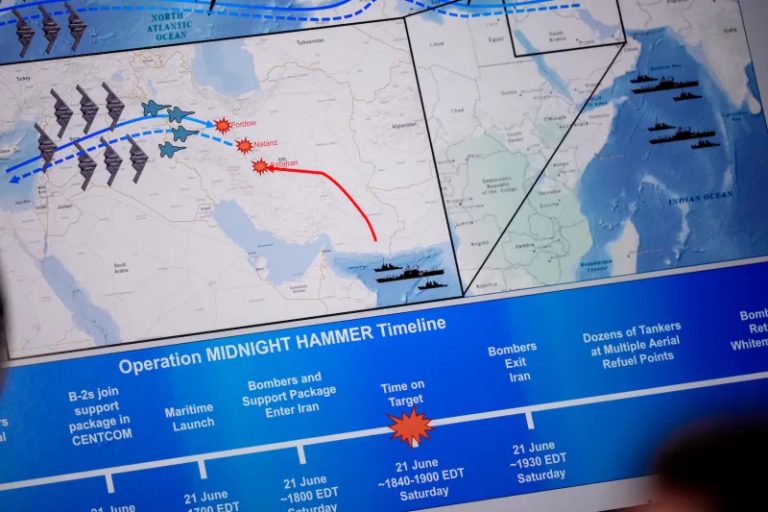
The Islamic Republic enters this confrontation from a position of extraordinary weakness — and yet remains dangerously defiant. In June 2025, Israel struck multiple targets across Iran with the stated goal of preventing nuclear weapons development, damaging key nuclear facilities and killing several top military leaders. The United States joined the campaign, bombing three nuclear sites. The 12-day war devastated Iran’s strategic infrastructure and threw its ruling elite into disarray.
Then came the uprising. On December 28, 2025, protests began in Iran, initially sparked by economic grievances. They quickly spread to all 31 provinces, becoming the largest mass mobilization since the 1979 revolution. The regime initially adopted a conciliatory posture, but this hesitation only emboldened demonstrators — echoing a dynamic the clerical establishment should have recognized from the revolution that brought it to power, when the Shah’s reluctance to use lethal force accelerated his downfall.
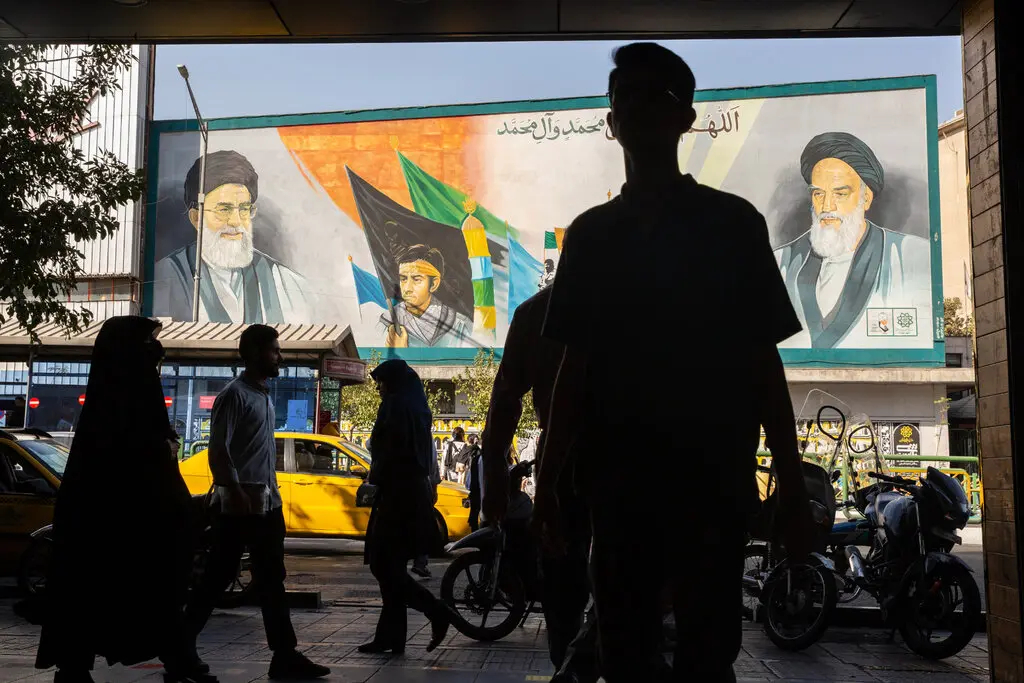
The regime eventually chose slaughter. Activists say at least 7,015 people have been killed, many in a bloody crackdown overnight between January 8 and 9. Some estimates are far higher: Time, The Guardian, and Iran International reported that between 30,000 and 36,500 protesters were killed during January 8–9 alone. The crackdown has seen over 41,800 arrests. The scale of violence was so severe that Amnesty International documented security forces positioned on streets and rooftops, firing into unarmed crowds. The UN Human Rights Council condemned the massacres and renewed the mandate of its fact-finding mission on Iran.
The brutality served its intended purpose. Extensive protests occurred in Iran in January 2026 but security forces remained loyal. The regime restored the terrifying authority on which its survival depends. Yet this control is built on sand: the underlying causes of discontent — economic collapse, corruption, ecological crisis — remain entirely unaddressed.
The Diplomatic Impasse
Two rounds of indirect negotiations have revealed more about the gap between the two sides than any pathway to agreement. The first round of the 2026 talks, held in Oman on February 6, made no evident progress in narrowing the wide gaps between the parties. The second round in Geneva on February 17 was slightly more productive, but the substance remains thin. Tehran continues to argue it cannot forever forgo its right to enrich uranium — a right it asserts flows from its standing as a party to the Nuclear Non-Proliferation Treaty. In Geneva, Tehran reportedly offered only to suspend enrichment for three to five years.
Washington’s demands are far more sweeping. The administration has called for the complete dismantlement of Iran’s enrichment capabilities, restrictions on ballistic missiles, an end to Tehran’s support for militant organizations, and accountability for the crackdown on protesters. Iran has flatly refused to discuss anything beyond the nuclear file. The fundamental problem is that what the U.S. considers a minimum acceptable outcome — zero domestic enrichment — is something Tehran views as a non-starter. Accepting such a demand would not end Iran’s isolation but would strip it of the leverage it believes is essential for any future sanctions relief, while leaving it more vulnerable to Israeli military action.
Iran’s negotiating behavior suggests a strategy of delay rather than concession. The International Atomic Energy Agency continues monitoring, and Tehran met with the agency’s director-general in Geneva ahead of the talks. But the regime appears to be playing for time, forestalling a strike while providing just enough diplomatic oxygen to avoid being blamed for a collapse. Trump said Iran had 10 to 15 days at most to strike a deal, warning: “We’re either going to get a deal, or it’s going to be unfortunate for them”.
The Military Calculus
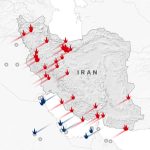
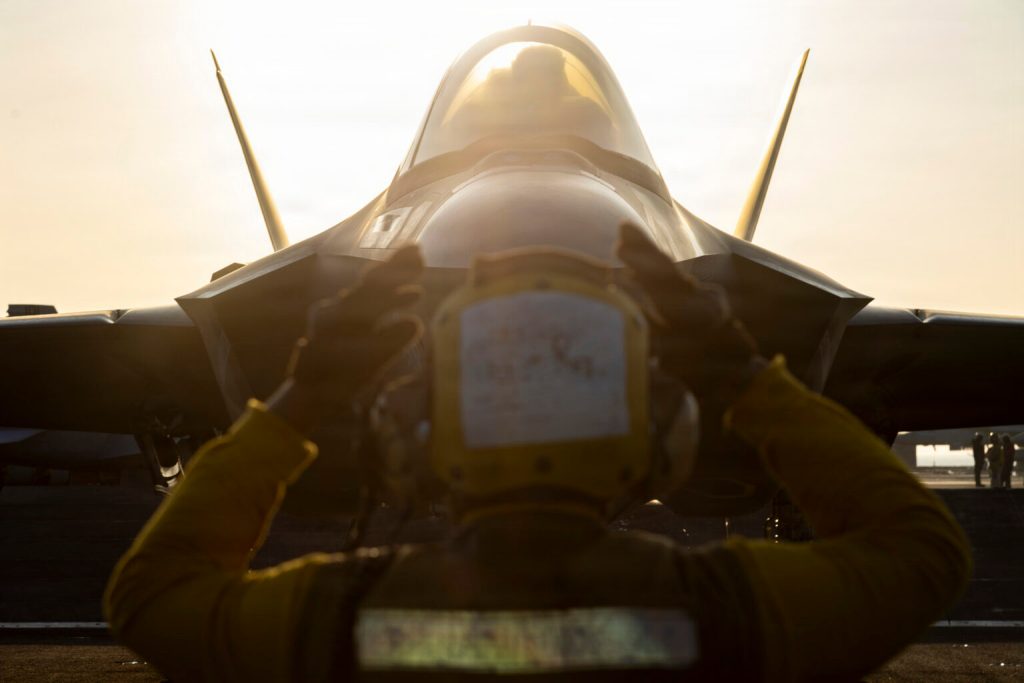
The scale of the American buildup is itself a message. The current American air force buildup is the largest air force presence in the Middle East since the 2003 invasion of Iraq. A second carrier strike group centered on the USS Gerald Ford was steaming toward waters near Iran, while another 50 U.S. combat aircraft — F-35s, F-22s, and F-16s — were ordered to the region. There is no buildup of U.S. ground troops anywhere in the region — a critical detail that confirms this would be an air and naval campaign, not an occupation.
Any military operation would likely present the president with a spectrum of options. The narrowest would target Iran’s security apparatus — the Islamic Revolutionary Guard Corps (IRGC) and its Basij militia — as enforcement of the red line against the massacre of protesters. A broader campaign could expand to include remaining nuclear infrastructure, missile systems, and their industrial backbone. The most aggressive option would attempt to decapitate the regime’s political and military leadership, destroying its command and control capabilities and striking symbolic targets.
The president faces a trap partly of his own making. He publicly encouraged the uprising, promising that American “help is on its way,” then stood by as thousands were butchered. He has drawn a red line that the regime openly crossed. An Oxford Analytica analyst described the current situation as “extremely dangerous,” with the U.S. and Iran “certainly closer” to outright conflict than before. The assembled armada cannot remain deployed indefinitely; withdrawing without strikes or a deal would be perceived — in Tehran and globally — as retreat.
Yet every informed observer of this president’s approach to Iran arrives at the same conclusion: he does not want this war. He is deeply concerned about where escalation could lead. If military action comes, it may take the most limited form available — a sharp but narrow strike designed to enforce credibility without igniting a spiral.
Iran’s Counter-Strategy and Regional Risks
Tehran has made clear that any attack will be met with force, not the symbolic responses of the past. Iran’s calculus is stark: capitulation would not end the confrontation but make the regime more vulnerable to further demands and eventual collapse. From Tehran’s perspective, fighting back — however risky — is less dangerous than surrendering.
Iran’s toolkit focuses on asymmetric pressure. Iran’s IRGC began a series of war games in the Strait of Hormuz to prepare for “potential security and military threats”. In 2024, oil flow through the strait averaged 20 million barrels per day, or roughly 20% of global petroleum liquids consumption, the EIA estimates. Closing this chokepoint, even temporarily, would constitute what energy analysts at the U.S. Energy Information Administration have called one of the most disruptive scenarios for global oil markets. About 13 million barrels per day of crude oil transited the Strait of Hormuz in 2025, accounting for roughly 31% of global seaborne crude flows.
Iran could also target U.S. military installations in the Gulf, oil processing facilities in Saudi Arabia and the UAE, or attempt to inflict casualties that would force Washington into a choice between escalation and withdrawal. A single rocket striking a commercial high-rise in Dubai could damage the UAE’s economic model for years. An attack on critical Saudi oil infrastructure at Abqaiq — this time targeting elements that take years to replace — could send oil prices spiraling with immediate effects on U.S. inflation.
The Gulf states are acutely aware of these dangers. One Arab Gulf diplomat told the AP that major Middle Eastern governments had been discouraging the Trump administration from launching war, fearing “unprecedented consequences” that could explode into a “full-blown war”.
The Day After: Four Futures for Iran
Perhaps the most unsettling dimension of this crisis is the absence of any coherent plan for what follows military action. If strikes succeed in toppling the regime, the outcome will almost certainly not resemble the democratic Iran many hope for. There is no occupation force, no day-after strategy, and the U.S. government personnel who might once have formulated such plans have largely been dismissed.
Four scenarios present themselves. A democratic republic is what many Iranians desire but is the least likely outcome of regime change through airstrikes alone — particularly without meaningful external assistance. A monarchical restoration under Reza Pahlavi is favored by some diaspora communities and Israeli allies, but would require military backing that no outside power is willing to provide. State failure and civil war — with ethnic fragmentation and outside powers backing competing factions — is a grimly plausible outcome that the Gulf states, above all, fear. As of January 2026, Iran is experiencing its deepest and longest economic crisis in modern history. The World Bank projected that Iran’s economy would shrink in both 2025 and 2026, and that annual inflation would rise towards 60%. War would compound this devastation.
The most likely post-regime outcome is a takeover by the IRGC — the best-armed and most powerful force in any chaotic transition. An IRGC-led Iran would be nationalist, authoritarian, and likely remain hostile to the United States, drawing on public rage against the bombing campaign to consolidate control. In 2025, the Iranian budget bill granted 51% of total oil and gas export revenues to the IRGC and the Law Enforcement Command. The guards already control vast economic networks and would be positioned to dominate whatever emerges from the rubble.
Conclusion
The U.S.-Iran confrontation has reached a point where both sides view concession as more dangerous than conflict. Washington cannot withdraw its armada without a deal or a strike and retain credibility. Tehran cannot accept terms that strip its last deterrent and expose it to further coercion. The diplomatic window remains technically open — Iran has promised detailed proposals within two weeks — but the structural gap between the two positions may be unbridgeable.
What makes this moment so perilous is the convergence of multiple crises: a nuclear standoff, a humanitarian catastrophe from the January massacres, a collapsing economy, and the largest U.S. military deployment to the region in over two decades. Each layer constrains the options available and raises the stakes of miscalculation. Whether through a limited strike or a broader campaign, the consequences of military action will be felt far beyond Iran’s borders — in global energy markets, in the stability of Iraq and Syria, and in the credibility of American power for decades to come. The Iranian people, who have shown extraordinary courage, may once again find themselves caught between a regime willing to kill thousands and external powers with no plan for what comes next.
Comprehensive analysis and research by ThinkTanksMonitor.