
Tag: Strategic Stability

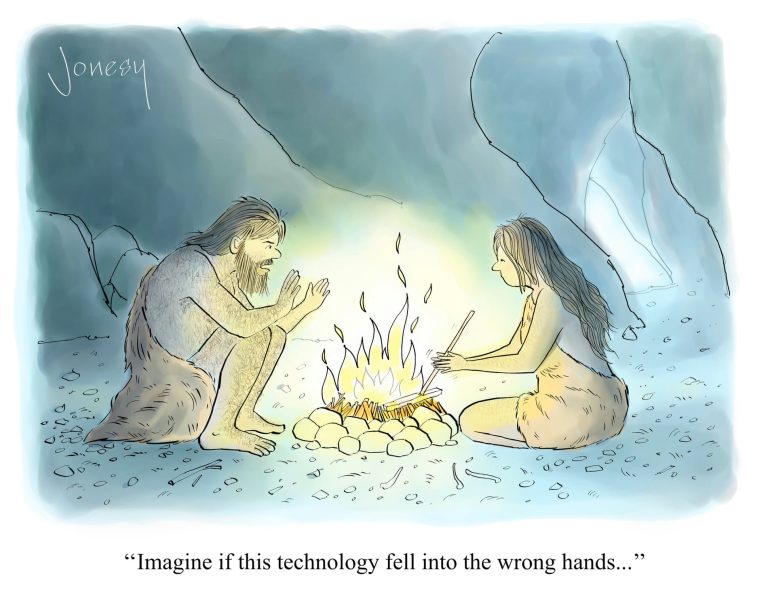
Steve Jones on dangerous tech innovations – cartoon

Analysis: The cartoon depicts early prehistoric hominids encountering an open flame alongside modern corporate technologists operating beside an ominous, superheated data processing core. Jones visualizes artificial intelligence not merely as a commercial breakthrough, but as an ungoverned, elemental force that shifts rapidly from utility to systemic vulnerability. The strategic relevance lies in illustrating the precarious governance gap confronting global powers, where competitive pressures prevent the establishment of non-proliferation safeguards on sovereign dual-use technologies.

Read More »
A digital globe made of light particles next to a large grey radioactive symbol.

Digital Triggers for Nuclear Response: Cyber Warfare’s Escalation Risk

As cyberattacks increasingly target critical infrastructure and nuclear command systems, the risk of “accidental” nuclear escalation has reached a historic peak. Strategists are now debating whether to explicitly classify massive digital offensives as triggers for a nuclear response to restore deterrence in the “gray zone” of modern warfare.

Read More »
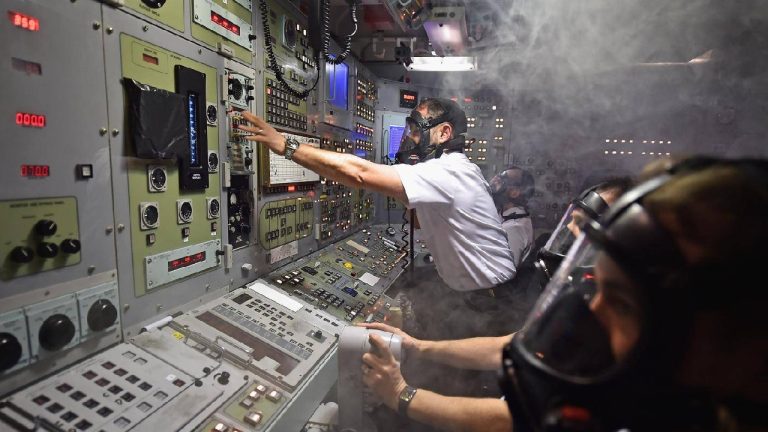
Several crew members wearing gas masks operating a complex control panel filled with buttons, dials, and digital displays in a smoky, dimly lit room.

Machine-Generated Misinformation and Nuclear Security: Artificial Intelligence Risks in Early Warning Systems

AI integration in nuclear early warning systems creates catastrophic risks by generating high-fidelity “hallucinations” and deepfakes that could trigger accidental escalation. To ensure strategic stability, nuclear powers must maintain strict “human-in-the-loop” protocols, improve deepfake detection, and prioritize information accuracy over launch speed in crisis decision-making.

Read More »