Tag: Nuclear Negotiations

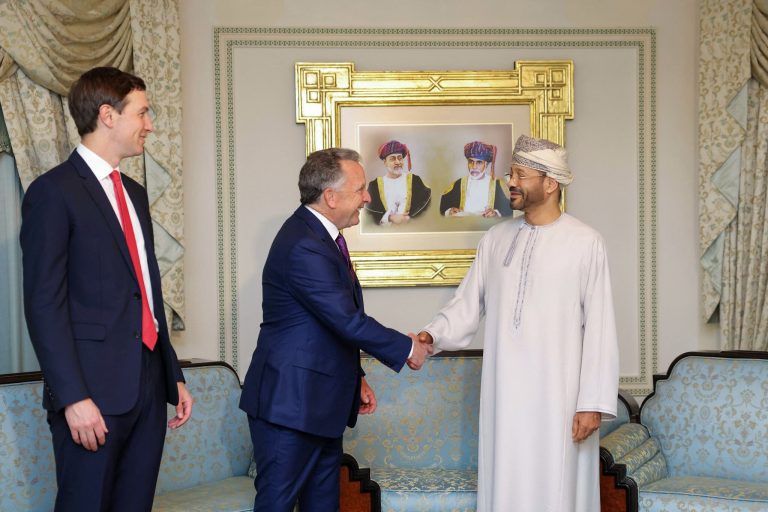
Alt Text Jared Kushner watching a handshake between a Western official and an Omani diplomat.

Did Two Unqualified Negotiators Talk Trump Into War With Iran?

A last‑minute nuclear proposal in Oman collapsed after Steve Witkoff and Jared Kushner — neither a nuclear expert — misread or misrepresented Iran’s concessions. Gulf mediators say Tehran offered unprecedented limits, but the U.S. team walked away. Their advice helped pave the path to war, raising urgent questions about competence, influence, and accountability.
Read More »
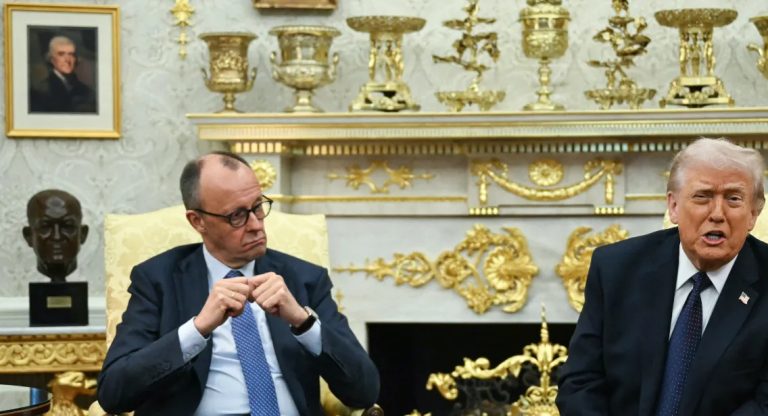
German politician Friedrich Merz and Donald Trump sitting in an ornate room during a meeting.

Europe’s Iran Dilemma: Opposing the War While Sanctioning Tehran

Europe opposes the U.S.–Israeli war on Iran while simultaneously sanctioning Tehran for domestic repression, revealing a split between its principles and its power. Disunited governments, limited leverage, and damaged credibility leave the EU unable to shape the conflict or support Iranian reformers — turning its “third way” into an aspiration without influence.

Read More »
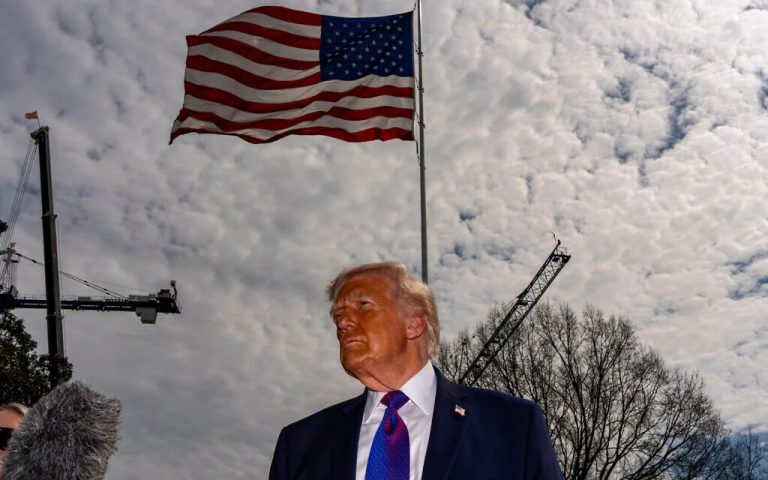
Donald Trump standing under a large waving American flag with construction cranes in the background.

A War Without an Endgame and Americans Know It

Public support for Trump’s Iran war is eroding as the administration cycles through shifting justifications with no defined endgame. Polls show most Americans doubt Iran posed an imminent threat, oppose escalation, and don’t trust Trump’s judgment. With objectives unclear and munitions draining, the conflict risks drifting without a political destination.

Read More »
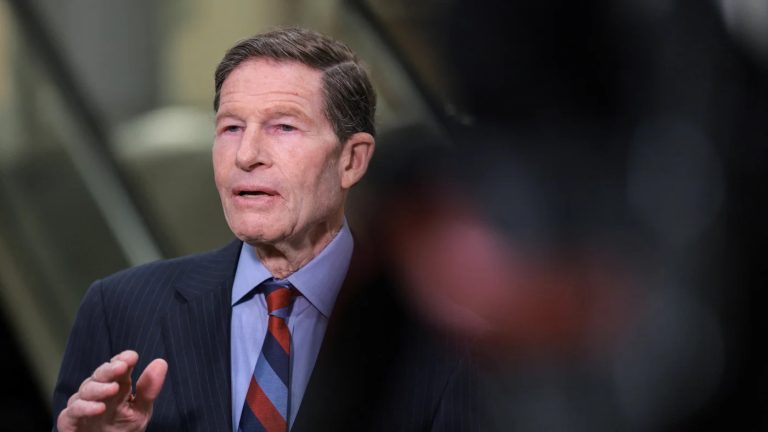
Senator Richard Blumenthal speaking during a press conference about classified briefings.

Boots on the Ground? Secret Briefing Rattles Washington

A classified Senate briefing ignited fears of U.S. ground troops in Iran after officials failed to define objectives or an exit strategy. Congress has already rejected efforts to curb war powers, diplomacy was mishandled, and intelligence suggests Russia is aiding Tehran — raising the stakes of any escalation on Iranian soil.

Read More »
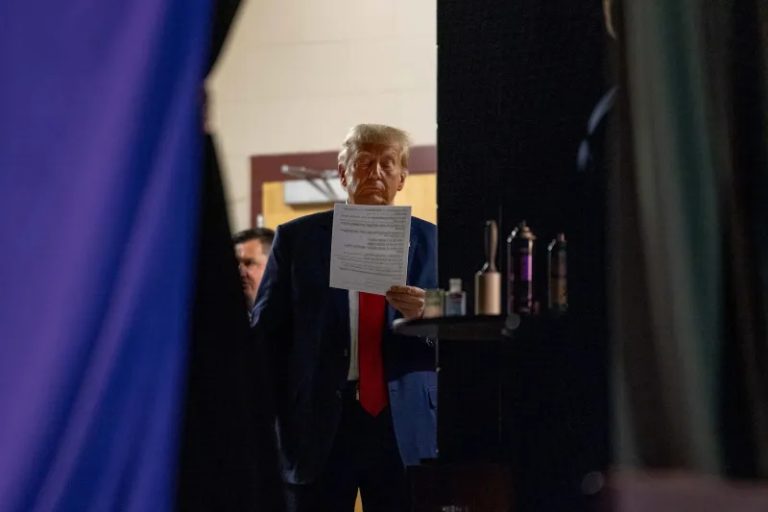
Candid behind-the-scenes shot of Donald Trump reading a document backstage.

Washington May Be Speaking the Wrong Language With Tehran

Khamenei’s invocation of Karbala signals a shift from deterrence to existential defiance, undermining Washington’s assumption that limited strikes can coerce Iran. Tehran’s doctrine favors horizontal escalation, hardened nuclear sites, and regional proxies. With succession fears rising, even a “surgical” U.S. attack risks unifying Iran’s system and triggering unpredictable retaliation.

Read More »
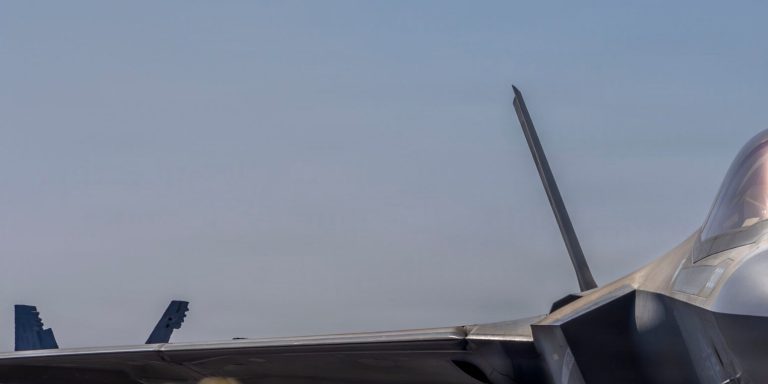
Close-up of an F-35 stealth fighter jet wing and tail against a clear sky.

Why a Nuclear-Only Iran Deal Is the Smart Play

A nuclear‑only agreement is the most achievable path in the current U.S.–Iran standoff. Iran’s damaged enrichment sites and willingness to accept strict IAEA oversight create rare diplomatic space, while demands on missiles and proxies are non‑starters. Limiting talks to the nuclear file avoids war and secures verifiable constraints.

Read More »
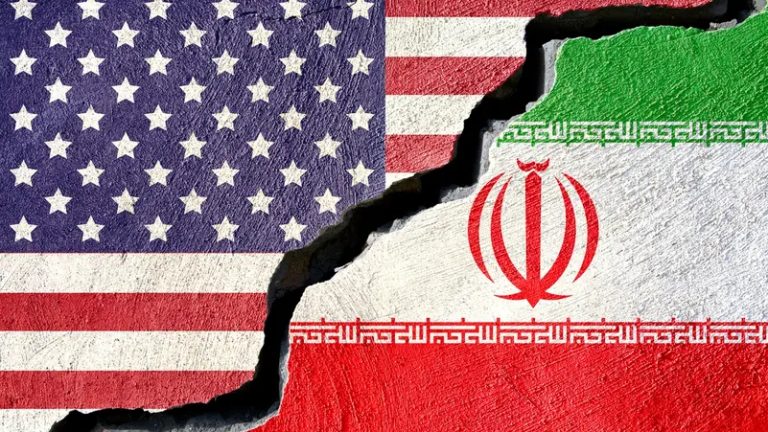
American and Iranian flags painted on a cracked concrete wall representing fractured diplomatic relations.

US-Iran Nuclear Talks Walk a Razor’s Edge

US–Iran talks resume in Geneva as both sides escalate militarily. Washington’s deadline and massive buildup collide with Tehran’s threats to close the Strait of Hormuz. The core dispute remains enrichment. If Iran offers verifiable limits and expanded IAEA oversight, a deal is possible; if not, Trump is weighing military options.

Read More »
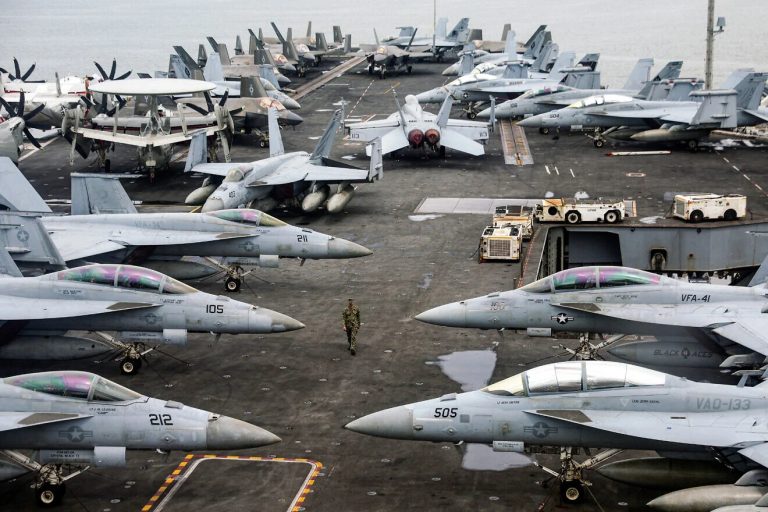
U.S. Navy fighter jets, including F/A-18 Super Hornets and E-2 Hawkeyes, crowded on the flight deck of an aircraft carrier.

US vs. Iran: Three Strike Options as Diplomacy Stalls

A massive U.S. buildup has positioned two carrier groups and stealth bombers for strikes on Iran. Washington is weighing three options: regime‑targeted attacks, strikes on nuclear sites, or an economic‑military squeeze. Tehran signals it will retaliate through missiles and its regional proxy network. With diplomacy stalled, the risk of rapid escalation is rising.

Read More »
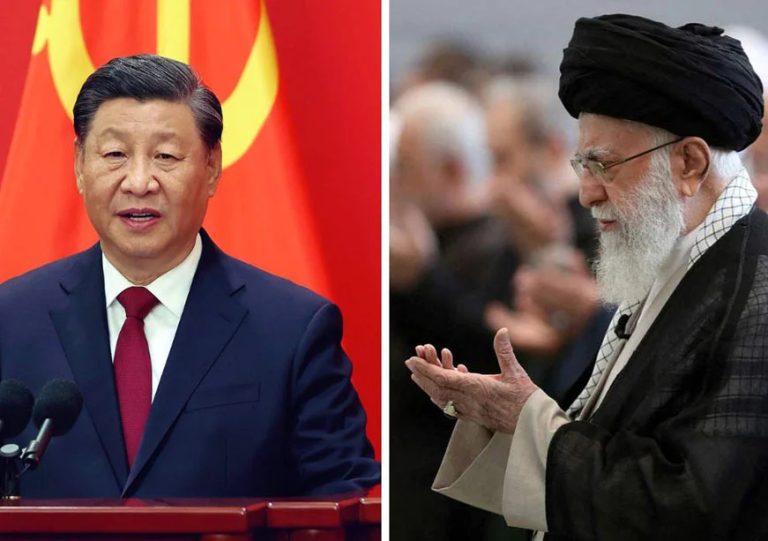
A side-by-side portrait of Xi Jinping on the left in front of a red and gold flag, and Ali Khamenei on the right with his hands raised in prayer, separated by a thin white vertical line.

Beijing’s Calculus in the US-Iran Standoff

Beijing views the US‑Iran standoff as both a threat to its energy security and an opportunity to portray Washington as unstable. China sees Trump’s shifting deadlines, dual‑carrier deployments, and stalled diplomacy as politically driven escalation. With Iran reliant on Chinese oil purchases, Beijing expects prolonged tension that drains US focus without triggering a regional war that disrupts Chinese trade.

Read More »
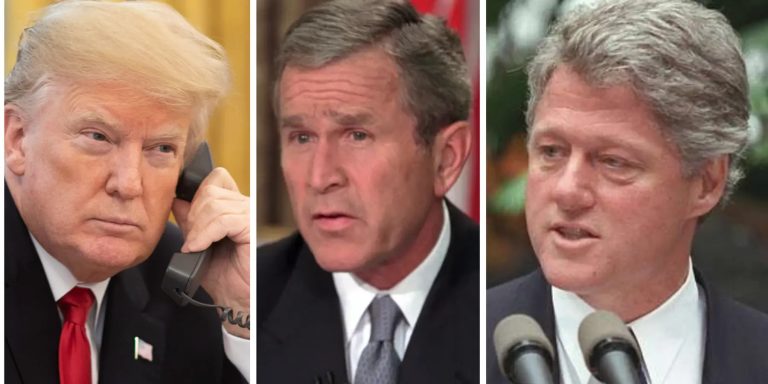
A triptych image featuring three U.S. Presidents: Donald Trump on the left holding a telephone, George W. Bush in the center speaking, and Bill Clinton on the right speaking behind microphones.

America’s Iran Buildup: A 30-Year Pattern of Strategic Failure

The U.S. has deployed its largest force near Iran since 2003, but Washington lacks a clear objective. Trump’s shifting demands, stalled diplomacy, and massive military buildup create momentum toward conflict. After decades of failed interventions, Iran’s hardened defenses and great‑power involvement raise the risk of escalation. The core question remains unanswered: what happens after the strikes?

Read More »
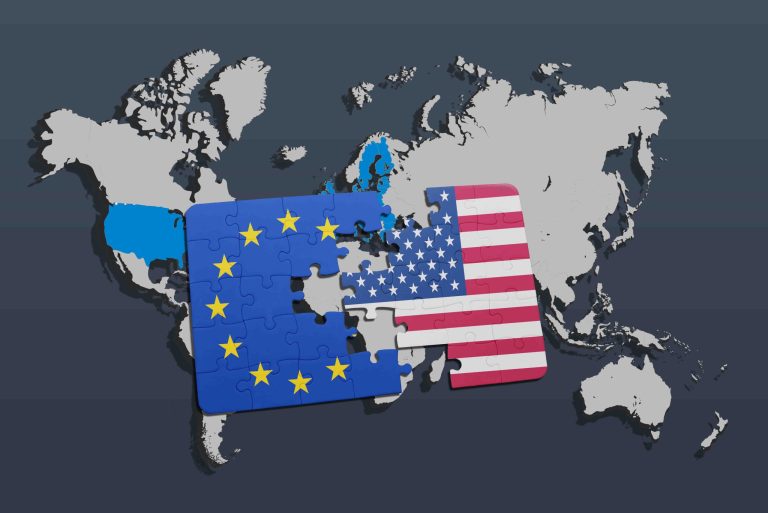
A conceptual digital illustration of a gray world map background with two large puzzle pieces in the center; the left puzzle piece displays the blue flag and yellow stars of the European Union, and the right piece displays the stars and stripes of the United States flag.

US and EU in the Middle East: Allies With Different Playbooks

Washington and Brussels still share the same core goals in the Middle East: prevent nuclear proliferation, avoid regional war, stabilize energy flows, and suppress jihadist networks. But they now pursue those goals with different playbooks, shaped by diverging political cultures, institutional habits, and strategic priorities.

Read More »