Tag: Benjamin Netanyahu

America and Israel Are at War Together, but Not the Same War

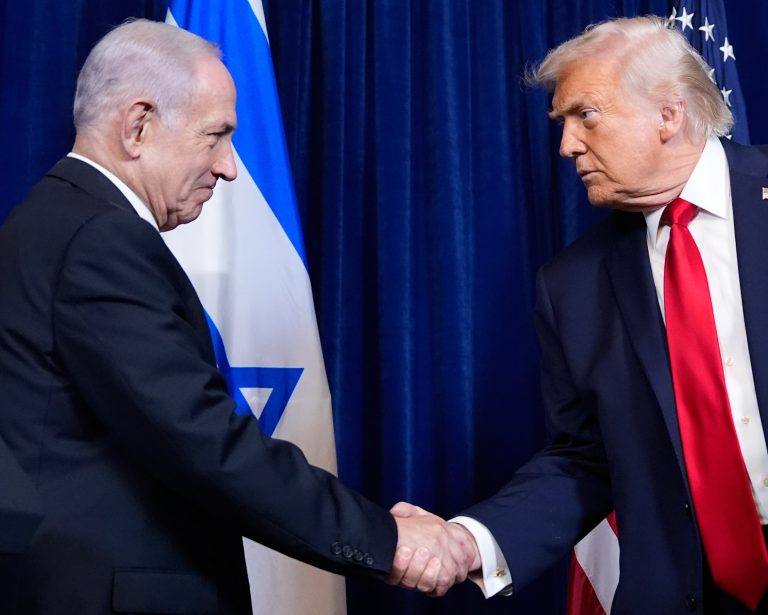
The U.S. and Israel are fighting the same war with different goals: Washington wants a quick, contained operation, while Netanyahu seeks regime collapse and a strategic reset. Conflicting timelines, clashing objectives, and diverging public opinion leave neither side in control of the endgame — a recipe for a war that drifts far beyond its opening strike.

Read More »
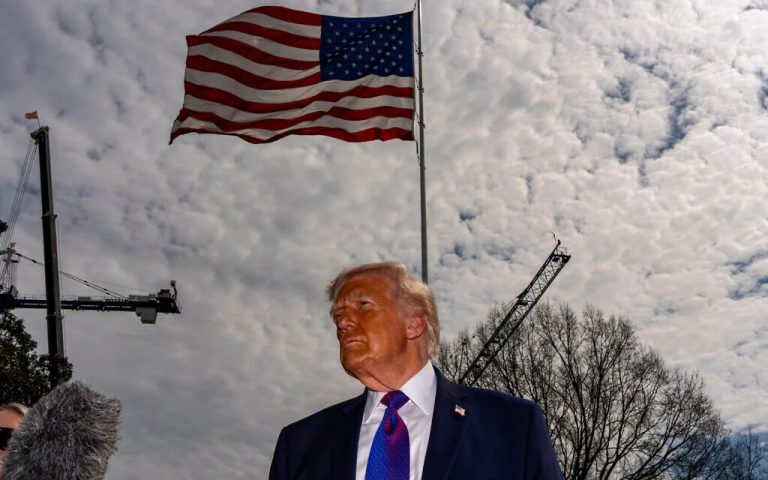
Donald Trump standing under a large waving American flag with construction cranes in the background.

A War Without an Endgame and Americans Know It

Public support for Trump’s Iran war is eroding as the administration cycles through shifting justifications with no defined endgame. Polls show most Americans doubt Iran posed an imminent threat, oppose escalation, and don’t trust Trump’s judgment. With objectives unclear and munitions draining, the conflict risks drifting without a political destination.

Read More »
Man walking with a briefcase in front of a massive black smoke plume from a burning warehouse.

Gulf States Face an Impossible Reckoning After Iran’s Barrage

Iran’s unprecedented barrage on all six GCC states has shattered the Gulf’s belief that they could host U.S. bases, court Tehran diplomatically, and stay insulated from war. Missiles have crippled refineries, LNG exports, and data centers, while trust in both Washington and Tehran collapses — forcing Gulf rulers into a strategic reckoning they long tried to avoid.

Read More »
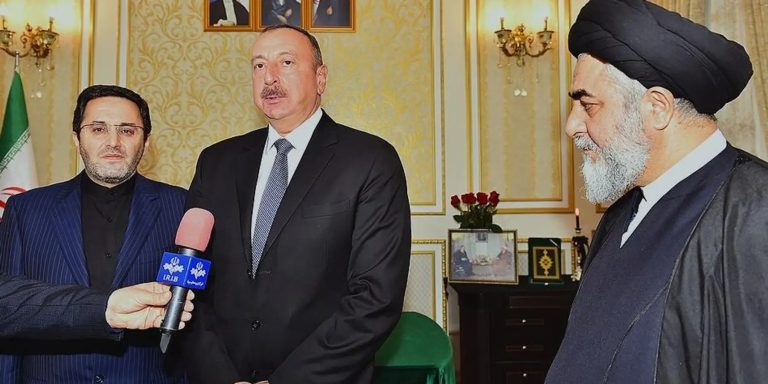
President Ilham Aliyev of Azerbaijan standing with an Iranian cleric and an official during a press meeting.

Azerbaijan Chose Diplomacy Over War — and Washington’s Hawks Are Furious

## **Micro‑Brief (50 words)**
Azerbaijan defused a crisis that Washington’s hawks hoped would open a northern front against Iran. After drone strikes on Nakhchivan, Baku briefly mobilized but quickly reversed course, reopening borders and sending aid. Pipeline vulnerability, Turkey’s restraint, and Iran’s large Azeri population made escalation untenable — exposing the limits of anti‑Iran coalition fantasies.

If you’re keeping this as part of your serialized war‑briefs, I can align tone and cadence across all entries.

Read More »
Ali Khamenei pinning a medal onto the chest of Amir Ali Hajizadeh's military uniform, while Mohammad Bagheri and Abdolrahim Mousavi watch from the background.

Iran’s ‘Mosaic Defense’: The Doctrine Built to Outlast Decapitation

Iran’s “mosaic defense” is built for decapitation: 31 autonomous IRGC units, layered successors, and dispersed stockpiles keep the system fighting despite leadership losses. As Mojtaba Khamenei takes power, fragmented command creates both resilience and volatility — from rogue strikes to Hormuz disruption — turning time, terrain, and cost asymmetry into Iran’s core weapons.

Read More »
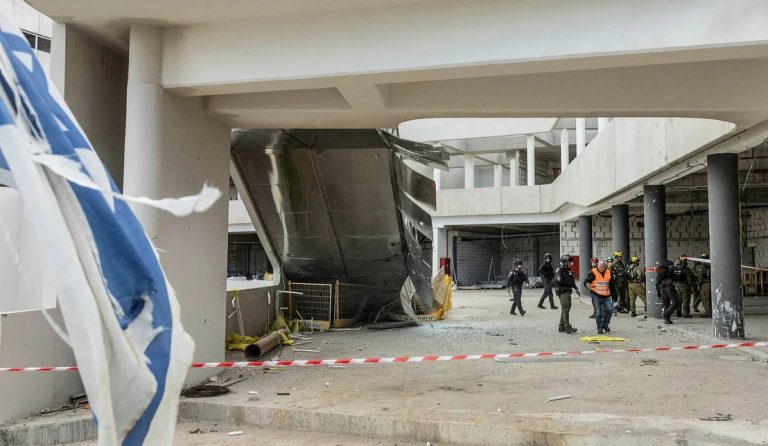
A tattered Israeli flag overlooks a damaged building interior where a large metal structure has collapsed, with emergency responders in orange vests and armed security personnel walking through the debris behind red and white caution tape.

US Threatens Iran With ’20 Times’ Harder Response Over Hormuz

The U.S.–Israel war with Iran has entered a deadly rhythm: heavy American strikes, rising regional casualties, and Iran threatening the Strait of Hormuz. Over 140 U.S. troops are wounded, Gulf states face missile barrages, and oil flows have nearly halted. Trump warns Iran will be hit “20 times harder” if Hormuz is mined.

Read More »
Close-up of an F-35 stealth fighter jet wing and tail against a clear sky.

Why a Nuclear-Only Iran Deal Is the Smart Play

A nuclear‑only agreement is the most achievable path in the current U.S.–Iran standoff. Iran’s damaged enrichment sites and willingness to accept strict IAEA oversight create rare diplomatic space, while demands on missiles and proxies are non‑starters. Limiting talks to the nuclear file avoids war and secures verifiable constraints.

Read More »
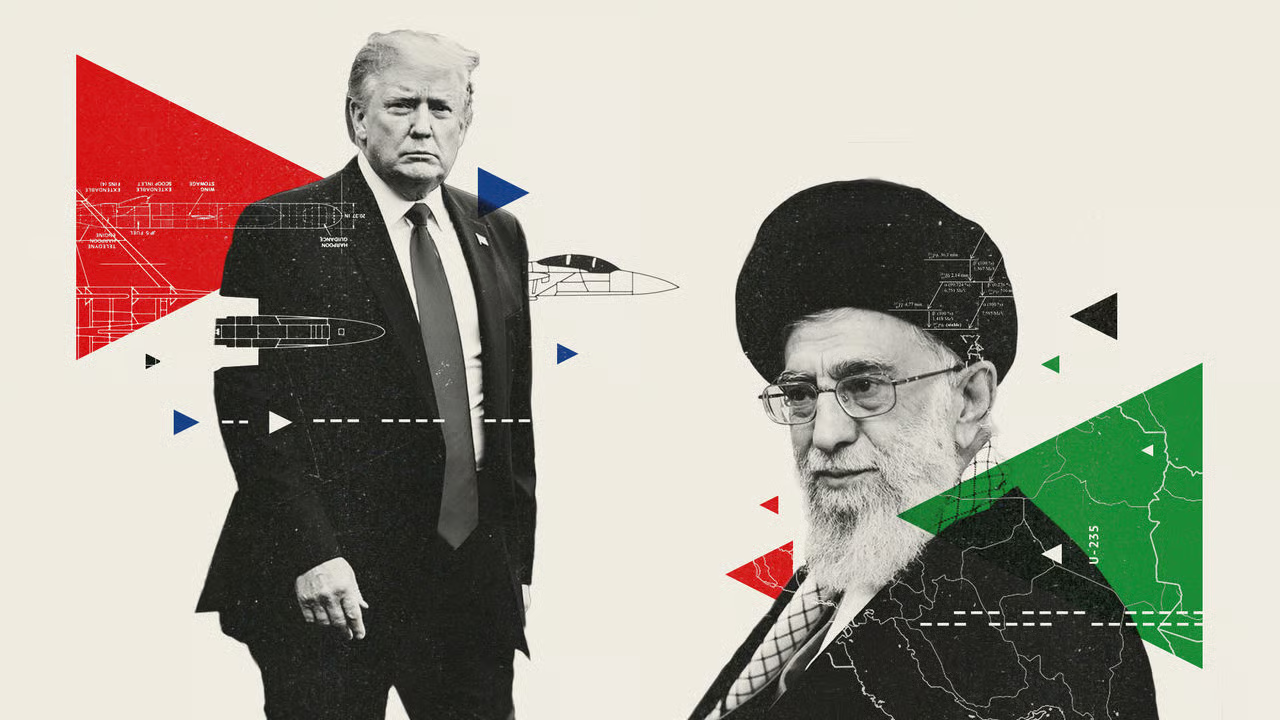
Conceptual collage of Donald Trump and Ayatollah Ali Khamenei with military schematics and geometric overlays.

Iran and the US: War Drums or a Last-Minute Deal?

A massive U.S. buildup and Trump’s ultimatum have pushed Washington and Tehran toward a decisive moment. Iran’s weakened economy and protests limit its options, while threats to close the Strait of Hormuz raise global stakes. A narrow deal allowing token enrichment remains possible, but failure could trigger U.S. strikes with unpredictable escalation.

Read More »
Iranian flag waving on a flagpole in front of a modern curved glass building.

Iran Crisis: What Seven Experts Think Could Happen Next

A massive U.S. buildup and stalled diplomacy have created the most volatile U.S.–Iran standoff in decades. Experts disagree whether Trump’s pressure will force a deal or trigger escalation. Iran’s weakened regime, internal unrest, and unpredictable IRGC commanders heighten risks. With both sides misreading each other, even a “limited strike” could spiral fast.

Read More »
Israeli National Security Minister Itamar Ben-Gvir standing inside a prison facility with several Palestinian detainees lying on the floor in the background.

Israel’s Death Penalty Bill Targets Palestinians

Israel’s proposed death‑penalty bill creates a two‑track system that overwhelmingly targets Palestinians, applying capital punishment through military courts with no appeals. Rights groups warn it violates the Fourth Geneva Convention and entrenches discrimination. Amid reports of torture and deaths in custody, critics say the bill would formalize abuses already occurring inside Israel’s detention system.

Read More »
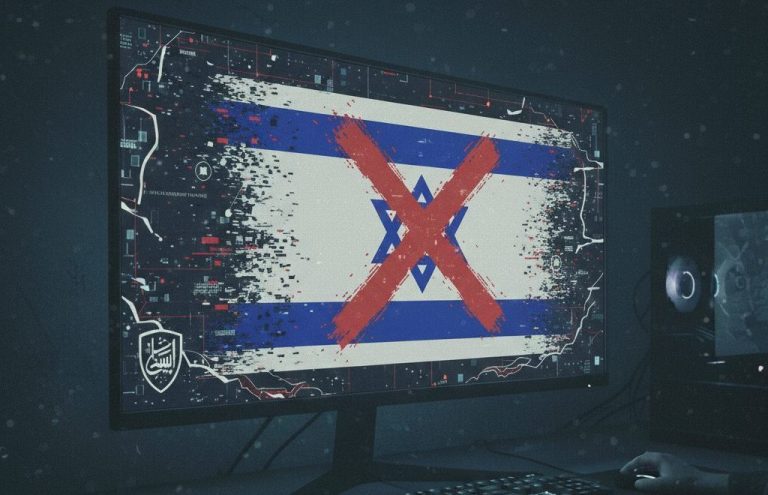
Digital screen showing an Israeli flag with a red "X" through it and ISNAD branding for cyber warfare.

ISNAD’s Shift From Wartime Propaganda to Long-Term Social Warfare

The ISNAD network has shifted from wartime agitation to long‑term influence operations, using fake Hebrew accounts to erode Israeli social cohesion. Its new “sociological warfare” strategy promotes polarization, distrust, and emigration. With tighter organization and ideological volunteers, ISNAD offers a replicable model of civilian‑style interference that democracies are still struggling to counter.

Read More »