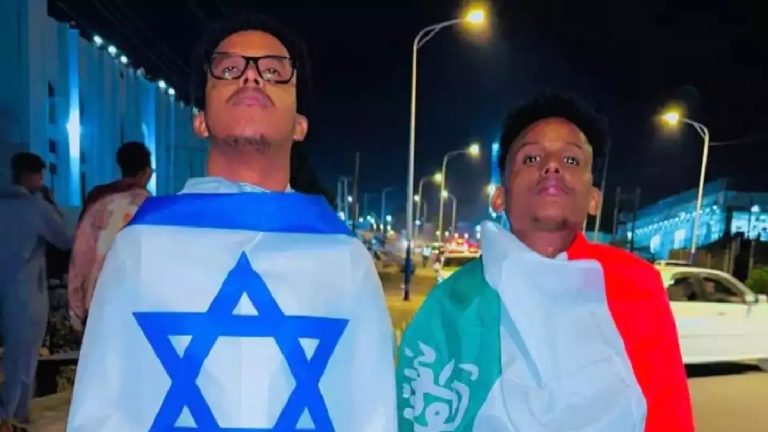
The strategic waterways of the Red Sea and Gulf of Aden have emerged as a renewed focal point of tension, with recent diplomatic maneuvers threatening to destabilize fragile regional arrangements and undermine international development investments. Israel’s December 2025 recognition of Somaliland as an independent state marks the first such acknowledgment by any United Nations member country, drawing immediate condemnation from Somalia, Türkiye, Egypt and numerous international bodies.
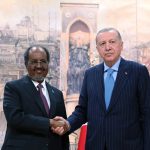
The timing and nature of this recognition has prompted questions about whether the move specifically targets Turkish investments and influence in the region. Türkiye has systematically expanded its presence in Somalia through comprehensive development initiatives spanning energy extraction, infrastructure modernization, and advanced technology projects. Following Israel’s diplomatic shift, Somali President Hassan Sheikh Mohamud undertook a critical visit to Türkiye to coordinate responses to what Mogadishu describes as an assault on its territorial integrity.
Regional Security Dynamics
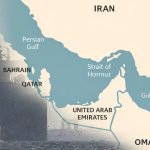
Yemen’s Houthi rebels have conducted sustained operations targeting Israeli interests and commercial vessels in the Red Sea, Gulf of Aden and surrounding waters, responding to Israeli military actions in Gaza. These operations have triggered multiple Israeli airstrikes within Yemeni territory. The situation intensified when Israel became the first UN member state to formally recognize Somaliland in late December 2025, a decision situated near the strategically vital Bab al-Mandab Strait.
The African Union, Arab League, Gulf Cooperation Council, and Organization of Islamic Cooperation have all condemned Israel’s recognition as violating international law and threatening regional stability. These diplomatic steps appear deliberately concentrated in areas where Türkiye has committed substantial resources to stability enhancement and capacity development, suggesting objectives extending beyond narrow military considerations to encompass broader regional influence competition.
This calculated approach directly impacts a pivotal partnership between Türkiye and Somalia that has evolved considerably beyond conventional diplomacy into concrete nation-building programs designed to promote economic advancement and regional security. The potential disruption of these initiatives threatens a carefully constructed framework for regional progress.
Turkish Economic Engagement
Throughout the past decade, Türkiye has constructed a comprehensive, multi-dimensional partnership with Somalia, establishing itself as a crucial security and economic collaborator. Ankara’s sustained engagement began earnestly with high-level diplomatic visits in 2011 and subsequently expanded through defense agreements, economic cooperation pacts, and development initiatives.
Central to this relationship stands hydrocarbon exploration activities. Under agreements granting exploration rights across approximately 15,000 square kilometers of Somali offshore blocks, the Turkish Petroleum Corporation (TPAO) has conducted seismic surveys and anticipates commencing oil drilling operations by 2026. Turkey’s Oruc Reis seismic research vessel has completed substantial survey work in Somali waters, with operations expected to conclude by mid-2026, potentially accessing significant hydrocarbon reserves.
Beyond energy sector engagement, Türkiye aims to establish cutting-edge technological infrastructure within Somalia. Ankara plans to construct a space launch facility in Somalia, utilizing the nation’s equatorial geographical advantage for satellite launches and potentially missile testing capabilities. The project, which commenced construction in December 2024 as part of broader cooperation agreements, aims to strengthen Türkiye’s aerospace capabilities while deepening strategic connections. The facility will occupy 900 square kilometers along the Indian Ocean coastline.
Capacity Building Initiatives
Türkiye’s engagement also encompasses security sector development and institutional capacity-building programs. The Turkish military operates Camp TURKSOM, Ankara’s largest overseas military installation, which trains Somali security forces and enhances naval and coastguard operational capabilities. Joint agreements executed in recent years include maritime security cooperation to patrol Somali waters for a decade, protecting both regional stability and commercial activities.
Additionally, Turkish infrastructure investments encompass modernization of aviation facilities, healthcare institutions, fishery development programs, and diplomatic compounds. These comprehensive initiatives demonstrate Ankara’s commitment to Somalia’s long-term development trajectory.
Türkiye’s strategic approach remains fundamentally structural, aimed at building Somali institutional capabilities and establishing mutual economic interests. Whether through petroleum extraction, space technology deployment, or infrastructure modernization, Ankara’s presence in the Horn of Africa is designed for sustained, transformational impact across multiple sectors.
Geopolitical Calculations
The Israeli recognition of Somaliland occurs within a complex regional context where multiple powers compete for influence. Israel positioned the diplomatic breakthrough as aligned with the Abraham Accords framework, emphasizing potential economic cooperation opportunities. However, the move has generated significant diplomatic backlash across African and Arab nations.
Somalia’s parliament unanimously passed a resolution declaring Israel’s recognition “null and void”, with President Mohamud characterizing the action as a “naked invasion” and describing Israel as an enemy. The federal government has committed to pursuing all diplomatic, political and legal measures to defend its sovereignty and internationally recognized borders.
The concentration of these actions in areas of significant Turkish investment suggests potential coordination aimed at constraining Ankara’s expanding regional influence. Turkish investments in Somalia represent substantial long-term commitments across multiple strategic sectors, creating dependencies and partnerships that strengthen both nations’ regional positions.
Future Trajectory
The convergence of Israeli diplomatic initiatives, ongoing Houthi operations in maritime corridors, and Turkish development investments creates a volatile mixture with significant implications for regional stability. Whether these dynamics represent deliberate targeting of Turkish interests or coincidental alignment of competing regional strategies remains subject to interpretation.
What remains evident is that the Horn of Africa has become an arena for intensifying great power competition, with Somalia serving as a focal point for these intersecting interests. The sustainability of Turkish-Somali partnership and the regional response to Israeli recognition of Somaliland will significantly shape the security and economic landscape of this strategically vital region in coming years.
Original analysis by Prof. Dr. Yahya Amir Hagi Ibrahim from Anadolu Agency. Republished with additional research and verification by ThinkTanksMonitor.