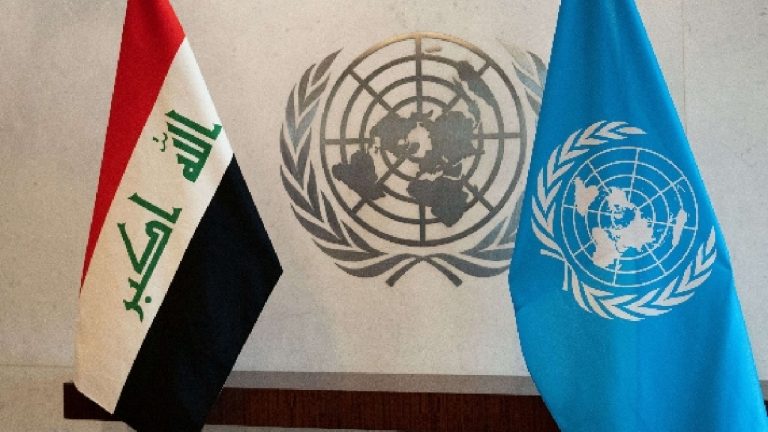
The conclusion of the UN Assistance Mission for Iraq’s 22-year mandate marks significant milestone in Middle Eastern political development, prompting reconsideration of how regional actors can address ongoing conflicts through mediation and cooperation rather than civilizational confrontation. This transition offers opportunity to examine whether regional diplomatic leadership can provide alternative frameworks to conflict resolution beyond traditional great power intervention.
From Intervention to Regional Agency
UN Secretary-General António Guterres’s recent visits to Saudi Arabia, Oman, and Iraq highlighted shifts in regional diplomatic dynamics. The termination of UNAMI’s mandate reflects Iraqi government’s assertion of sovereignty and capacity to manage national affairs independently, representing transition from post-conflict international administration toward autonomous governance.
During meetings with Crown Prince Mohammed bin Salman, Guterres discussed “ways to support efforts to enhance global security and stability,” emphasizing Saudi Arabia’s role in multilateral diplomacy. Particular attention focused on conflicts in Yemen and Sudan, with Guterres noting that “war in Sudan is horrific and must stop.” The Sudan conflict has displaced over 12 million people, creating one of contemporary era’s most severe humanitarian crises.
Guterres’s meeting with Sultan Haitham bin Tarik acknowledged Oman’s “constructive and balanced foreign policy” and mediation efforts regionally and globally. Muscat mediated May de-escalation agreement between United States and Yemen’s Houthi movement, while also facilitating negotiations regarding UN staff detained by Houthis. Oman’s quiet diplomatic approach has earned description as “Switzerland of the Middle East” for its neutral mediation role.
The Huntington Framework and Its Limitations
Samuel Huntington’s “Clash of Civilizations” thesis, published in 1993, argued that post-Cold War conflicts would primarily stem from cultural and religious identities rather than ideological or economic factors. Huntington identified several major civilizations—Western, Islamic, Sinic, Hindu, Orthodox, Latin American, and Sub-Saharan African—predicting that future conflicts would occur along civilizational fault lines.
The Iraq War (2003-2011) has been cited as validating Huntington’s thesis, though this interpretation remains contested. Critics argue that the conflict stemmed more from geopolitical calculations, resource competition, and specific policy decisions than inevitable civilizational clash. The war’s aftermath—sectarian violence, state collapse, and humanitarian catastrophe—reflected specific circumstantial factors rather than predetermined civilizational incompatibility.
Huntington’s framework, formulated over three decades ago in immediate post-Cold War context, may inadequately capture contemporary international dynamics. Globalization, economic interdependence, transnational challenges like climate change, and hybrid identities complicate simplistic civilizational categorizations. Many conflicts previously attributed to civilizational clashes involve complex combinations of resource competition, governance failures, regional rivalries, and great power interventions.
Middle Eastern Conflicts and Regional Solutions
The Middle East has experienced numerous devastating conflicts over past 80 years: Arab-Israeli conflicts, Yemen civil wars, Lebanese Civil War, Iran-Iraq War, Gulf War, 2006 Lebanon War, and Syrian Civil War. These conflicts have produced immense human suffering, economic devastation, and political instability across the region.
Current crises in Yemen and Sudan particularly demand urgent attention. Yemen’s humanitarian catastrophe, resulting from years of civil war and intervention, has created massive displacement, food insecurity, and health emergencies. Sudan’s recent conflict between competing military factions has rapidly escalated into full-scale humanitarian disaster with millions displaced and widespread atrocities.
Traditional international interventions in these conflicts have produced mixed results at best. External military operations, sanctions regimes, and diplomatic initiatives led by distant powers often lack deep understanding of local dynamics, fail to address root causes, or inadvertently exacerbate tensions. This pattern suggests potential value in regional actors assuming greater mediation responsibility.
Regional Mediation Capacity and Limitations
Saudi Arabia, Oman, and Iraq possess several advantages as potential mediators. Geographic proximity provides intimate understanding of regional dynamics, historical relationships, and cultural contexts that external actors lack. Saudi Arabia’s economic resources and political influence enable both carrots and sticks in negotiations. Oman’s longstanding neutrality and trusted mediator reputation facilitate dialogue between antagonistic parties. Iraq’s experience transitioning from conflict to relative stability offers relevant lessons.
However, significant limitations constrain regional mediation effectiveness. Saudi Arabia’s direct involvement in Yemen conflict as coalition leader compromises its neutrality regarding that specific dispute. Regional powers maintain their own interests and rivalries potentially conflicting with impartial mediation. Authoritarian governance models in many regional states may limit their credibility promoting democratic conflict resolution or human rights protections.
Furthermore, regional solutions require international community support and coordination. Conflicts like Yemen and Sudan involve multiple external actors—Iran, UAE, Egypt, Russia, and Western powers—whose interests must be addressed. Regional mediation succeeds best when integrated with broader international frameworks rather than replacing them entirely.
Civilizational Cooperation Framework
The proposed alternative to Huntington’s clash paradigm involves emphasizing civilizational cooperation rather than confrontation. This framework recognizes shared interests across civilizational boundaries in addressing transnational challenges: terrorism, climate change, pandemic disease, economic instability, and humanitarian crises.
Rather than viewing international relations through lens of civilizational competition, this approach emphasizes: collaboration between regional actors and international institutions like United Nations, cross-civilizational partnerships addressing shared challenges, integration of regional expertise with global resources, and recognition that most contemporary conflicts involve complex factors beyond civilizational identity.
This framework does not deny cultural and religious differences’ importance but argues they need not inevitably produce conflict. Instead, diverse civilizational perspectives can contribute complementary approaches to problem-solving when channeled through cooperative mechanisms.
Practical Implementation Challenges
Translating civilizational cooperation concept into practical policy faces substantial obstacles. First, ongoing conflicts involve deeply entrenched interests, historical grievances, and power struggles that diplomatic frameworks alone cannot resolve. Military force, economic pressure, and political maneuvering remain necessary conflict resolution components.
Second, regional actors pursuing civilizational cooperation must overcome their own rivalries and competing interests. Saudi-Iranian tensions, Arab-Israeli conflicts, and intra-Arab disputes complicate unified regional approaches. Recent Saudi-Iranian diplomatic normalization facilitated by China demonstrates potential for rival power reconciliation but implementation remains uncertain.
Third, domestic political constraints within regional states may limit their flexibility in conflict mediation. Authoritarian governments often prioritize regime security over regional stability when these conflict. Economic challenges, including oil price volatility and diversification pressures, constrain resources available for mediation and conflict resolution.
Fourth, external powers including United States, China, Russia, and European states maintain significant Middle Eastern interests they will not readily subordinate to regional mediation initiatives. Effective regional diplomacy requires coordination with these actors rather than attempting to exclude them.
The Role of International Institutions
The UN’s continued engagement with Iraq following UNAMI termination illustrates how international institutions can support regional solutions without imposing external administration. Guterres pledged ongoing UN support focused on sustainable development and global collaboration rather than governance substitution.
The recommendation of former Iraqi President Barham Salih for UN Refugee Agency leadership represents potential model wherein regional figures assume global institutional positions, bringing regional perspective to international organizations while enhancing these institutions’ legitimacy and effectiveness in affected regions.
This approach combines regional leadership with international institutional frameworks, leveraging comparative advantages of both. Regional actors provide contextual understanding and direct relationships while international institutions offer resources, legal frameworks, and coordinating mechanisms that no single regional state can provide alone.
Future Directions and Realistic Expectations
The coming years will test whether regional mediation can effectively address Middle Eastern conflicts. Several factors will determine success or failure: regional powers’ willingness to subordinate narrow interests to broader stability objectives, international community’s readiness to support rather than undermine regional initiatives, conflict parties’ openness to mediation and compromise, and sustained commitment despite inevitable setbacks.
Realistic expectations recognize that civilizational cooperation framework cannot eliminate conflicts or resolve all disputes. Cultural and religious differences will continue influencing international relations, sometimes generating tensions. However, the choice between Huntington’s clash paradigm and cooperation alternative is not binary. The question is whether conflicts involving civilizational dimensions must be viewed primarily through confrontation lens or can be managed through cooperative frameworks emphasizing shared interests and mutual accommodation.
The Middle East’s trajectory depends substantially on regional actors’ choices. They can embrace mediation roles, coordinate with international institutions, and demonstrate that civilizational differences need not produce perpetual conflict. Alternatively, they can prioritize narrow interests, maintain rivalries, and allow external powers to continue dominating regional security dynamics. The former path offers no guarantees but represents more promising direction than continuing patterns that have produced decades of violence and instability.
Original analysis inspired by Diana Galeeva from Arab News. Additional research and verification conducted through multiple sources.