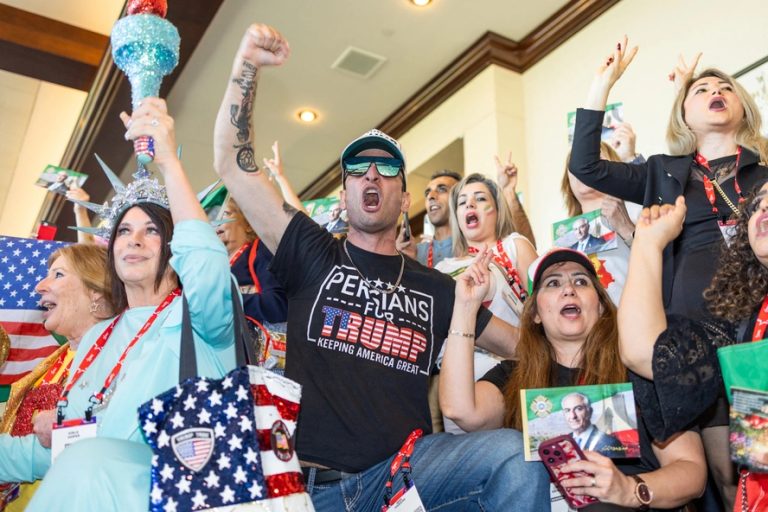
The annual Conservative Political Action Conference has always been a loyalty test. For decades, it served as the Republican base’s loudest megaphone — a place where grassroots energy met political ambition and everyone left fired up for the fight ahead. This year in Grapevine, Texas, the energy was different. Younger conservatives spoke of disappointment and even “betrayal” over Trump’s launch of strikes against Iran, saying the president’s actions run counter to his many pledges to oppose foreign entanglements. Older CPAC participants were far more forgiving, describing Trump as wisely responsive to the threat Iran posed — several, in fact, suggested Trump did not initiate the war, but that Iran had decades ago. The gap between the two groups was not subtle. It was the defining fault line of the conference, and it carries serious implications for a Republican Party heading into a brutal midterm cycle with its House majority hanging by a thread.
A Generation That Trusted “America First”
The young men who powered Trump’s 2024 victory did so largely on vibes — podcasts, memes, and a candidate who promised economic renewal and an end to foreign wars. Polling this month suggests Trump is losing ground among young voters, another group that contributed to his 2024 gains; more than half of men under 30 supported Trump in that election, but that demographic has cratered by 20 points in just a year. CNN’s Harry Enten put it bluntly: “Trump won in 2024 because of men. They are abandoning him right now.”
At CPAC, the frustration was personal. Matthew Kingston, 26, of Lubbock, Texas, said the conflict runs counter to what many Trump voters expected: “I personally don’t think we should be getting involved in Iran — this is definitely not what I was voting for when I voted Trump. This was supposed to be America first, not Israel first.” Tiffany Krieger, a 20-year-old University of Pittsburgh sophomore, said her level-10 support for Trump has dipped to five: “It seems like the love for him is plateauing. We see our party splitting apart and we’re supposed to be united.”
The polling backs up the anecdotes. The youngest voters have the lowest approval of Trump’s handling of Iran — just 25% among those 18–29 — and Gen Z is the least likely generation to approve at 24%. A POLITICO survey found that more than 70% of MAGA men over 35 believe Trump has a plan, compared with just 49% of those under 35. A Reuters/Ipsos poll this week found 61% of respondents actively disapprove of the war — up 18 percentage points from the earliest days. Trump didn’t see the usual “rally-around-the-flag” boost, and his net approval rating sits at a second-term low of -16.7.
The Influencer Rebellion
What makes this split dangerous for the GOP is where young conservative men get their information. Tucker Carlson, Megyn Kelly, and Joe Rogan — voices that carry enormous weight with men under 35 — have all criticized the war. Cracks in the coalition appeared early, led by influential opinion leaders like Carlson. Joe Kent, director of the Center for Counterterrorism at DHS, quit his administration post, saying “I cannot in good conscience support the ongoing war in Iran” and that “Iran posed no imminent threat to our nation.” Steve Bannon, expected to speak at CPAC, has warned that a protracted engagement will cost Republicans seats as conservatives sit out the November midterms.
The conference stage reflected the tension. Former congressman Matt Gaetz earned one of the biggest reactions of the week when he told the crowd that “a ground invasion of Iran will make our country poorer and less safe.” Conservative commentator Josh Hammer fired back from another panel, blasting Carlson and Kelly as “doomsayers.” The crowd itself skewed older than in years past — a far cry from a decade ago when CPAC was known for wild parties and frantic dating scenes. One disappointed 20-year-old woman described the gathering as “Turning Point for boomers.”
Meanwhile, older attendees clogged escalators chanting for exiled Crown Prince Reza Pahlavi, who addressed the conference on Saturday, and wore pins reading “Iran & America United.” The generational disconnect was almost physical: one half of the convention hall wanted to liberate Iran, while the other half wanted to know why American gas prices had jumped over a dollar a gallon.
Midterm Math
The political math is unforgiving. Republicans’ hold on the U.S. House is already in jeopardy and the GOP’s thin Senate majority is not as secure as it was a year ago. Young voters predicted significant political fallout, with one warning that “in the midterms, the GOP is going to get destroyed” unless the party adapts to a new generation of voters. Only 25% of respondents approved of Trump’s handling of the cost of living, while just 29% approved of his overall economic stewardship — the lowest rating in either of his administrations and lower than any economic approval rating of Joe Biden.
The White House is aware of the danger but constrained by its own contradictions. Trump cannot walk back the war without appearing weak to the hawkish wing of his base, and he cannot escalate without driving more young men away. Conservative pollster Richard Baris noted that fewer people are identifying as MAGA, a phenomenon the Iran war has accelerated, and that young people are far more skeptical of Israel than bedrock Republican voters. “There’s a resentment now with younger Republicans toward Israel because they feel like the US put Israel before them,” Baris said.
CPAC chairman Matt Schlapp acknowledged the divide was real but insisted the coalition would hold. “I think people trust President Trump,” he told the AP. “But I think underneath there’s concern about where does this lead.” That question — where does this lead — is the one nobody at CPAC could answer. And for a party that needs every young male voter it gained in 2024 to survive November, the silence is deafening.
Original analysis inspired by Liz Crampton from POLITICO. Additional research and verification conducted through multiple sources.