Physics concepts of relativity and time compression acquired unsettling personal meaning for this Palestinian journalist by year’s end. Geography determines temporal experience—in certain locations, entire decades compress into twelve months. More remarkably, one can traverse time itself: journeying seven decades into history, then leaping forward multiple decades into an imagined future.
New Year Under Bombardment
The year commenced quietly on a displacement shelter mattress in Deir al-Balah, central Gaza. The final minute of 2024 ticked toward midnight—sixty seconds that could encompass multiple airstrikes. Survival through dawn remained uncertain. Hope flickered while fingers scrolled news applications searching ceasefire updates. Among circulating agreement provisions, eyes sought one specific term: “Return.” No ceasefire would signify genocide’s conclusion without guaranteeing displaced Palestinians’ right to return to northern Gaza.
Twenty-seven days transformed hope into reality. On January 27, 2025, Israel opened al-Rashid Street along the coast, allowing displaced Palestinians into northern Gaza for the first time in over fifteen months. Hundreds had previously died attempting this crossing. Rushing alongside colleagues to document events, climbing atop a broadcast vehicle provided vantage for framing the extraordinary scene: massive crowds moving on foot, carrying life’s remnants, walking toward potentially destroyed homes.
Embodying Past and Future
Documenting these scenes provoked internal transformation. No longer merely reflecting refugee grandmother’s image after prolonged forced displacement, but simultaneously embodying a future grandchild finally walking toward Jerusalem, the family’s original hometown. This materialized long-imagined scenes from grandparents’ descriptions of returning to homes and villages from which 1948 expulsion occurred.
The UN estimated over 376,000 displaced Palestinians returned to northern Gaza after Israeli forces withdrew from the Netzarim corridor. Covering events on camera required suppressing smiles while attempting the “neutral” image expected of local journalists—an image denying personal identity and suffering’s weight, even while reporting attacks that shaped it. Remaining present and refusing another forced displacement represented reclaiming—partially—what grandparents lost in 1948.
Actual return to Gaza City required another three weeks securing temporary shelter and repairing the miraculously surviving home. Late February brought relocation to the fourth shelter, this time in Gaza City. Yet as return’s promise solidified and goods tentatively reappeared in markets, circumstances reversed violently.
Starvation Crisis Unfolds
March’s beginning marked Israel’s total siege reimposition, initiating a new starvation phase. Two weeks later, ceasefire collapse preceded genocide’s resumption. Following months taught how currency lost meaning—untouched wallet contents remained useless while wandering bombarded streets desperately seeking single wheat flour bags at any price.
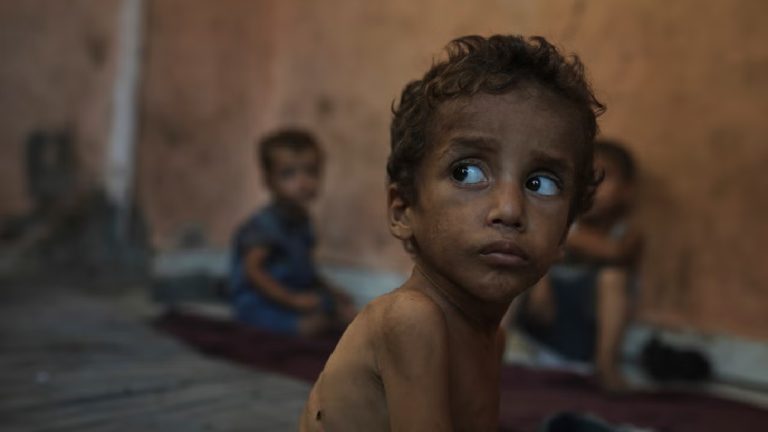
Market purchases ceased; people reverted to bartering existing possessions for other items. As famine conditions spread across Gaza governorates, shelter from relentless bombardment provided no refuge from starvation—hunger manifested in rawest form. Exhausted, hollow, craving one “normal” food dish, local journalists across Gaza suppressed personal suffering, reporting starvation from detached positions while every hunger pang confirmed direct experience.
Returning to damaged homes in June, death’s arrival—whether by starvation or bombardment—seemed preferable within one’s own residence. Over subsequent two months before aid trickled back, starvation peaked with widespread malnutrition documented by UN agencies. Interview questions evolved: “What sustains your survival?” This transcended journalistic inquiry—it became desperate survival idea gathering as hunger consumed everything.
These interviews revealed bread-making techniques from pasta, and how tea fattah—bread soaked in tea—could momentarily quiet hunger, providing sufficient strength for another day’s survival. WHO reported over 18,000 children hospitalized for acute malnutrition since early 2025, with multiple children dying from hunger-related causes.
Displacement Orders Return
Food items’ August reappearance in markets coincided with new Israeli mass displacement orders for Gaza City and northern Gaza residents. As fresh displacement directives arrived almost daily, with repeated Israeli military phone calls ordering evacuation, residents clung to fragile hope: remaining one more day in houses’ remnants. Gradually, familiar “How are you?” greetings disappeared, replaced by “Do you have anywhere to go?” or “How much longer will you stay?” A common response: “Until the last moment.”
Nobody truly understood when that moment arrived or whether it had already passed. Still, the phrase circulated widely on social media—posts bearing identical words without context or elaboration, meaning understood exclusively by those experiencing it. For this journalist, that “last moment” came when Israel’s explosive-laden robots capable of leveling dozens of buildings simultaneously moved within hundreds of meters of home.
September 17 brought final packing of long-resisted essentials. Collecting the cat and basil plant—purchased upon returning home after nearly eighteen months’ displacement—departure occurred. Rather than fleeing Gaza City entirely, relocation to city center felt like resistance itself. For the first time since genocide commenced, carrying a quiet, unspoken wish: dying in one’s city rather than being pushed again into displacement’s endlessness.
Reclaiming Fragments of Home
Growing up as Palestinian refugees’ granddaughter meant absorbing family grief and sorrow over fleeing Jerusalem. That loss shaped our home, and internalized itself before birth: pain from being expelled from unseen yet always-belonging land. As a journalist, listening to trembling elderly Palestinian voices, each repeating identical pleas eventually whispered personally: burial under own homes’ rubble rather than leaving them to occupiers.
Eight harrowing days followed watching the city empty under unprecedented Israeli bombardment and massacres. Entire residential buildings flattened onto occupants. Those refusing evacuation endured incomprehensible relentless bombing. From rooftop apartment windows encircling the heart of the city, smoke rose from every direction. In brief silences between explosions, one thought returned with clarity: death is easy. Survival under constant oppressor gaze—giving voice to those they want silenced—constitutes the real fight.
Then came belongings gathering once more, leaving the city, heading to another Gaza part. A makeshift Deir al-Balah tent revealed different life’s face—harsher, yet more invigorating. It stripped away every comfort illusion, leaving only raw survival will lasting as long as possible.
Second Return and Time’s Measure
Three weeks passed before October 10’s long-awaited ceasefire agreement took effect. Impatiently waiting until next day before packing belongings final time, taking cat and basil plant, heading home. Stepping into home for the second return in a single year, Gaza’s own time measure finally became comprehensible.
Here, lifetimes compress into single years. One lives both displacement and return, starvation and sating, survival and thousand deaths between—yet somehow, one more moment remains to hold on, to document it in a story. This act itself constitutes small victory, as long as recording everything before they manage silencing you. With over 70,000 Palestinians killed and 171,000 injured according to Gaza’s Ministry of Health, each documented moment represents resistance against erasure.
Original analysis by Maha Hussaini from Middle East Eye. Republished with additional research and verification by ThinkTanksMonitor.